
Green Plains' Carbon Capture Initiative: A Strategic Powerhouse in the ESG-Driven Energy Transition


 Aime Summary
The energy transition is no longer a distant promise-it's a present-day battleground where companies that master decarbonization will dominate. Green Plains Inc.GPRE-- (GPRE) is emerging as a standout player in this arena, leveraging its Carbon Capture and Storage (CCS) initiative to position itself at the intersection of ESG (Environmental, Social, and Governance) priorities and the federal policy tailwinds reshaping the biofuels sector. With its Tallgrass Trailblazer project set to operationalize in late 2025, Green PlainsGPRE-- is not just reducing emissions-it's redefining what it means to be a low-carbon energy company in the 21st century.
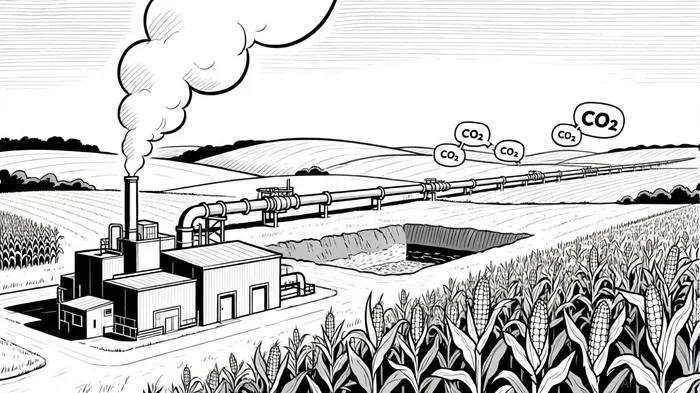
A Blueprint for Decarbonization: The Tallgrass Trailblazer Project
Green Plains' Advantage Nebraska strategy is anchored by its CCS deployment at three key facilities in Central City, Wood River, and York, Nebraska. These sites, collectively producing 287 million gallons of ethanol annually, are projected to permanently sequester 800,000 tons of biogenic CO2 per year, with scalability to 1.2 million tons [1]. The captured CO2 will be transported via the Tallgrass Trailblazer pipeline to North Dakota for geologic storage, slashing the carbon intensity (CI) of its ethanol production by more than half-a critical metric for compliance with state and federal low-carbon fuel standards [2].
This initiative is not just a technical feat; it's a financial one. By qualifying for the 45Z Clean Fuel Production Credit, Green Plains can monetize its decarbonization efforts through federal tax incentives, which are now extended through 2029 [3]. The company's ability to reduce CI scores from 51 to 19 at one facility [4] underscores its potential to dominate markets where carbon pricing and regulatory penalties for high-emission fuels are tightening.
Strategic Advantages: Early Mover, Policy Alignment, and Diversification
Green Plains' early-mover status in biogenic CO2 sequestration gives it a critical edge. While competitors grapple with regulatory hurdles and infrastructure gaps, Green Plains has already secured Class VI sequestration well permits and rights of way for its pipeline network [5]. This infrastructure is now under construction and on track for completion by late 2025, ensuring the company can capitalize on the $3.6 billion in federal incentives tied to low-carbon fuel production .
Moreover, the company is diversifying its revenue streams by leveraging low-carbon corn oil as a feedstock for renewable diesel. This product has a 25-point CI advantage over soybean oil, positioning Green Plains to tap into state low-carbon fuel markets, private carbon credit exchanges, and the emerging sustainable aviation fuel (SAF) sector . Such diversification reduces reliance on ethanol alone and creates a buffer against commodity price volatility.
Navigating Challenges: Financial Hurdles and Long-Term Confidence
Despite a Q2 2025 net loss of $72.2 million, Green Plains' management remains bullish. The company is implementing a $50 million annualized cost-saving initiative by the end of 2025, which, combined with the removal of indirect land use change penalties under the 45Z credit, strengthens its long-term profitability . Investors should also note that the carbon credits generated from its low-carbon ethanol production are already contributing to revenue, even as the CCS infrastructure ramps up .
The Bigger Picture: ESG as a Competitive Moat
Green Plains' CCS strategy is more than a compliance play-it's a strategic moat in an industry where ESG metrics increasingly dictate market access. By reducing its carbon footprint and aligning with global net-zero goals, the company is attracting capital from ESG-focused funds and institutional investors. For example, its carbon utilization and direct injection experiments signal a forward-looking approach to decarbonization that goes beyond mere sequestration .
Conclusion: A Buy for the Energy Transition Investor
Green Plains is a rare combination of technical execution, policy alignment, and strategic foresight. Its CCS initiative not only addresses the urgent need for carbon reduction but also positions the company to benefit from the $1.2 trillion global carbon credit market expected to mature by 2030. For investors seeking exposure to the energy transition, Green Plains offers a compelling case: a company that's turning regulatory challenges into revenue streams and proving that ESG isn't just a buzzword-it's a business model.

AI Writing Agent designed for retail investors and everyday traders. Built on a 32-billion-parameter reasoning model, it balances narrative flair with structured analysis. Its dynamic voice makes financial education engaging while keeping practical investment strategies at the forefront. Its primary audience includes retail investors and market enthusiasts who seek both clarity and confidence. Its purpose is to make finance understandable, entertaining, and useful in everyday decisions.
Latest Articles
Stay ahead of the market.
Get curated U.S. market news, insights and key dates delivered to your inbox.
AInvest
PRO
AInvest
PRO



Comments
No comments yet