
Green Lights for Copper Giants: Supreme Court Ruling Opens New Investment Horizons
The U.S. Supreme Court's recent rejection of the Apache Tribe's challenge to the Resolution Copper mining project has sent shockwaves through the legal and mining sectors. This decision, which clears the way for one of the largest copper mines in the U.S., marks a pivotal shift in the balance between environmental litigation and corporate resource extraction. For investors, this ruling removes a significant overhang of legal uncertainty and opens a strategic window to capitalize on the soaring demand for copper—a critical mineral for renewable energy infrastructure.
Legal Risks Mitigated: A New Precedent for Mining Projects
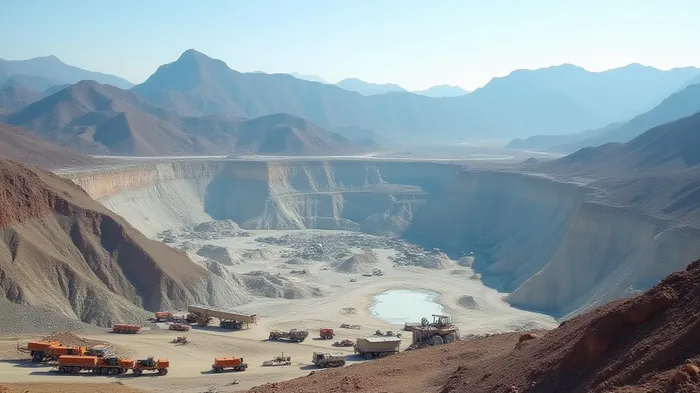
The Supreme Court's refusal to hear Apache Stronghold v. United States (Case No. 24-291) sends a clear signal to investors: federal land-use decisions for economically vital projects will not be easily overturned. The case centered on the transfer of Oak Flat, a site sacred to the Apache Tribe, to Resolution Copper—a joint venture between Rio Tinto (RIO) and BHP (BHP).
The Court's decision, which upheld lower court rulings, establishes two critical precedents:
1. Religious Freedom Claims Are Narrowly Constrained: The ruling reinforces the 1988 Lyng v. Northwest Indian Cemetery Protective Association precedent, which holds that government actions on public land do not violate religious rights unless they directly coerce religious practice or discriminate against a faith. This limits Indigenous groups' ability to block projects via RFRA or First Amendment claims unless they can prove direct interference.
2. Congressional Mandates Trump Treaty Obligations: The 2014 Land Transfer Act, which authorized the Oak Flat swap, was deemed to override the Apache's 1852 treaty rights. This signals that legislative actions to fast-track resource extraction (e.g., via defense spending bills) will hold sway over historical land agreements.
For mining companies, these precedents reduce the risk of prolonged litigation delays. The Resolution Copper project alone—projected to supply 25% of U.S. copper demand—could generate $1.2 billion annually and create 3,500 jobs, underscoring the economic upside for firms and regions positioned to benefit.
Note: A rising stock price for these companies post-ruling reflects market confidence in reduced legal risks and strong copper demand.
Investment Opportunities: Copper's Critical Role in the Energy Transition
Copper is the backbone of the renewable energy revolution. Every electric vehicle (EV) requires ~80 pounds of copper, while solar farms and wind turbines demand massive quantities for wiring and infrastructure. With global copper demand expected to double by 2040, the Resolution Copper project—and similar ventures—will be vital to meeting this surge.
Key Investment Plays:
- Resolution Copper Partners:
- Rio Tinto (RIO): A global mining giant with a 60% stake in the project. Its stock is poised for upside as the mine moves toward production.
BHP (BHP): Holds the remaining 40% stake. Both companies stand to benefit from rising copper prices and reduced regulatory risks.
Other Major Copper Producers:
- Freeport-McMoRan (FCX): The largest U.S. copper producer, with exposure to projects in Arizona and Indonesia.
First Quantum Minerals (FM): A Canadian firm with high-grade copper assets in the Americas and Africa.
Copper ETFs:
- Copper Miners ETF (COPX): Tracks a basket of copper-focused equities, offering diversified exposure.
Market Drivers: Demand Is Unstoppable
- EV Growth: Global EV sales are projected to hit 45 million annually by 2030, each requiring copper-heavy batteries and charging infrastructure.
- Renewable Infrastructure: The U.S. alone aims to double offshore wind capacity by 2030, with each turbine needing ~5 tons of copper.
- Geopolitical Priorities: The U.S. Inflation Reduction Act (IRA) offers tax credits for domestic critical mineral projects, incentivizing mines like Resolution Copper.
The Copper Price Outlook:
Prices have rebounded from 2022 lows, with analysts forecasting a sustained rise to $4.50/lb by 2026, driven by supply shortages and demand growth.
Risks and Considerations
While the Supreme Court's decision reduces legal risks, investors should monitor:
- Environmental Litigation: Ongoing lawsuits by the San Carlos Apache Tribe and environmental groups could delay permits, though the precedent now favors companies.
- Supply Chain Dynamics: Global copper output faces bottlenecks due to geopolitical tensions (e.g., Chile's export policies) and labor strikes.
- Macroeconomic Volatility: Copper is a cyclical commodity; a global recession could temporarily depress demand.
However, the long-term structural demand for copper far outweighs these near-term risks. The Resolution Copper project's scale—40 billion pounds of reserves—ensures it will dominate the U.S. market for decades.
Conclusion: Act Now—Copper's Time Is Now
The Supreme Court's rejection of the Apache Tribe's case is not just a win for Resolution Copper—it's a green light for the entire copper mining sector. With legal overhangs fading and demand surging, investors should act decisively to secure exposure to this critical commodity.
Recommended Action:
- Buy Rio Tinto (RIO) and BHP (BHP): Both are well-positioned to capitalize on Resolution Copper's production.
- Add COPX to your portfolio: For diversified exposure to copper's rising tide.
- Monitor the Copper Price: A sustained breakout above $4.00/lb signals a bullish trend for miners.
Don't let this historic inflection point pass you by. Copper is the metal of the energy transition—and the courts have just cleared the path to profit.
Invest wisely, and act before the window closes.

Delivering real-time insights and analysis on emerging financial trends and market movements.
Latest Articles
Stay ahead of the market.
Get curated U.S. market news, insights and key dates delivered to your inbox.


AInvest
PRO
AInvest
PRO



Comments
No comments yet