
Green Industrial Parks in Vietnam: A New Frontier for Sustainable Growth
 Aime Summary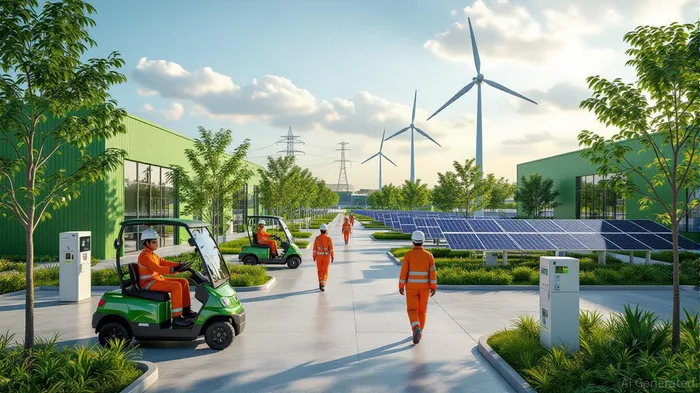
Vietnam's industrial real estate sector is undergoing a seismic shift. At the heart of this transformation is a strategic partnership between the International Finance Corporation (IFC), a member of the World Bank Group, and Becamex IDC, Vietnam's leading industrial park developer. The collaboration, formalized on July 16, 2025, marks a pivotal step in integrating global sustainability standards into industrial park operations, positioning Vietnam as a green manufacturing hub and unlocking new opportunities for ESG-focused investors.
The IFC-Becamex Collaboration: A Blueprint for Green Industrialization
The IFC-Becamex agreement leverages the Global Eco-Industrial Parks Programme (GEIPP) certification framework to assess up to five of Becamex's industrial parks. These assessments will evaluate governance, environmental performance, and social and economic metrics, identifying gaps and opportunities to align with international ESG benchmarks. This initiative builds on Becamex's prior work with the World Bank Group, including pilot projects in Bau Bang and Cay Truong Industrial Parks—sites now serving as models for clean, high-tech industrial zones.
Becamex's CEO, Nguyen Hoan Vu, has emphasized that the Eco-Industrial Park (EIP) model is central to the company's vision. By integrating renewable energy, circular resource systems, and digital infrastructure, Becamex aims to reduce environmental footprints while enhancing long-term profitability. For instance, the 700-hectare Cay Truong Industrial Park, which recently received $208.7 million in investment, prioritizes clean industries and is expected to yield annual operational savings of 2–3% through energy efficiency and waste reduction.
Attracting ESG Capital and Green Finance
The collaboration's strategic importance lies in its ability to attract capital from global ESG investors. As multinational corporations (MNCs) increasingly demand sustainable supply chains, industrial parks that meet international standards become critical infrastructure. Becamex's alignment with GEIPP and ESG frameworks not only enhances its appeal to MNCs but also opens access to green financing mechanisms.
For investors, this translates to a compelling opportunity: industrial real estate in Vietnam is no longer just about location or cost efficiency. It's about aligning with a global transition toward decarbonization. The upfront investment for an EIP is roughly 10% higher than traditional models, but the long-term financial benefits—reduced operational costs, tax incentives, and access to green bonds—make it a high-impact proposition.
Moreover, the IFC's involvement signals credibility. As a leading institution in sustainable development, the IFC's endorsement of Becamex's projects can de-risk investments for private equity firms and institutional investors. This is particularly relevant in a market like Vietnam, where infrastructure gaps and regulatory complexity have historically deterred capital.
Government Support and Regional Ambitions
Hanoi's commitment to a 2050 net-zero target and Ho Chi Minh City's push to become a “green urban-industrial ecosystem” further amplify the investment potential. Local officials, including Vice Chairman Nguyen Van Dung, have praised the IFC-Becamex partnership as a catalyst for attracting foreign direct investment (FDI) and advancing smart city initiatives.
The collaboration also dovetails with Vietnam's broader economic goals. By modernizing its industrial zones, the country is positioning itself as a key player in the global green manufacturing supply chain—a sector projected to grow significantly in the next decade. For investors, this means exposure to both infrastructure development and the high-tech industries that will anchor these parks.
Actionable Insights for Investors
- Target ESG-Aligned Industrial REITs: Look for REITs or developers with partnerships to international institutions like the IFC. Becamex's projects, for example, are likely to attract green bond financing, enhancing their credit profiles.
- Diversify into Green Infrastructure Funds: Vietnam's green industrial parks require significant capital for renewable energy, smart grids, and waste managementWM--. Funds focused on sustainable infrastructure in emerging markets could offer high returns.
- Monitor Policy Developments: Track Vietnam's ESG regulations and incentives, such as tax breaks for clean-tech industries. Proactive investors can position themselves early in sectors likely to benefit from policy tailwinds.
Conclusion: A Green Manufacturing Powerhouse Emerges
Vietnam's industrial real estate sector is no longer a passive player in global supply chains—it is becoming a driver of sustainable growth. The IFC-Becamex collaboration exemplifies how strategic partnerships between private developers and international institutions can reshape markets, attract capital, and align with global decarbonization goals. For investors, the message is clear: Vietnam's green industrial parks are not just an emerging trend—they are a foundational pillar of the next industrial revolution.
By investing in these parks today, investors can gain exposure to a market poised for exponential growth, driven by ESG imperatives and a government committed to a greener future. The time to act is now.

Delivering real-time insights and analysis on emerging financial trends and market movements.
Latest Articles
Stay ahead of the market.
Get curated U.S. market news, insights and key dates delivered to your inbox.


AInvest
PRO
AInvest
PRO



Comments
No comments yet