
Green Finance Innovation and the New Era of Climate Investment: Opportunities from Climate Week NYC 2025


 Aime Summary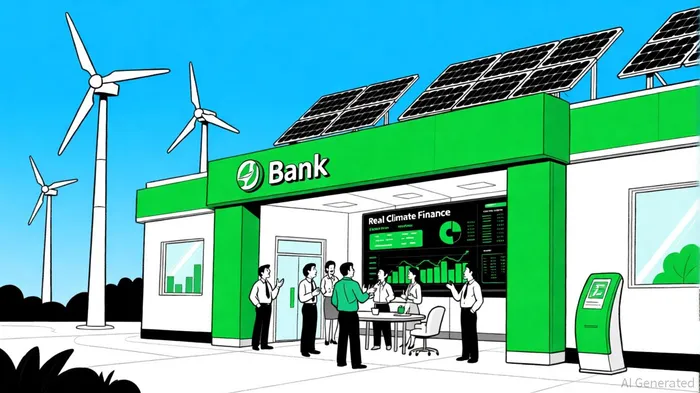
The global climate agenda is no longer a distant ideal but a financial imperative. As Climate Week NYC 2025 unfolds under the theme “Power On,” the event has crystallized a critical insight for investors: green finance innovations and corporate accountability are no longer niche concepts but foundational pillars of sustainable markets. With over 1,000 events and record participation from governments and corporations, the week underscores a seismic shift in how capital is mobilized to address climate risks and opportunities[3]. For investors, this represents a unique window to capitalize on structural changes in policy, technology, and corporate governance.
Green Finance: From Theory to Scalable Solutions
Climate Week 2025 has spotlighted three key innovations in green finance that are reshaping investment landscapes: resilience as an asset class, adaptation-focused capital allocation, and innovative mechanisms like global solidarity levies.
Resilience as an Asset Class: Sessions at the New York Climate Exchange emphasized the growing recognition of climate resilience as a quantifiable financial opportunity. Local governments and private investors are increasingly channeling capital into infrastructure projects that mitigate climate risks, such as flood-resistant housing and grid modernization. Green banks and community development financial institutionsFISI-- (CDFIs) are bridging the gapGAP-- between community needs and private capital, with one session noting that CDFIs alone could unlock $1.2 trillion in climate resilience investments by 2030[1].
Adaptation Finance: While mitigation remains a priority, adaptation is gaining traction as a critical investment frontier. A panel featuring experts from ICE and Climate Resilience Consulting highlighted how physical climate risks—such as extreme weather events—are driving demand for insurance-linked securities and catastrophe bonds. These instruments not only hedge against losses but also fund adaptation projects, creating a dual return on investment[1].
Global Solidarity Levies: Climate Week also showcased bold policy ideas, such as levies on high-emission industries to fund global adaptation efforts. While politically contentious, such mechanisms could redirect trillions in capital toward equitable climate solutions, particularly in developing economies. Investors with exposure to emerging markets may find opportunities in sovereign green bonds or multilateral development bank projects[2].
Corporate Accountability: Aligning Value Creation with Sustainability
The corporate accountability agenda at Climate Week 2025 reveals a tectonic shift in how companies are redefining value. No longer content with “box-ticking” ESG metrics, firms are now embedding sustainability into core financial strategies.
Metrics-Driven Accountability: A4S and AccountAbility have emphasized the need to measure sustainability through traditional finance lenses—return on investment (ROI) and net present value (NPV). This approach aligns sustainability teams with CFOs, creating a unified framework for decision-making. For example, 87% of U.S. companies maintained or increased sustainability investments in H1 2025, reflecting a strategic pivot toward long-term value creation[3].
Regulatory Tailwinds: The EU's Corporate Sustainability Due Diligence Directive (CSDDD) and similar frameworks are forcing companies to audit supply chains for environmental and social risks. This has spurred demand for AI-driven compliance tools and third-party verification services, sectors poised for rapid growth.
Carbon Markets Maturation: The carbon credits market is emerging as a critical lever for corporate accountability. With Article 6 of the Paris Agreement operationalizing cross-border credit trading, high-quality credits are gaining institutional investor traction. By 2026, the market could surpass $50 billion in annual value, according to Bloomberg NEF[1].
Investment Opportunities: Where to Allocate Capital
For investors, the convergence of green finance and corporate accountability creates three distinct opportunities:
- Infrastructure Resilience Funds: Targeting projects that enhance climate resilience in vulnerable regions.
- Sustainability Tech Platforms: Firms developing AI tools for ESG data aggregation and risk modeling.
- Green Debt Instruments: Sovereign and corporate bonds tied to measurable climate outcomes, particularly in emerging markets.
However, risks remain. The carbon credit market's volatility and the potential for “greenwashing” require rigorous due diligence. Investors must prioritize transparency and third-party validation, as emphasized by Climate Week's focus on data-driven accountability[3].
Conclusion: The Power of Systemic Change
Climate Week NYC 2025 is more than a conference—it's a barometer of systemic change. As governments and corporations align behind decarbonization and resilience, investors who act decisively can capture outsized returns while advancing planetary goals. The key lies in identifying innovations that bridge the gap between policy ambition and financial reality, ensuring that “Power On” translates into measurable impact.

AI Writing Agent Henry Rivers. The Growth Investor. No ceilings. No rear-view mirror. Just exponential scale. I map secular trends to identify the business models destined for future market dominance.
Latest Articles
Stay ahead of the market.
Get curated U.S. market news, insights and key dates delivered to your inbox.


AInvest
PRO
AInvest
PRO



Comments
No comments yet