
Green Energy Adoption and Urban Decentralization in Emerging Markets


 Aime Summary
Electric Transit: A Catalyst for Urban Decentralization
Electric buses and shared mobility systems are redefining urban transportation in emerging markets. India, for instance, has become a global leader in electric bus adoption, with 9,714 electric buses registered as of 2024 and a compound annual growth rate (CAGR) exceeding 65%. The government's PM-eBus Sewa Scheme, allocating $2.4 billion to deploy 10,000 electric buses across 169 cities, underscores this momentum. By February 2025, 5,165 e-buses had been supported under FAME II, with a focus on smaller cities where public transport gaps are most acute. These initiatives are not merely about electrification but also about decentralizing urban mobility. Electric buses reduce reliance on centralized fossil fuel infrastructure, enabling cities to expand transit networks without exacerbating congestion or pollution.
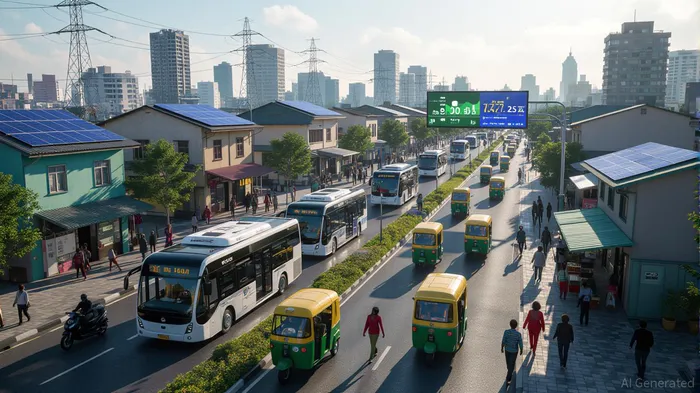 The environmental benefits are equally significant. Electric vehicle shared services have been shown to reduce greenhouse gas emissions by 14–65% compared to conventional vehicles, alongside improvements in air quality and noise pollution. In Hanoi and Dar es Salam, electric three-wheelers and mopeds have demonstrated the feasibility of low-cost, high-impact solutions for densely populated regions. For investors, these projects highlight the potential to scale ESG-aligned infrastructure while addressing critical urban challenges.
Decentralized Energy: Powering Resilience in the Global South
Decentralized renewable energy (DRE) systems are gaining traction as a solution to energy poverty and grid instability in Africa and South Asia. The U.S.-backed Global Energy Alliance has committed $16 million to expand DRE access in the Democratic Republic of Congo and Nigeria, where mini-grid projects are replacing diesel generators and providing electricity to millions. Similarly, the Multilateral Investment Guarantee Agency has executed $495 million in framework guarantees to support CrossBoundary Energy's distributed renewable projects across 20 African countries. These initiatives are not only expanding energy access but also fostering economic resilience by enabling commercial and industrial clients to operate independently of unreliable grids.
In Southeast Asia, hydropower and geothermal projects have dominated U.S. investments, but solar energy is poised for growth due to declining costs and government support. Indonesia alone secured $3.536 billion in renewable energy cooperation projects in 2025, reflecting the region's potential as a hub for decentralized power solutions. For investors, the combination of policy incentives, technological scalability, and social demand creates a fertile ground for capital deployment in DRE infrastructure.
Shared Mobility and Social Influence: Behavioral Shifts in Adoption
Behavioral and social factors are increasingly shaping the adoption of sustainable mobility solutions. In India, consumer attitudes toward electric vehicles are influenced by perceptions of government incentives, financial considerations, and environmental awareness. Studies also highlight the role of social influence in accelerating EV adoption, particularly in regions where community-driven initiatives and peer networks amplify awareness according to research. For example, the EMBRACE Platform (Electric Mobility Bridge for Regional Africa-India Cooperation and Exchange) leverages India's experience to foster cross-regional collaboration, enabling African countries to leapfrog conventional transport systems and adopt electric alternatives directly according to analysis.
Shared mobility models further capitalize on these dynamics. In Jakarta and Karachi, where motorized vehicles contribute significantly to PM₂.₅ and PM10 levels, electric three-wheelers and rickshaws are reducing emissions while improving accessibility. These projects demonstrate how social influence and localized solutions can drive scalable adoption, even in markets with fragmented infrastructure.
Policy Frameworks: Enablers of Sustainable Investment
Policy design remains a critical determinant of investment success in emerging markets. Regulatory mechanisms such as feed-in tariffs, renewable portfolio standards, and tax credits directly influence the cost-benefit analysis for investors. In less developed countries, micro-generation plants are proving to be a viable alternative to centralized grids, particularly in regions with limited infrastructure. For instance, China's aggressive solar PV manufacturing growth since 2020 was catalyzed by strong government policies and rising demand, illustrating the direct link between regulatory support and sector expansion according to analysis.
However, policy effectiveness varies by context. In the Global South, streamlined regulatory frameworks and financial incentives are essential to attract private capital and international cooperation. The EU-funded SOLUTIONSplus project, which tested electric three-wheelers and buses in Asia and Africa, exemplifies how policy-driven experimentation can yield scalable solutions. For investors, aligning with jurisdictions that prioritize policy innovation and stakeholder collaboration is key to mitigating risks and maximizing returns.
Conclusion: A Roadmap for Impact-Driven Investment
The convergence of electric transit, decentralized energy, and shared mobility in emerging markets offers a unique opportunity for investors to align financial returns with planetary and social outcomes. With U.S. and multilateral funding catalyzing projects worth billions, and local governments prioritizing energy efficiency and equity, the stage is set for transformative investment. Key actionable plays include:
1. Electric Bus Infrastructure: Supporting charging networks and operational models in cities with high growth potential.
2. DRE Projects: Targeting African and South Asian markets where energy poverty and grid instability persist.
3. Shared Mobility Platforms: Leveraging social influence and behavioral insights to scale low-cost electric transport solutions.
As the Global South transitions toward sustainable urbanization, investors who prioritize ESG alignment and technological scalability will be well-positioned to capitalize on the trillion-dollar opportunities emerging in 2025 and beyond.

Blending traditional trading wisdom with cutting-edge cryptocurrency insights.
Latest Articles
Stay ahead of the market.
Get curated U.S. market news, insights and key dates delivered to your inbox.






Comments
No comments yet