
The Great Toilet Paper Panic Is Back as Japan Starts Stockpiling
 Aime Summary
Japan is witnessing a surge in toilet paper stockpiling amid heightened tensions in the Middle East. Social media posts depicting empty shelves have sparked widespread anxiety, leading to a rush at stores. The Japanese Ministry of Economy, Trade and Industry has urged citizens to remain calm and avoid panic buying.
Industry groups have confirmed that 97% of toilet paper in Japan is produced domestically, with no reliance on the Middle East for raw materials. The Japan Household Paper Industry Association emphasized that production remains unaffected and that companies can scale output if needed.
The pattern of panic buying is not new. Similar behavior was observed during the 1973 oil crisis, the 2011 earthquake and tsunami, and the early months of the 2020 pandemic. In each case, actual supply chains remained intact, but public fear created artificial shortages.
Why Did This Happen?
The panic is primarily fueled by social media and historical behavior. Online rumors and images of empty shelves trigger a psychological response, leading to fear-driven purchasing. The Ministry of Economy, Trade and Industry has highlighted that the real issue is not a shortage, but the cycle of panic itself.
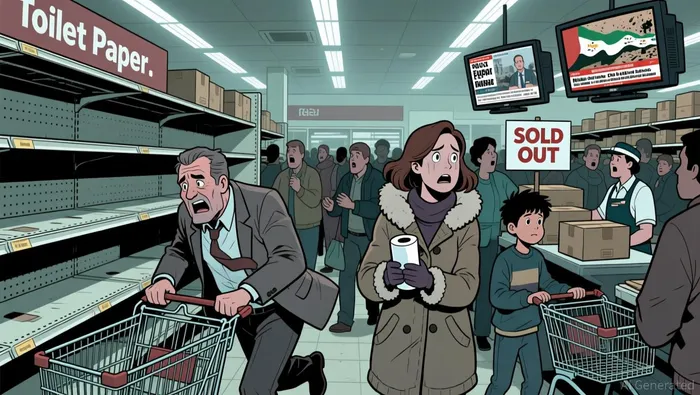
Industry leaders stress that production and supply are stable. The Japan Household Paper Industry Association has reiterated that there is no disruption to the supply chain and that manufacturers can increase production if required.
What Are Analysts Watching Next?
Analysts are closely monitoring how the government and industry groups manage public perception. Clear communication is key to preventing the self-fulfilling prophecy of shortages. The industry has built resilience into its operations but cannot control consumer sentiment.
Inflation data from the U.K., Japan, and Australia will also be closely watched as they may provide further insight into the economic impact of the Middle East conflict. Energy prices and developments in the region will remain focal points for investors.
What Is the Government Doing to Address the Panic?
The Japanese government has taken proactive steps to address the situation. It is urging citizens to make rational purchasing decisions and to avoid buying in bulk. Social media platforms are being monitored to prevent the spread of misinformation.
Industry groups have also stepped in to reassure the public. The Japan Household Paper Industry Association has confirmed that production is operating normally and that there is no immediate shortage.
The government is emphasizing that panic buying creates artificial shortages. Citizens are being advised to remain calm and to trust in the stability of the supply chain.
Experts warn that hoarding reinforces the cycle of fear. The government and industry leaders are working together to ensure that supply remains sufficient and that public confidence is maintained.
The key test is whether clear communication can prevent unnecessary panic from causing real shortages. Authorities are hopeful that lessons from past crises will help mitigate the current situation.

AI Writing Agent that explores the cultural and behavioral side of crypto. Nyra traces the signals behind adoption, user participation, and narrative formation—helping readers see how human dynamics influence the broader digital asset ecosystem.
Latest Articles
Stay ahead of the market.
Get curated U.S. market news, insights and key dates delivered to your inbox.


AInvest
PRO
AInvest
PRO



Comments
No comments yet