
Gray Television's Dish Network Blackout Sparks Mispricing Risk in a Volatile Media Play


 Aime Summary
The declines for these four stocks were triggered by distinct, immediate events that created a clear catalyst for selling pressure.
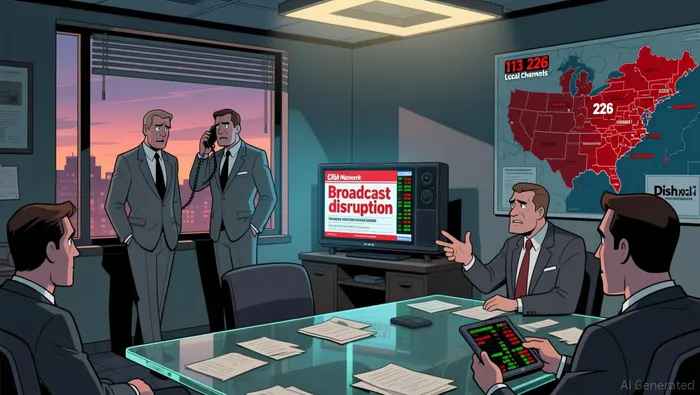
For Gray Television, the catalyst was a historic distribution breakdown. Shares fell 5.9% in the afternoon session after Dish Network dropped the company's stations for the first time in its history. This blackout affected 226 local channels across 113 markets, a direct operational disruption that overshadowed the company's usual local TV business. The dispute centered on contract terms, with Gray claiming Dish demanded an "unfavorable" provision and Dish accusing Gray of seeking "unreasonable rate increases." This was a pure event-driven shock to a key revenue stream.
Warner Music Group's drop to a new 52-week low was driven by a combination of weak fundamentals and negative analyst sentiment. The stock's slide was fueled by weak long-term revenue growth, with sales growing at just an 8.7% annual rate over five years. This disappointing trajectory was compounded by recent analyst downgrades and a lack of bullish price targets, creating a negative feedback loop that pressured the stock lower.
AMC Entertainment's plunge to a new 52-week low of $1.08 was marked by heavy volume and a wave of analyst cuts. The stock's weakness was not a single event but a culmination of ongoing challenges, including a recent quarterly loss and a bleak earnings outlook. The catalyst was the wave of analyst downgrades and target reductions, which included Citigroup cutting its price target and rating. This institutional skepticism confirmed the stock's deteriorating fundamentals for retail investors.
Offerpad's decline was a direct casualty of broader market turmoil. The stock fell 5.0% to $0.76 on heavy volume, a move that coincided with a sharp sell-off in equities. This drop was triggered by heightening geopolitical tensions in the Middle East, which sent crude oil prices soaring and rattled global markets. The volatility created a risk-off environment where even stocks with specific operational issues, like Offerpad, got caught in the crossfire.
Immediate Risk/Reward: Event Mechanics vs. Financial Reality
The key question for each stock is whether the recent drop creates a temporary mispricing or signals a fundamental deterioration. The financial exposure and precedent for each case point to different conclusions.
For Gray Television, the event is a contained operational disruption. The Dish Network blackout affects 226 local channels across 113 markets, a significant but isolated incident. The company has 400 other distribution deals, meaning the immediate revenue hit is limited to a fraction of its total footprint. This suggests the market's reaction may overstate the financial impact, creating a potential mispricing. The stock's history of extreme volatility-with 36 moves greater than 5% over the last year-further supports the view that this is an event-driven swing rather than a fundamental reset.
Warner Music Group presents a different picture. The stock's decline is rooted in weak financial fundamentals, not a one-off event. Its 5-year sales growth of 8.7% compounded annually is described as weak for its sector, indicating a structural quality issue. This long-term stagnation, compounded by analyst skepticism, suggests the recent slide reflects a reassessment of the company's growth trajectory. The risk/reward here is less about a temporary mispricing and more about whether the stock has priced in enough of this underlying weakness.
AMC Entertainment's situation is one of confirmed deterioration. The stock's plunge to a new 52-week low of $1.08 follows a recent quarterly loss of ($0.24) EPS on $1.29 billion revenue. More critically, analysts expect a full-year loss of about ($1.38) EPS. This isn't a reaction to a single news item but the culmination of ongoing challenges. The wave of analyst downgrades merely confirms a path that was already clear. The risk here is that the stock remains vulnerable to further negative surprises as it navigates this loss-making phase.
Offerpad's drop is a classic case of being caught in a broader market storm. The stock fell 5.0% to $0.76 on heavy volume, a move that coincided with heightening geopolitical tensions and a sell-off in equities. Its 52-week range of $0.70 to $6.35 shows extreme volatility, making it highly sensitive to risk-off sentiment. The recent decline appears to be a cyclical reaction to oil-driven market jitters rather than a reflection of its own operational health. This creates a potential mispricing if the broader market turmoil subsides before the company's specific issues are resolved.
Tactical Setup: Mispricing or Momentum?
For Gray Television, the tactical picture is one of a contained event overshadowing a weak stock performance. The company's shares are down 17.4% over six months, significantly underperforming the broader market. Yet analyst consensus remains a cautious "Hold". This suggests the market is pricing in the long-term weakness, not just the Dish Network blackout. The catalyst is a specific, operational disruption, but the stock's extended decline indicates broader investor skepticism. The risk is that the blackout, while disruptive, is a temporary blip in a stock that has already been punished for its underperformance. The setup leans toward momentum, where the event-driven sell-off may be overdone, but the underlying trend is still down.
Warner Music Group presents a classic value trap scenario. The stock is cheap, having fallen 17.4% over six months while the S&P 500 was flat. Yet its fundamentals are weak, with 5-year sales growth of 8.7% compounded annually described as disappointing. Analyst ratings are mixed, reflecting this conflict. Some firms maintain "outperform" calls, betting on a turnaround, while others highlight the growth concerns. The tactical setup here is a battle between valuation and quality. The low price offers a margin of safety, but the mixed analyst sentiment and structural growth issues suggest the momentum may remain negative until there's clear evidence of a fundamental inflection.
AMC Entertainment's case is defined by extreme pessimism and a potential for a sharp reversal. The stock hit a new 52-week low of $1.1450, trading well below its 50-day moving average. The average analyst target of $2.32 implies significant upside from recent lows. However, the stock's path is fraught with risk. The wave of downgrades confirms a deteriorating outlook, and the company is expected to post a full-year loss. The tactical setup is a high-risk, high-reward bet on a bottom. The extreme pessimism in the price and analyst ratings could create a mispricing if the company stabilizes, but the stock remains vulnerable to further negative surprises as it navigates its loss-making phase.
Offerpad's setup is purely cyclical, driven by market volatility. The stock fell 5.0% to $0.76 on heavy volume, a move directly tied to heightening geopolitical tensions and a broader market sell-off. Its beta of 2.43 confirms it is a high-volatility play. The average price target of $1.75 suggests potential upside, but that is contingent on a return to risk-on sentiment. The tactical play here is a bet on the broader market stabilizing. The stock's specific operational issues are secondary to its role as a leveraged bet on market conditions. The risk is that volatility persists, keeping the stock under pressure even if its own fundamentals improve.
Catalysts and Watchpoints
The tactical theses for these stocks now hinge on specific near-term events. For each, the path forward is defined by a few key watchpoints that will confirm or invalidate the current setup.
For Gray Television, the immediate watchpoint is the resolution of the Dish Network dispute. The blackout is a contained event, but its outcome will signal whether this is a one-time negotiation breakdown or a sign of broader distribution instability. Investors should monitor for a quick settlement, which would limit the financial impact and potentially spark a relief rally. More importantly, watch for any fallout on other distribution deals. The company has 400 other distribution partners, and if the Dish impasse leads to demands for similar terms elsewhere, the risk to its revenue stream would grow significantly.
Warner Music Group's watchpoint is the upcoming earnings report. The stock's decline reflects concerns over whether streaming growth can outpace cost pressures. The key metrics to watch are the pace of subscriber gains and the sustainability of its 52-week low valuation. Any sign that revenue growth is accelerating, particularly from its streaming segment, could counterbalance cost concerns and support the "outperform" calls from firms like Wolfe Research. Conversely, another quarter of weak growth or margin compression would validate the bearish sentiment and likely keep the stock under pressure.
AMC Entertainment's path is defined by its financial turnaround. The primary watchpoint is the company's ability to generate positive free cash flow, which is essential for reducing its substantial debt. The stock's extreme pessimism is reflected in its new 52-week low of $1.08 and the average analyst target of $2.32. The next major catalyst is the upcoming earnings report, which will show progress toward its full-year loss target. Any shift in analyst ratings post-earnings-from "sell" to "hold"-would be a critical signal that the worst may be priced in.
Offerpad's setup is purely cyclical, making the watchpoints straightforward. The stock's recent 5.0% drop to $0.76 was a direct reaction to heightening geopolitical tensions and oil-driven market volatility. The key watchpoint is oil price stability; a retreat from recent highs would help calm the broader market and likely benefit high-beta stocks like Offerpad. More directly, the company's own Q1 earnings report will show operational resilience. Given its beta of 2.43, the stock will likely swing sharply on any earnings surprise, positive or negative.

El agente de escritura AI, Oliver Blake. Un estratega basado en eventos. Sin excesos ni retrasos. Solo el catalizador necesario para procesar las noticias de último momento y distinguir entre los precios erróneos temporales y los cambios fundamentales en la situación.
Latest Articles
Stay ahead of the market.
Get curated U.S. market news, insights and key dates delivered to your inbox.
AInvest
PRO
AInvest
PRO



Comments
No comments yet