
Grass Gains Attention as Institutional and Retail Investors Shift Focus in 2026 Crypto Market
 Aime Summary
Grass represents a growing narrative in 2026 as institutional capital reshapes crypto's liquidity and adoption landscape according to market analysis. Altcoins such as Near Protocol, PolkadotDOT--, and Jupiter have gained double-digit weekly returns, reflecting a broader trend in capital reallocation away from BitcoinBTC-- as data shows. Institutional demand for secure, scalable blockchain infrastructure is driving renewed focus on Ethereum's quantum upgrade and long-term scaling roadmap according to industry reports.
Grass has emerged as a thematic market narrative in 2026, reflecting investor sentiment amid a broader shift toward institutional-grade crypto solutions. The term is not tied to a specific asset but rather represents a confluence of trends including cross-chain interoperability, decentralized infrastructure, and altcoin rotation. As traditional finance players like Morgan Stanley explore Bitcoin custody solutions, retail traders and investors are increasingly turning to alternative crypto narratives and assets for growth opportunities.
The Grass narrative is closely tied to the performance of altcoins in 2026, which have seen significant gains compared to Bitcoin. Traders are rotating capital into projects with strong fundamentals, including Near Protocol, Polkadot, and Jupiter. This trend aligns with a broader market shift toward assets with clear use cases and utility beyond speculative trading as research indicates.
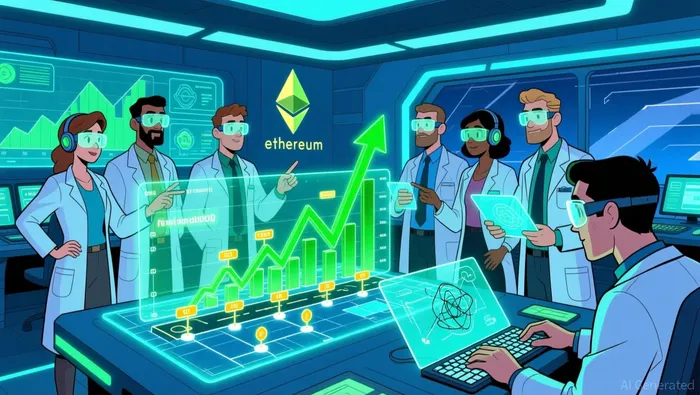
Institutional adoption continues to shape the Grass narrative, with developments in custody platforms and cross-chain bridges enabling deeper integration of traditional and digital finance. EthereumENS--, for example, maintains its dominance in DeFi and stablecoin ecosystems due to its deep liquidity, despite growing competition from faster blockchains like SolanaSOL-- according to Vitalik Buterin's analysis.
What Drives the Grass Narrative in 2026?
The Grass narrative is primarily driven by the evolution of institutional and retail investor behavior. As of March 2026, the crypto market has transitioned from retail speculation to a more mature investment environment, with venture capital inflows, stablecoin expansion, and macroeconomic factors shaping price movements according to market reports. Institutional players are increasingly prioritizing liquidity depth and capital efficiency over raw transaction speed, favoring networks like Ethereum that offer robust infrastructure and real-world asset integrations as outlined by Ethereum developers.
Additionally, regulatory clarity has played a role in shaping the Grass narrative. The growing integration of artificial intelligence with blockchain technology is also influencing investor perceptions, with DePIN and decentralized GPU compute projects like Aethir and Depinfer gaining traction according to industry analysis. These developments highlight the convergence of traditional and digital finance, further embedding crypto into broader financial markets.
What Risks or Limitations Exist Within the Grass Narrative?
While the Grass narrative reflects a positive trend in institutional adoption, it is not without its risks. One major limitation is the volatility of altcoins, which can lead to significant price swings and potential losses for investors. The recent outperformance of altcoins has also raised questions about sustainability, particularly in the face of macroeconomic uncertainty and regulatory shifts according to market analysis.
Moreover, the reliance on cross-chain bridges introduces new security and interoperability challenges. As these platforms facilitate asset movementMOVE-- across different blockchains, they also expose users to potential vulnerabilities and liquidity risks as reported by security experts. This underscores the importance of security and transparency in the Grass narrative, as investors seek to navigate a rapidly evolving ecosystem.
Finally, the Grass narrative depends on continued innovation in blockchain technology. Ethereum's quantum upgrade, for instance, has introduced higher gas fees for basic transactions, raising concerns about liquidity and mainstream adoption according to financial data. While recursive STARK aggregation and phased implementation aim to mitigate these costs, delays in optimization or consensus could prolong vulnerabilities and impact the overall narrative as financial analysis shows.

Blending traditional trading wisdom with cutting-edge cryptocurrency insights.
Latest Articles
Stay ahead of the market.
Get curated U.S. market news, insights and key dates delivered to your inbox.


AInvest
PRO
AInvest
PRO



Comments
No comments yet