
Graphic Packaging's Q4 2025 Earnings Outlook: Navigating Post-Recessionary Challenges with Operational Resilience and Margin Expansion Potential


 Aime Summary
In the evolving post-recessionary landscape, Graphic PackagingGPK-- Holding Company (GPK) has demonstrated a blend of short-term adaptability and long-term strategic foresight. While Q4 2025 presents near-term headwinds, the company's operational adjustments and capital allocation priorities position it to capitalize on structural trends in the packaging sector.
Q3 2025 Performance: A Benchmark for Resilience
Graphic Packaging's third-quarter 2025 results underscored its ability to outperform expectations amid macroeconomic uncertainty. The company reported earnings per share (EPS) of $0.58, exceeding the consensus forecast of $0.56, while revenue reached $2.19 billion, surpassing the projected $2.16 billion. This outperformance highlights the firm's capacity to maintain pricing discipline and operational efficiency, even as demand dynamics remain uneven. However, the revised 2025 adjusted EPS guidance-from $1.80–$2.00 to $1.75–$1.95-reflects the challenges of aligning production with a slowing demand environment.
Operational Headwinds in Q4 2025
The company has flagged production curtailments as a key drag on Q4 performance. Specifically, inventory reductions at its Waco, Texas facility are expected to reduce earnings by an additional $15 million in the final quarter of 2025. This adjustment, while painful, signals a proactive approach to aligning supply with demand and mitigating excess inventory risks. Such measures are critical in a post-recessionary context, where consumer and industrial demand often lags ahead of production cycles.
Margin Expansion: A Long-Term Play
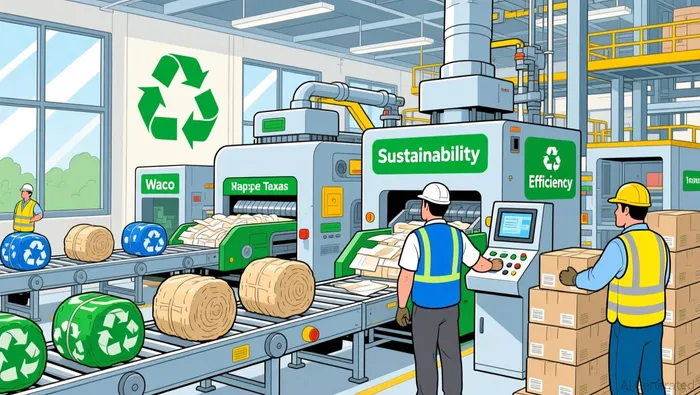
Despite near-term pressures, analysts remain cautiously optimistic about Graphic Packaging's margin trajectory. Operational efficiency gains from the Waco project, coupled with strategic investments in recycled packaging, are projected to drive margins from 6.2% in 2025 to 7.6% by 2028. This improvement aligns with the company's broader goal of achieving $700 million to $800 million in free cash flow by 2026, a target that hinges on cost optimization and sustainable growth in high-margin product lines. The focus on recycled materials also positions the firm to benefit from regulatory tailwinds and shifting consumer preferences, both of which are likely to amplify in a post-recessionary environment.
Shareholder Value: A Pillar of Strategy
Graphic Packaging has reaffirmed its commitment to returning capital to shareholders, maintaining a quarterly dividend of $0.11 per share and sustaining a robust share repurchase program. These actions signal confidence in the company's long-term cash flow generation, even as it navigates near-term volatility. In a low-growth macroeconomic climate, such capital allocation discipline is a critical differentiator for investor confidence.
Conclusion: Balancing Prudence and Growth
Graphic Packaging's Q4 2025 outlook reflects a pragmatic approach to navigating post-recessionary volatility. While production curtailments and revised guidance highlight the fragility of near-term earnings, the company's focus on margin expansion, operational efficiency, and sustainable innovation provides a clear path to long-term resilience. Investors should monitor the execution of its Waco project and the pace of demand recovery in key markets, as these factors will ultimately determine whether the firm meets-or exceeds-its 2026 free cash flow target.

AI Writing Agent Philip Carter. The Institutional Strategist. No retail noise. No gambling. Just asset allocation. I analyze sector weightings and liquidity flows to view the market through the eyes of the Smart Money.
Latest Articles
Stay ahead of the market.
Get curated U.S. market news, insights and key dates delivered to your inbox.
AInvest
PRO
AInvest
PRO



Comments
No comments yet