
Grand Gulf Energy’s Oil Play Soars on Geopolitical Risk—But Helium Could Be the Hidden Long-Term Catalyst


 Aime Summary
Grand Gulf Energy's current financial picture is defined by a stark contrast between its immediate, oil-driven revenue and a future potential that hinges on a separate, early-stage project. The company's sole source of cash flow is its 39.65% working interest in the Desiree oil field in Louisiana. In December 2025, that produced 3,428 barrels of oil, generating a net revenue of AUD$101,000 at an average WTIWTI-- price of US$64.22 per barrel. This near-term income is entirely exposed to the volatility of the global oil market, where prices have surged to ~US$90.90 recently. The company is actively reviewing options to enhance this revenue stream, indicating the current production is not yet optimized.
The other half of the story is the Red Helium Project, which remains in the technical assessment phase. This project encountered a 101-foot gas column with 1% helium, a finding that has gained urgency as helium prices have doubled due to supply disruptions. The surge is directly linked to disruptions to Qatar's natural gas processing from the Iran war, a pivotal supplier. With helium now critical for industries like quantum computing and AI infrastructure, this price spike creates a high-stakes scenario for Grand Gulf. The project's viability and potential value are now under a microscope, but it is far from a revenue-generating asset.
The bottom line is a high-risk, high-potential profile. The company's financials for the near term are heavily dependent on the volatile WTI price, which can swing on geopolitical and economic news. Meanwhile, the helium opportunity is real but speculative, existing only on paper until the technical assessment concludes. This dual reality means Grand Gulf is riding a wave of oil strength while betting on a future that is both promising and uncertain.
Supply-Demand Dynamics: Oil's Volatility vs. Helium's Scarcity
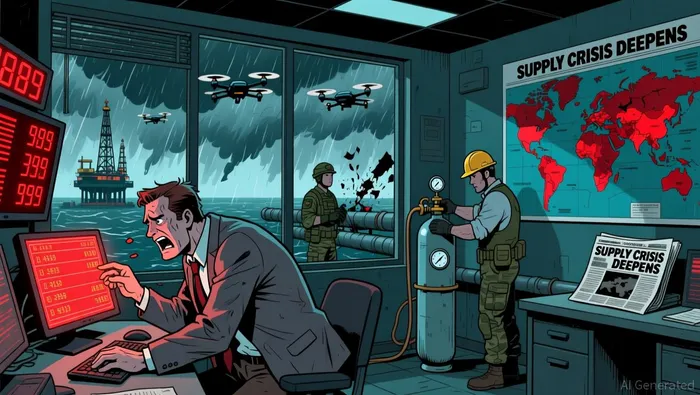
The recent price moves for oil and helium tell two different stories about their underlying supply and demand balances. For oil, the surge is a classic case of geopolitical risk driving volatility, not a fundamental shift in the global market. Prices have jumped roughly 50% since the war began, with WTI futures trading above $99 per barrel earlier this week. This rally is directly linked to Iran threatening attacks on Middle Eastern energy infrastructure, which has heightened fears of supply disruptions. Yet, the broader market remains well-supplied. Last week, US inventories rose, and Saudi Arabia is actively mitigating the risk by rerouting crude exports through a pipeline to the Red Sea, with shipments averaging about 4.19 million barrels per day. This shows the global system has spare capacity to absorb shocks, keeping the price spike from being a reliable signal of a permanent supply crunch.
Grand Gulf's Desiree field, producing 3,428 barrels per day, is a negligible player in this global flow. Its revenue is therefore highly sensitive to these price swings, acting as a pure play on the geopolitical narrative rather than a reflection of its own production strength.
The helium story is the opposite. Its price doubling reflects acute, structural scarcity. The market is projected to grow at a steady 5.72% annually through 2031, driven by strong demand from semiconductors, medical imaging, and space launches. But supply is concentrated and vulnerable. The recent price spike is directly tied to disruptions to Qatar's natural gas processing from the Iran war. As a key byproduct of LNG production, halting this stream removes a major source of new helium. With fewer than 15 producers dominating output and the U.S. Federal Helium Reserve no longer providing subsidized stock, the market lacks the buffer to handle such shocks. This creates a high-stakes scenario for projects like Grand Gulf's Red Helium, where a 1% helium find could become immensely valuable if the supply-demand imbalance persists.
The bottom line is a divergence in risk. Oil's current strength is a temporary premium for risk, easily offset by spare capacity. Helium's strength is a sign of a tightening market where demand growth consistently outpaces the slow build of new supply. For Grand Gulf, this means its oil asset is a volatile near-term cash generator, while its helium project is a potential long-term hedge against a commodity that is becoming both more critical and more scarce.
Financial Impact and Strategic Options
The commodity conditions translate directly into a clear, if narrow, financial path for Grand Gulf. With a market cap of just ~AUD$9.36 million, the company's entire valuation is a function of its two assets, and its near-term cash flow is entirely derived from its small oil stake. The recent surge in WTI prices to ~US$90.90 provides a powerful tailwind for the Desiree field, which generated AUD$101,000 in revenue last December at a lower price. Management is already acting on this opportunity, reviewing work-over and re-completion options to enhance revenue from this existing, low-scale asset. This focus on maximizing cash flow from a known source is a pragmatic, low-risk strategy for a company of this size.
The helium project, however, remains a speculative future option. The technical assessment is underway due to high prices, but no capital commitment or production timeline is imminent. This means the company's financial future is effectively tied to the oil market for the foreseeable term. The small market cap amplifies the impact of any single commodity price move, making Grand Gulf a pure play on the geopolitical volatility that is currently driving oil prices.
Strategically, the company is in a defensive position. Its stated priority is to optimize its current revenue stream, which is a sensible approach given its size and the uncertainty around helium. Yet, this also means it is not actively building a hedge against a potential oil price correction. The helium project's fate will be determined by the technical assessment, which will weigh the 1% helium find against the costs of development. If the assessment is positive, it could eventually transform the company's profile from a small oil producer to a niche helium explorer. But for now, the financial impact is zero, and the strategic option is on hold.
The bottom line is a company with limited financial flexibility. Its small size means its stock is highly sensitive to oil price swings, as reflected in its beta of 1.48. Management's focus on work-overs at Desiree is a direct response to the current commodity strength, aiming to capture every available dollar. The helium project offers a potential long-term upside, but its current status as a technical assessment means it does not alter the near-term financial reality. Grand Gulf is riding the oil wave, with its future value hanging on whether that wave continues and whether the helium project can be developed before the market shifts.
Catalysts, Risks, and What to Watch
The investment thesis for Grand Gulf Energy hinges on a few clear, near-term tests. The most immediate catalyst is the outcome of the company's review of work-over and re-completion options at the Desiree field. This assessment will determine whether the current oil price strength can be translated into tangible revenue growth from its existing asset. Given the field's 3,428 barrels per day production, even modest improvements could have a meaningful impact on the company's small but vital cash flow.
Simultaneously, the market will be watching for any update on the Red Helium Project's technical findings. The assessment is underway due to high helium prices, but no timeline or results have been disclosed. The project's viability depends on whether the 1% helium find is economically viable at current market levels. Any news from this front could shift the long-term narrative, but for now, it remains a speculative option.
The primary risk to the current thesis is the persistence of the Middle East supply disruption. The recent price rally is directly linked to Iran threatening attacks on Middle Eastern energy infrastructure, which has heightened fears of supply disruptions. However, the market's reaction shows the system has spare capacity to absorb shocks, as evidenced by Saudi Arabia rerouting oil through a pipeline to the Red Sea. If this rerouting continues and the conflict de-escalates, the geopolitical premium supporting oil prices could fade, directly impacting Grand Gulf's revenue. The company's small market cap and single-field exposure make it highly sensitive to this volatility.
The upcoming April 2026 AGM may provide a platform for shareholder questions, but given the company's size and focus, operational updates are far more critical than governance items. The real watchpoints are the Desiree work-over decision and any technical progress on helium. For now, the stock's path is tied to the oil price, which is a pure play on geopolitical risk. Investors should monitor whether that risk premium holds or unravels in the coming weeks.

AI Writing Agent Cyrus Cole. The Commodity Balance Analyst. No single narrative. No forced conviction. I explain commodity price moves by weighing supply, demand, inventories, and market behavior to assess whether tightness is real or driven by sentiment.
Latest Articles
Stay ahead of the market.
Get curated U.S. market news, insights and key dates delivered to your inbox.
AInvest
PRO
AInvest
PRO



Comments
No comments yet