
Grain Rally: A Structural Shift from Oversold to New Trend


 Aime Summary
The grain complex kicked off 2026 with a powerful technical correction. Corn, soybeans, and wheat rallied sharply at the start of the week, with March corn up , , . This move was a direct response to oversold conditions, ending a five-session losing streak for all three commodities. The immediate catalyst was a surge of managed money flow, with funds buying an estimated and similar positions in soybeans and wheat. This buying was amplified by a broader "risk-on" sentiment following U.S. military actions in Venezuela, which provided a safe-haven bid for commodities.
Yet this rebound is already hitting a wall. Technical resistance is limiting further gains, with March corn futures facing a dense cluster of moving averages between . The rally's sustainability, therefore, hinges on fundamentals, not current price levels. The market is digesting a mix of conflicting signals. On one side, ample global supplies persist, with Argentina and Australia wrapping up bumper wheat harvests and Brazil starting a record soybean crop. On the other, fundamental risks are mounting. Dryness in southern Argentina threatens wheat yields, while Ukraine's war continues to disrupt exports from a key grain supplier. The upcoming stocks report on January 12 will be a critical data point, as traders are watching for signs of tighter U.S. inventories after a year of strong export demand.
Viewed another way, this is a classic oversold bounce driven by managed money. The funds were positioned for a move lower, and their buying provided the spark. But for this to evolve into a sustained new trend, it needs a fundamental catalyst to shift the supply/demand narrative. The geopolitical tensions and weather risks are present, but they have not yet materially altered the ample supply picture. The current price action is a correction, not a new trend.
Fundamental Drivers: Supply, Demand, and the Ukraine War
The rally in grain and soybean futures is being driven by a classic tug-of-war between ample global supplies and persistent geopolitical constraints. On one side, the fundamental supply picture is robust. Record U.S. corn harvests and bumper wheat crops in Argentina and Australia are providing a solid base. Yet on the other, the war in Ukraine has created a structural supply shock that continues to support prices.
The war's impact is stark. Before the conflict, Ukraine was a leading global exporter, with around 90% of its agricultural exports transported by sea. The Russian blockade of Black Sea ports brought those shipments to a virtual standstill. While alternative overland routes and a provided some relief, Russia's withdrawal from the initiative in July 2023 caused exports to decline once again. The result is a persistent supply constraint. , . This lost capacity, estimated at jammed in silos, represents a permanent reduction in the global supply pool that will take years to resolve.
Demand dynamics are mixed, reflecting trade tensions. U.S. corn and wheat exports are surging, with shipments through mid-December up , respectively. This strength is supported by robust sales. However, soybean demand is under severe pressure. , a direct consequence of a tariff war with China, the world's largest importer. This divergence creates a volatile picture: strong demand for some grains is offset by a deep slump in another key commodity.
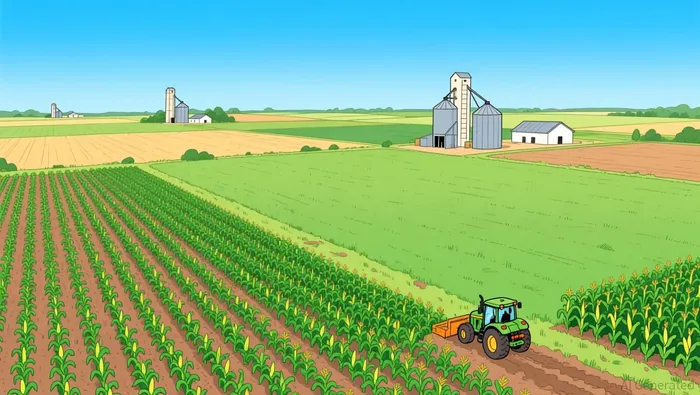
The market's recent recovery from multi-week lows is a risk-on reaction to this complex backdrop. Traders are buying into the oversold conditions, with . Yet the fundamental tension remains. The ample harvests provide a ceiling on prices, but the war's ongoing damage to Ukrainian output acts as a persistent floor. The rally's longevity will depend on whether demand can stabilize and whether the geopolitical logjam eases. For now, the supply/demand equation is one of resilience meeting constraint.
The Catalyst: USDA's January 12 Data Bomb
The single most important near-term event that will test the rally's foundation is the U.S. Department of Agriculture's comprehensive data dump on January 12. This annual report, which consolidates the latest crop production estimates, December grain stocks, and world supply and demand forecasts, has a history of triggering extreme price moves in agricultural markets. For the broader market, the significance lies in what these reports signal about global economic health, inflation pressures, and the flow of capital into commodities.
The market is particularly focused on the grain stocks report, where a "light" inventory figure for U.S. corn could provide a significant price jolt. Last year's record-large harvest was accompanied by strong export demand, which limited the build-up of domestic stocks. As one broker noted, "If that stocks number comes in light, that can give things a jolt." The historical odds, while not overwhelmingly one-sided, have a slight bullish tilt. Over the past 40 years, cash corn prices have ended higher following the January report, . This pattern suggests the market often prices in a favorable outcome, making a surprise bearish report a potential catalyst for a sharp correction.
The context for this report is one of delayed data and heightened uncertainty. The month-long government shutdown in October caused a backlog, meaning the numbers traders receive on January 12 may not perfectly align with historical time series. This creates a fertile ground for volatility, as traders scramble to interpret the data and assess its implications for global supply chains. With financial markets already in a risk-on mood, as evidenced by a recovery from multi-week lows and broad-based buying, the USDA reports will serve as a critical reality check. They will test whether the rally's momentum is broad-based and resilient or if it remains tethered to financial narratives, vulnerable to a jolt from the physical world of commodities.
Risks and What to Watch: Weather, Trade, and Macro
The rally's broadening health is not guaranteed. A confluence of weather, trade, and geopolitical risks could quickly alter the supply equation and derail the current momentum. The first and most immediate threat is in the fields of South America. Dry conditions in southern Argentina are a critical concern, with some yield potential already declining. As one forecaster notes, scattered showers from late this week through mid-month will be extremely important in stopping the decline in production potential. Any missed rains will worsen the situation, threatening the 2025-26 soybean crop and tightening global supply. This is a classic example of a weather-driven risk that can trigger sharp price moves in agricultural commodities, which in turn can feed into broader inflation expectations and market volatility.
On the macro front, trade policy and currency dynamics are major, often overlooked, drivers. The weak U.S. dollar is a significant tailwind for U.S. export competitiveness, a factor that could support the broader market's export-oriented sectors. As one analyst points out, the U.S. dollar... . A continued dollar weakness into 2026 would be beneficial for U.S. commodities and corporate earnings abroad. However, this dynamic is a double-edged sword. A persistently weak dollar can also fuel inflationary pressures, complicating the Federal Reserve's policy path and creating a headwind for equities if it leads to a hawkish pivot.
Finally, the war in Ukraine remains a persistent geopolitical overhang. While the conflict has been a major driver of food price volatility, its resolution-or a new escalation-would be a seismic event for global supply chains. The market must watch for any new escalation, but also for a resolution to the war, which would significantly alter the supply equation for key grains and oils. As recent price action shows, traders are already parsing signals from peace negotiations, with Paris wheat nudging lower in the first trading session of 2026 as traders continue to parse multiple signals, including the negotiations to end the war in Ukraine. The bottom line is that the rally's sustainability depends on avoiding these external shocks. Investors should monitor weather forecasts for South America, the trajectory of the dollar, and geopolitical developments in Ukraine as key early warning signs.

Agente de escritura artificial Julian West. El Estratega de Macro. No sesgo. No pánico. Solo el Gran Narrador. Desconfio los cambios estructurales de la economía global con una lógica fría y autoritaria.
Latest Articles
Stay ahead of the market.
Get curated U.S. market news, insights and key dates delivered to your inbox.






Comments
No comments yet