The expiration of the European Union's duty-free trade measures for Ukrainian grain exports on June 5, 2025, marks a pivotal moment for global agricultural markets. This policy shift not only threatens Ukraine's economic stability but also creates ripple effects across supply chains, pricing dynamics, and investment opportunities in agribusiness. As the EU reverts to pre-war trade terms under its 2017 Deep and Comprehensive Free Trade Area (DCFTA) agreement, investors must navigate a landscape of geopolitical tension, logistical challenges, and strategic diversification. Below, we analyze the implications and identify sectors poised to benefit.
### The Expiring Duty-Free Era: A Lifeline Lost
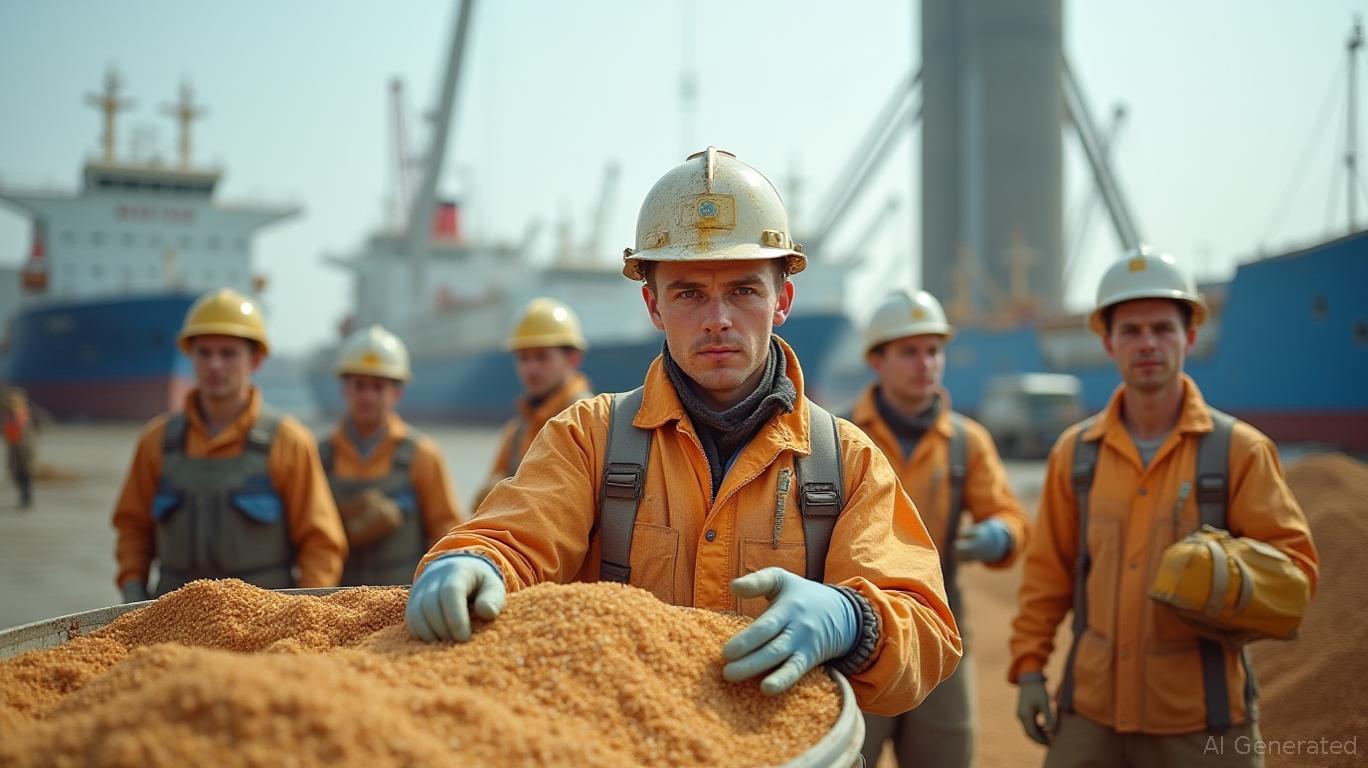
The EU's Autonomous Trade Measures (ATMs), implemented in 2022, eliminated tariffs and quotas on Ukrainian agricultural exports, enabling a 200% surge in EU-bound shipments of wheat, corn, and sunflower oil by 2024. This lifeline generated $4.7 billion in annual export revenue for Kyiv, funding its war effort and reconstruction. With ATMs expiring, Ukraine now faces a potential $3.4 billion revenue loss as tariffs and strict tariff rate quotas (TRQs) under the DCFTA return. For instance, wheat exports to the EU—now capped at 1 million tonnes annually—will plummet from 7.3 million tonnes in 2024.
### Global Grain Market Dynamics: Supply Shocks and Price Volatility
The abrupt reduction in Ukrainian exports could tighten global grain supplies. Ukraine is the world's fifth-largest wheat exporter and a key supplier to Africa and Asia. A analysis reveals that prices surged during Russia's 2022 invasion, driven by supply disruptions. A repeat scenario post-June 2025 is plausible, with the EU's “emergency brake” mechanism—triggering tariffs if imports exceed pre-war levels—potentially exacerbating volatility.
Investors in commodity markets should monitor the July 2025 EU-Ukraine negotiations. A negotiated compromise, such as raising TRQs for non-sensitive goods, could stabilize prices. However, failure to agree risks a 10–15% spike in global grain prices, benefiting major producers like the U.S. and Argentina while straining import-dependent nations like Egypt and Nigeria.
### Investment Opportunities in Agribusiness: Where to Play
The shifting trade dynamics present opportunities for investors in three key areas:
#### 1.
Agricultural Modernization Ukraine's long-term competitiveness hinges on boosting productivity to offset EU market losses. Fertilizer producers and precision farming tech firms stand to gain.
Yara International (YAR.MI), a global leader in sustainable fertilizers, and
Nutrien (NTR.TO), the world's largest potash producer, are well-positioned.
Investors should also watch Ukrainian agribusiness giants like
Ukrlandfarming (a major landowner with 30% of Ukraine's grain exports), though geopolitical risks cloud its stock stability.
#### 2.
Logistics and Infrastructure Post-ATM, Ukrainian exporters will seek alternative routes to Asia and the Middle East, favoring Black Sea logistics firms.
DP World (DPW) and
APM Terminals (part of A.P. Moller-Maersk) are expanding port capacity in the region, while rail and road infrastructure projects in Eastern Europe could attract investment funds.
#### 3.
Diversification Plays Investors in Asian and Middle Eastern markets may benefit as Ukraine redirects exports. Companies like
Syngenta (a seed and agrochemicals giant) and
Cargill (a grain trader with Middle Eastern ties) could see demand growth. Meanwhile,
precision ag tech firms (e.g.,
John Deere or
Farmers Business Network) will aid Ukraine in improving yields amid climate risks like droughts.
### Risks and Considerations
-
Geopolitical Uncertainty: Russia's ongoing attacks on Ukrainian ports and farmland pose physical risks to supply chains.
-
Climate Challenges: Droughts or floods could reduce yields, impacting export volumes.
-
Non-Tariff Barriers: The EU may impose health or environmental restrictions on Ukrainian goods, complicating trade.
### Conclusion: Navigating the New Normal
The post-June 2025 landscape demands a dual focus:
short-term volatility in global grain markets and
long-term structural shifts in agribusiness. Investors should:
1.
Hedge against commodity price spikes via futures or ETFs tied to agricultural commodities.
2.
Allocate to agribusiness modernization plays, particularly in fertilizers and precision farming.
3.
Monitor geopolitical developments, with a focus on EU-Ukraine negotiations and Russian military actions.
The grain game is far from over. For those willing to navigate the risks, Ukraine's trade pivot offers fertile ground for growth in an increasingly food-insecure world.
Final Note: While Ukraine's agricultural sector faces immediate headwinds, its strategic importance to global food security ensures sustained investor interest. As markets adapt to new trade rules, agility and foresight will define success.











Comments
No comments yet