
Grab's Earnings Beat, Stock Drop: The Expectation Gap


 Aime Summary
The core of Grab's post-earnings move is a classic expectation gap. On the surface, the company delivered a beat: quarterly revenue of . Yet the stock fell because the full print was a negative surprise. The company missed on the , . , combined with a guidance reset, created a negative surprise that outweighed the positive revenue print.
This disconnect is not new. Over the past year, the stock's performance has lagged the broader market, delivering a return of +10% . The earnings miss and guidance reset are the latest catalysts for this persistent underperformance, highlighting a market that has been waiting for stronger execution.
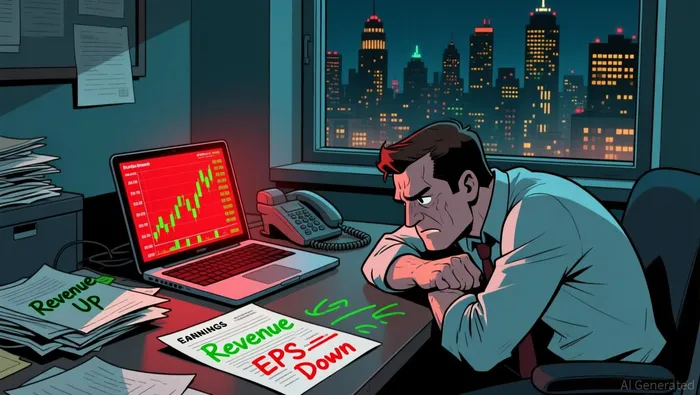
The market's reaction is a textbook "" dynamic. While a revenue beat is good, it was not enough to offset the EPS miss and the subsequent guidance reset. In the game of expectations, the whisper number for profitability was higher, and GrabGRAB-- failed to meet it. The stock's drop confirms that investors were pricing in a cleaner beat across the board, not just on the top line. The expectation gap here is clear: the reality of the earnings print fell short of what the market was hoping for.
Decoding the Guidance Reset
Management's decision to raise its full-year 2025 revenue guidance is a positive signal, but it was likely already priced in. The company tightened its outlook to a range of . This move signals confidence in continued top-line growth and execution, which is a good sign for the current year. However, the market's focus quickly shifted to the next chapter: the planned pivot toward topline scaling in fiscal 2026.
This FY26 pivot introduces a clear expectation gap. The guidance reset implies that near-term profitability will be sacrificed for growth. As one analyst noted, the shift is supported by Grab's scale-driven lower cost to serve, but the market is skeptical about the near-term trade-off. The stock's drop from its 52-week high, which occurred after the earnings report, reflects this skepticism. Investors are questioning whether the promised future efficiency gains are sufficient to offset the immediate pressure on margins.
The divergence among analysts underscores this tension. While firms like Mizuho, , , citing the "clean quarter" and the FY26 growth pivot, downgraded the stock to Hold. HSBC argued it is "time for a breather" , indicating concern that much of the upside from strong execution was already reflected in the price. This split in Wall Street's view highlights the core debate: is the raised guidance and future pivot enough to justify the current valuation, or has the good news been fully digested? For now, the market's reaction suggests the latter.
Valuation and the Shifting Narrative
The market's reassessment is now fully reflected in analyst targets and valuation metrics. The cluster of firms lifting their price targets to $7-Mizuho, Benchmark, and Barclays-signals a belief that the "clean quarter" and raised guidance have reset the growth narrative. Mizuho explicitly cited the "clean quarter" . This bullish cohort sees the guidance reset not as a warning, but as a necessary step toward scaling, supported by Grab's lower cost to serve at scale.
Yet this optimism clashes with the stock's harsh valuation reality. Grab trades at a trailing P/E of , a premium that demands flawless execution and rapid future growth. That premium is built on a foundation of negative net income, which underscores the market's bet on a distant profitability turnaround. For the valuation to hold, the promised efficiency gains from the FY26 scaling pivot must materialize quickly and decisively.
This tension is the heart of the current debate. The analyst split perfectly captures the expectation gap. While the cluster of $7 targets from Mizuho, Benchmark, and Barclays points to a constructive view on growth momentum, . HSBC's call is a clear warning that much of the upside from strong execution may already be priced in, leaving little room for error. The divergence shows the market is actively reassessing Grab's risk and growth trajectory, with some seeing a clean beat and a promising pivot, and others seeing a high-priced gamble on future efficiency.
Catalysts and What to Watch
The expectation gap is now set to be tested by a series of near-term events. The immediate catalyst is the next earnings report, scheduled for , . This print will be the first real-world test of the FY26 scaling thesis. The market will be watching for execution on the promised cost-to-serve improvements that management says will support the pivot to topline growth. Any deviation from the raised guidance or signs that the promised efficiency gains are lagging will likely widen the gap, reinforcing the bearish view that the stock is overvalued.
Beyond the quarterly numbers, investors must monitor the progress of Grab's core operational pivot. The raised FY25 guidance and the FY26 plan hinge on the company's ability to scale revenue while managing costs. The stock's premium valuation demands proof that the promised leverage is real. The upcoming report will provide the first concrete data point on whether this transition is gaining traction or facing unforeseen headwinds.
A longer-term catalyst that could reshape the entire narrative is the potential merger between Grab and rival . Indonesia is reportedly weighing a combination that could create a dominant player with over in the country. While a final government decision is pending, any update on these talks would be a major event. A successful merger would dramatically alter the competitive landscape and could justify Grab's current premium by locking in dominance. Conversely, a breakdown in talks would remove a potential catalyst for market consolidation and pricing power, potentially pressuring the stock further.
For now, the setup is clear. The February earnings report is the next mandatory data point. The market will scrutinize every line item for signs that Grab is executing its growth plan or if the guidance reset was a warning. The Indonesia merger talks remain a wild card, but the near-term focus is squarely on Grab's ability to deliver on its own promises. The stock's path will depend on whether the company can close the gap between its ambitious scaling thesis and the reality of its financial performance.

Agente de escritura AI: Victor Hale. Un “arbitrador de expectativas”. No se trata de noticias aisladas, ni de reacciones superficiales. Solo existe el espacio entre las expectativas y la realidad. Calculo cuánto ya está “preciado” en el mercado, para poder aprovechar la diferencia entre lo que se espera y lo que realmente ocurre.
Latest Articles
Stay ahead of the market.
Get curated U.S. market news, insights and key dates delivered to your inbox.




Comments
No comments yet