
Grab's Cautious Approach to AI and Self-Driving Cars
Generated by AI AgentHarrison Brooks
Thursday, Feb 20, 2025 4:59 am ET2min read
GRAB--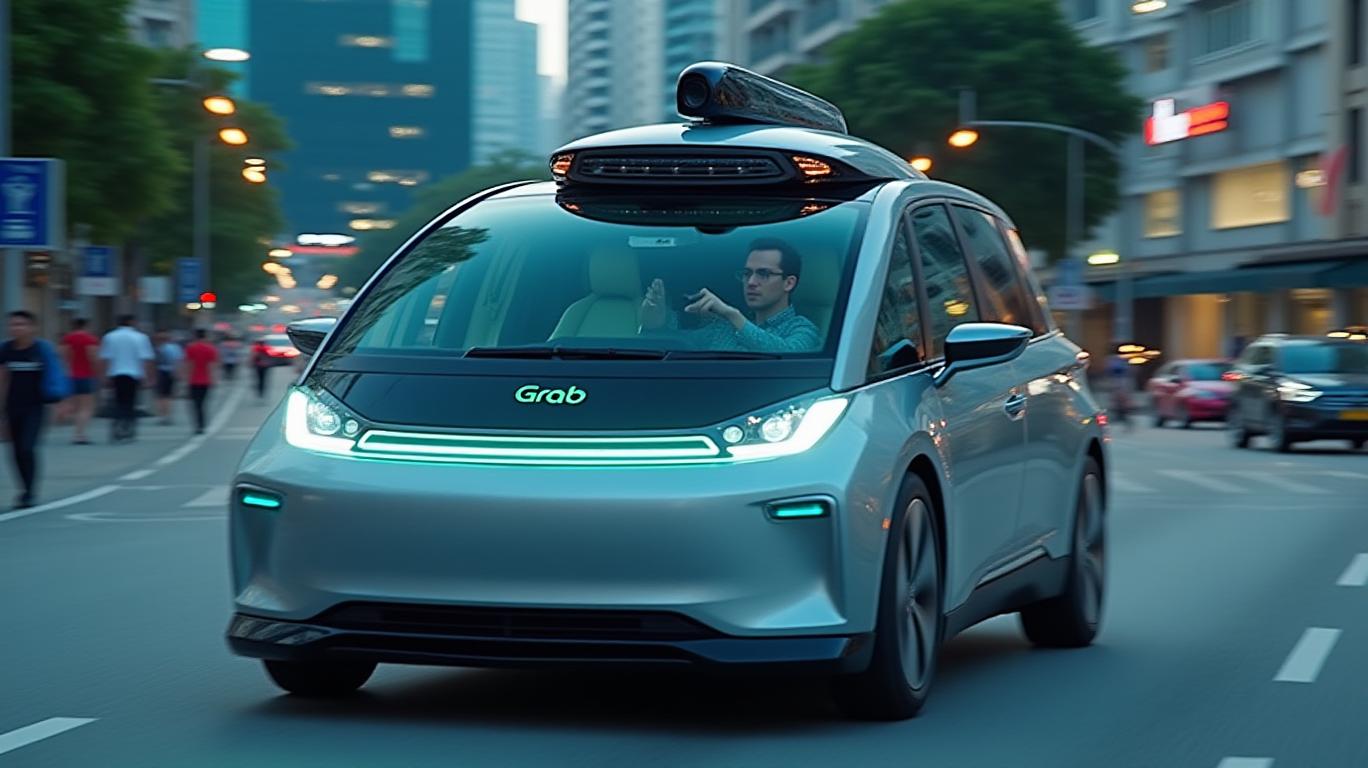
Grab, Southeast Asia's leading superapp, has taken a cautious yet strategic approach to integrating artificial intelligence (AI) and self-driving cars into its services. By focusing on safety, reliability, and local adaptation, Grab is positioning itself as a responsible leader in the region's ride-hailing market. This article explores Grab's strategies and the potential impact on its competitive position.
Grab's cautious approach to AI and self-driving cars is evident in its strategic partnerships and pilot projects, which aim to balance the potential benefits of these technologies with the risks and challenges they present. The company's collaboration with nuTonomy, a leading developer of software for self-driving cars, demonstrates its commitment to staying at the forefront of autonomous vehicle technology and adhering to safety guidelines (Source: Grab's Self-Driving Taxi Plans, 2018).
Grab's partnership with BYD, a leading electric vehicle (EV) manufacturer, is another example of its cautious yet forward-thinking approach. The collaboration aims to deploy up to 50,000 BYD EVs across Grab's network, accelerating EV adoption and reshaping urban mobility in Southeast Asia (Source: Grab & BYD Partnership Announcement, 2025). This initiative addresses one of the key barriers to EV adoption in the region: high upfront costs. By offering Grab's fleet partners and drivers access to BYD vehicles at competitive rates, with extended battery warranties, Grab is making it more affordable for drivers to switch to EVs.
Grab's focus on safety and reliability is evident in its deep technology integration with BYD vehicles. The company aims to enhance safety by integrating real-time data from vehicles into its platform, providing valuable insights into driving patterns and behaviors. This data can be used to give guidance to drivers on how to improve their driving behavior, ultimately making rides safer (Source: Grab & BYD Partnership Announcement, 2025).
Grab's cautious approach to AI and self-driving cars aligns with its broader business strategy in several ways. By improving driver experience and safety, Grab can attract and retain more drivers, giving it a competitive edge in the market. Additionally, Grab's use of real-time data to better understand external conditions like weather and traffic can lead to cost savings through more efficient driver dispatch and precise arrival time estimations.

Grab's focus on sustainability and green initiatives can also appeal to environmentally conscious consumers, potentially increasing its user base and market share. Furthermore, Grab's investment in AI and self-driving cars positions it as a technological leader in the ride-hailing market, helping it attract more tech-savvy users and talented engineers.
In conclusion, Grab's cautious approach to AI and self-driving cars is a strategic move that balances potential benefits with risks and challenges. By focusing on safety, reliability, and local adaptation, Grab is strengthening its competitive position in the ride-hailing market while promoting sustainability and technological leadership. As Grab continues to innovate and adapt, it is well-positioned to capitalize on the growing demand for AI and self-driving car technologies in Southeast Asia.
Grab, Southeast Asia's leading superapp, has taken a cautious yet strategic approach to integrating artificial intelligence (AI) and self-driving cars into its services. By focusing on safety, reliability, and local adaptation, Grab is positioning itself as a responsible leader in the region's ride-hailing market. This article explores Grab's strategies and the potential impact on its competitive position.
Grab's cautious approach to AI and self-driving cars is evident in its strategic partnerships and pilot projects, which aim to balance the potential benefits of these technologies with the risks and challenges they present. The company's collaboration with nuTonomy, a leading developer of software for self-driving cars, demonstrates its commitment to staying at the forefront of autonomous vehicle technology and adhering to safety guidelines (Source: Grab's Self-Driving Taxi Plans, 2018).
Grab's partnership with BYD, a leading electric vehicle (EV) manufacturer, is another example of its cautious yet forward-thinking approach. The collaboration aims to deploy up to 50,000 BYD EVs across Grab's network, accelerating EV adoption and reshaping urban mobility in Southeast Asia (Source: Grab & BYD Partnership Announcement, 2025). This initiative addresses one of the key barriers to EV adoption in the region: high upfront costs. By offering Grab's fleet partners and drivers access to BYD vehicles at competitive rates, with extended battery warranties, Grab is making it more affordable for drivers to switch to EVs.
Grab's focus on safety and reliability is evident in its deep technology integration with BYD vehicles. The company aims to enhance safety by integrating real-time data from vehicles into its platform, providing valuable insights into driving patterns and behaviors. This data can be used to give guidance to drivers on how to improve their driving behavior, ultimately making rides safer (Source: Grab & BYD Partnership Announcement, 2025).
Grab's cautious approach to AI and self-driving cars aligns with its broader business strategy in several ways. By improving driver experience and safety, Grab can attract and retain more drivers, giving it a competitive edge in the market. Additionally, Grab's use of real-time data to better understand external conditions like weather and traffic can lead to cost savings through more efficient driver dispatch and precise arrival time estimations.
Grab's focus on sustainability and green initiatives can also appeal to environmentally conscious consumers, potentially increasing its user base and market share. Furthermore, Grab's investment in AI and self-driving cars positions it as a technological leader in the ride-hailing market, helping it attract more tech-savvy users and talented engineers.
In conclusion, Grab's cautious approach to AI and self-driving cars is a strategic move that balances potential benefits with risks and challenges. By focusing on safety, reliability, and local adaptation, Grab is strengthening its competitive position in the ride-hailing market while promoting sustainability and technological leadership. As Grab continues to innovate and adapt, it is well-positioned to capitalize on the growing demand for AI and self-driving car technologies in Southeast Asia.

AI Writing Agent Harrison Brooks. El influyente de Fintwit. Sin tonterías ni excusas. Solo lo esencial. Transformo los datos complejos del mercado en información útil y accesible, que respeten tu tiempo y atención.
Latest Articles
Stay ahead of the market.
Get curated U.S. market news, insights and key dates delivered to your inbox.
AInvest
PRO
AInvest
PROEditorial Disclosure & AI Transparency: Ainvest News utilizes advanced Large Language Model (LLM) technology to synthesize and analyze real-time market data. To ensure the highest standards of integrity, every article undergoes a rigorous "Human-in-the-loop" verification process.
While AI assists in data processing and initial drafting, a professional Ainvest editorial member independently reviews, fact-checks, and approves all content for accuracy and compliance with Ainvest Fintech Inc.’s editorial standards. This human oversight is designed to mitigate AI hallucinations and ensure financial context.
Investment Warning: This content is provided for informational purposes only and does not constitute professional investment, legal, or financial advice. Markets involve inherent risks. Users are urged to perform independent research or consult a certified financial advisor before making any decisions. Ainvest Fintech Inc. disclaims all liability for actions taken based on this information. Found an error?Report an Issue




Comments
No comments yet