
GPT-5 Unveiled by OpenAI: Revolutionizing Coding and AI Innovation
 Aime Summary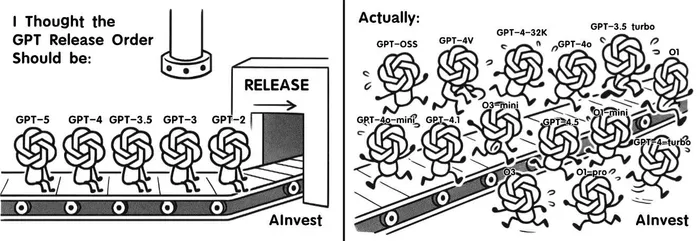
OpenAI’s unveiling of GPT-5 isn’t just another chapter in the AI saga—it’s a tectonic shift that could redefine how we code, write, and work.
Launched during a livestreamed event on Thursday, this “major upgrade,” as OpenAI CEO Sam Altman calls it, brings unprecedented capabilities in coding, creative writing, and reasoning to the table. For the first time, interacting with an AI feels like sparring with a domain expert who’s always one step ahead.
Microsoft, OpenAI’s deep-pocketed partner, is wasting no time weaving GPT-5 into its sprawling ecosystem—Copilot, GitHub Copilot, Azure AI Foundry, and MicrosoftMSFT-- 365—betting big on a future where AI isn’t just a tool but a co-creator. With a $300 billion valuation and $11.3 billion in funding behind OpenAI over the 7 years time span, this isn’t a speculative punt; it’s a calculated strike at the heart of a fiercely competitive AI market.
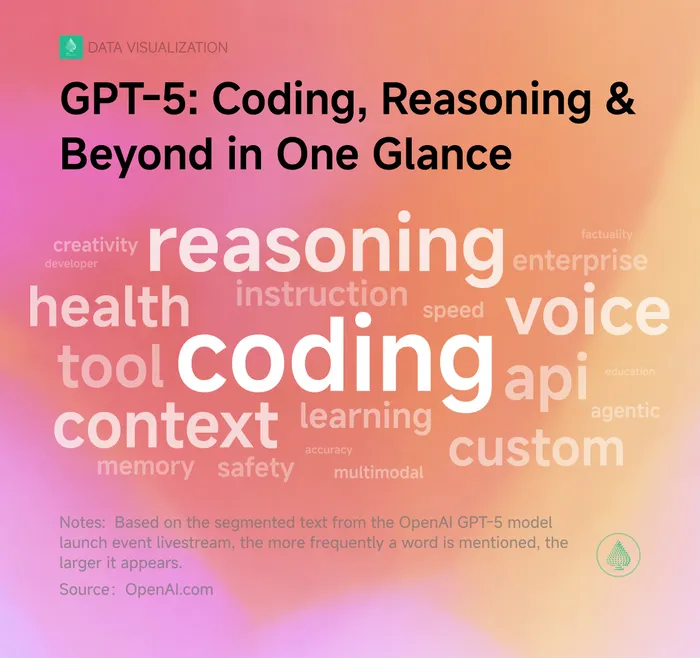
A New Benchmark in AI Capabilities
- Coding: Writes cleaner, more maintainable code, fixes bugs, and optimizes performance across multiple languages.
- Application & Website Building: Can create complex, fully functional apps or websites from scratch with minimal prompts.
- Reasoning: Stronger multi-step logical and mathematical reasoning for complex problem-solving.
- Creative Writing: Produces higher-quality poetry, storytelling, humor, and technical prose with customizable styles.
- Personalization: Adapts tone, personality, and formatting to user preferences more reliably.
- Integration: Seamlessly works within tools like Microsoft Copilot, GitHub Copilot, and Azure AI Foundry for real-time assistance.
- Reliability: More consistent factual accuracy and reduced hallucinations in specialized domains.
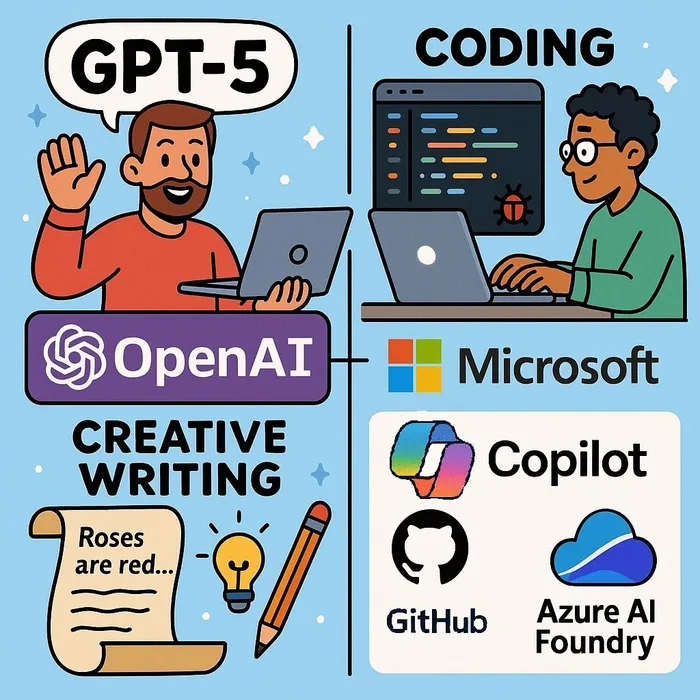
GPT-5 isn’t here to tinker at the edges—it’s rewriting the rules. In coding, it’s a powerhouse. Developers can now lean on it to architect sprawling, complex projects from scratch, not just patch up snippets. During a live demo, a researcher tasked GPT-5 with building a “beautiful, highly interactive” web app to teach French, complete with flashcards, quizzes, and a quirky Snake-like game where a mouse gobbles cheese.
Minutes later, the fully functional code materialized—game included. Early adopters like Anysphere, creators of the AI coding assistant Cursor, and Lovable, a Swedish startup riding the vibe coding wave, are already raving. Lovable’s CEO Anton Osika highlights its knack for churning out intricate applications—like a financial planning tool with an embedded chatbot—faster, with cleaner, more maintainable code. Bug hunting? GPT-5 sniffs them out and squashes them with finesse.
Writing is where GPT-5 flexes its creative muscle. It’s not just about banging out emails or reports—it can craft poetry, nail technical prose, and even sprinkle in humor with a deft touch. Nick Turley, head of OpenAI’s ChatGPT team, notes it’s “quicker to respond, better at answering queries, and makes things up less often.” That leap in reliability matters when stakes are high. With four pre-set personalities—Cynic, Robot, Listener, and Nerd—users can dial in the vibe they want, turning a sterile chatbot into a tailored sidekick. Under the hood, GPT-5’s reasoning engine decides how much brainpower to throw at a problem, optimizing compute without users lifting a finger.
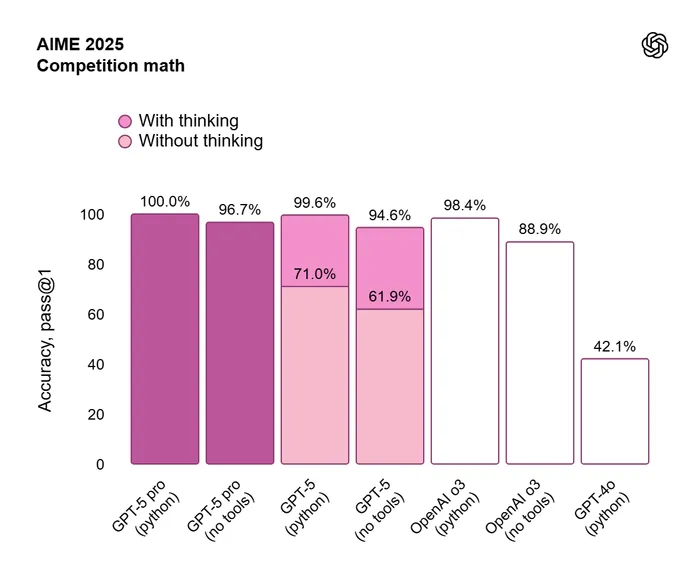
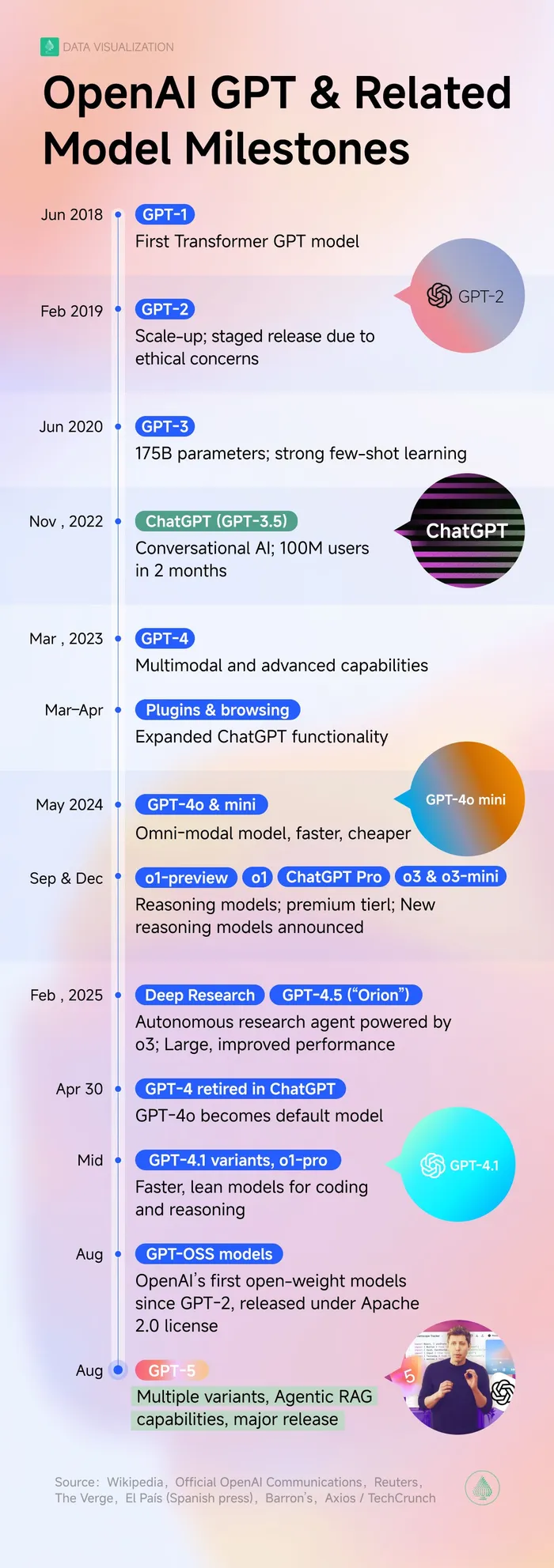
The Evolution of ChatGPT: From GPT-1 to GPT-5
ChatGPT’s journey is a masterclass in iterative innovation, tracing a path from modest beginnings to a transformative force in AI. It started with GPT-1 in June 2018, a 117-million-parameter model that showcased unsupervised learning’s potential in language tasks. Modest by today’s standards, it laid the groundwork for what followed. GPT-2, unveiled in February 2019 with 1.5 billion parameters, upped the ante with coherentCOHR--, multi-paragraph text generation. OpenAI hesitated on its full release, wary of misuse, but a staged rollout in November 2019 proved its worth.
The real game-changer came with GPT-3 in June 2020. Boasting 175 billion parameters, it turned heads with its ability to draft emails, craft poetry, and generate code—ushering in widespread adoption across industries. Users could finally engage directly with an AI that delivered practical, nuanced responses, cementing ChatGPT’s cultural and commercial impact. GPT-4 built on this, refining accuracy, reducing offensive outputs, and adding real-time internet connectivity. Each step sharpened the model’s alignment with user intent, setting the stage for GPT-5’s arrival.
This evolution hasn’t just advanced AI tech—it’s reshaped industries. Customer service bots now handle queries with uncanny precision, educators deploy personalized tutoring systems, and developers lean on AI for rapid prototyping. Healthcare providers analyze medical literature, while entertainment firms script game narratives—all powered by ChatGPT’s lineage. GPT-5 inherits this legacy, amplifying its predecessors’ strengths with enhanced reasoning and coding capabilities.
Microsoft’s Masterstroke: GPT-5 Everywhere
Microsoft isn’t just riding OpenAI’s coattails—it’s steering the ship. By embedding GPT-5 across its platforms, it’s betting on seamless, omnipresent AI to lock in users and outpace rivals. In Microsoft 365 Copilot, GPT-5 turns mundane productivity into a superpower. It can dissect complex questions, hold its own in marathon discussions, and pull insights from emails, docs, and files—think of it as a digital consigliere for the C-suite.
Developers get the VIP treatment. GitHub Copilot, juiced with GPT-5, isn’t just an autocomplete bot anymore—it’s a full-stack partner. It writes, tests, and deploys code with a model picker to match the task, while the Azure AI Foundry extension lets coders build AI agents without breaking stride in Visual Studio Code. The Microsoft AI Red Team’s stress tests confirm GPT-5’s safety chops, showing one of the strongest defenses against misuse like malware crafting or fraud automation.The backtest of MSFT's performance following major GPT milestone announcements shows a positive trend, highlighting the potential for the stock to experience gains in the immediate and medium-term aftermath of such events. This suggests that investors may find opportunities in MSFTMSFT-- around significant AI advancements.
The strategy of buying Microsoft when the Relative Strength Index (RSI) exceeds 70 and selling when it falls below 30 from 2022 to the present resulted in a 52.10% return, significantly outperforming the benchmark return of 37.12%. The strategy achieved an excess return of 14.98% and a CAGR of 13.34%, indicating a robust long-term performance. With a maximum drawdown of 0.00% and a Sharpe ratio of 0.68, the strategy also showcased excellent risk management, making it a reliable approach for investors looking to capitalize on MSFT's momentum while mitigating potential downturns.
The Money Game: Valuation and Competition
OpenAI’s $300 billion valuation isn’t a fluke—it’s fueled by ChatGPT’s 700 million weekly users and 5 million paying business accounts. The company’s $11.3 billion war chest keeps the lights on for talent, chips, and data centers, while whispers of a $500 billion stock sale for employees signal sky-high ambition.
Microsoft’s multibillion-dollar stake ties the duo at the hip, amplifying their reach. But the horizon’s crowded. Google, Anthropic, and xAI—helmed by OpenAI co-founder Elon Musk—are gunning for the same prize, with reasoning models and coding assistants of their own. Chinese upstarts like DeepSeek are gaining traction, and Meta’s poaching OpenAI talent for its AI lab. Yet OpenAI’s scale and Microsoft’s muscle give them an edge that’s tough to crack.
The Bottom Line: A Future Forged by AI
GPT-5’s launch isn’t just a product drop—it’s a clarion call. For coders, it’s a tireless architect; for writers, a boundless muse; for businesses, a razor-sharp strategist. Microsoft’s integration makes it ubiquitous—free for consumers, turbocharged for enterprises, and a godsend for developers.
Sam Altman’s vision of “software on demand” is taking shape, and it’s a bet that could pay off big. As AI morphs from assistant to collaborator, OpenAI and Microsoft are planting their flag, daring rivals to keep up. The numbers—users, funding, valuation—back the hype, but the real proof will be in the code it writes, the prose it pens, and the problems it solves. Welcome to the next frontier.

Stay ahead of the market.
Get curated U.S. market news, insights and key dates delivered to your inbox.
AInvest
PRO
AInvest
PRO



Comments
No comments yet