
The U.S. Government Shutdown and Its Toll on Consumer Confidence


 Aime Summary
Short-Term Economic Fallout: A Deepening Downturn
The immediate impact of the 2025 shutdown has been stark. , with spillover effects already rippling through the private sector, according to a MPA article. Unpaid federal workers and furloughed contractors face liquidity crises, exacerbating household financial stress. Meanwhile, , driven by new tariffs on goods like furniture and pharmaceuticals, though analysts argue these measures will have limited long-term inflationary effects, as the MPA article notes.
The shutdown has also widened disparities in consumer confidence. , , reflecting a K-shaped recovery, according to the MPA article. This divergence mirrors historical patterns, such as the 2013 shutdown, , and the 2018–2019 closure, , as the notes.
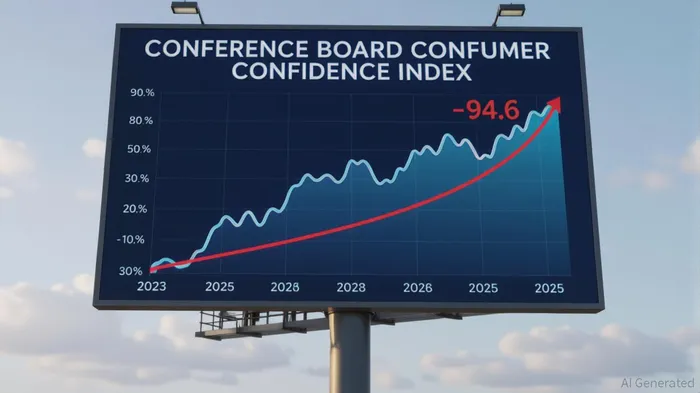
Long-Term Risks: Structural Weaknesses and Investor Sentiment
While past shutdowns have had limited long-term GDP impacts, the 2025 scenario introduces new risks. The threat of permanent layoffs (via RIFs) for federal workers could erode labor market stability, with potential ripple effects on consumer spending, according to a Northern Trust analysis. Additionally, delayed economic data-such as the jobs report and CPI-complicates the Federal Reserve's policy decisions, creating uncertainty around interest rate trajectories, as the Forbes article notes.
Historical precedents suggest that prolonged closures can erode trust in governance. For example, , as the TCW Quicktake notes. However, 2025's political climate may amplify these effects. Investors are increasingly rotating into defensive sectors and safe-haven assets, signaling a shift toward risk aversion, as the Forbes article notes.
Market Reactions and Strategic Implications
Equity markets have historically exhibited short-term volatility during shutdowns, but rebounds often follow swiftly. , as the TCW Quicktake notes. However, the 2025 shutdown's prolonged duration and political polarization may prolong uncertainty. Fixed income markets have also reacted: the yield curve steepened as investors sought safety in long-duration bonds, while delays in inflation-linked data could distort Treasury pricing, according to a JPMorgan report.
For investors, the key risks lie in sectoral imbalances and policy uncertainty. Defensive sectors (e.g., utilities, healthcare) and gold have gained traction, while cyclical industries face headwinds. The Federal Reserve's ability to respond to inflation or recession risks is further constrained by delayed data, potentially leading to misaligned monetary policy, as the Forbes article notes.
Conclusion: Navigating a Fragile Landscape
The 2025 government shutdown underscores the fragility of an economy already strained by inflation and political dysfunction. While historical data suggests short-term GDP contractions are manageable, the long-term risks-ranging from labor market instability to eroded investor confidence-demand closer scrutiny. Investors must remain agile, hedging against volatility while monitoring policy developments that could either resolve or exacerbate the crisis.

Delivering real-time insights and analysis on emerging financial trends and market movements.
Latest Articles
Stay ahead of the market.
Get curated U.S. market news, insights and key dates delivered to your inbox.






Comments
No comments yet