
Government Shutdown Threatens Key Economic Data Timelines
 Aime Summary
While the September employment and Consumer Price Index (CPI) reports were partially published, they remain delayed due to disrupted data collection processes. Economists estimate these reports could be released as early as next week, but the White House warned that October data—reliant on physical surveys and fieldwork—may be irreparably lost . This data blackout has already forced private institutions to attempt alternative measures, though their efforts lack the methodological rigor of official statistics .
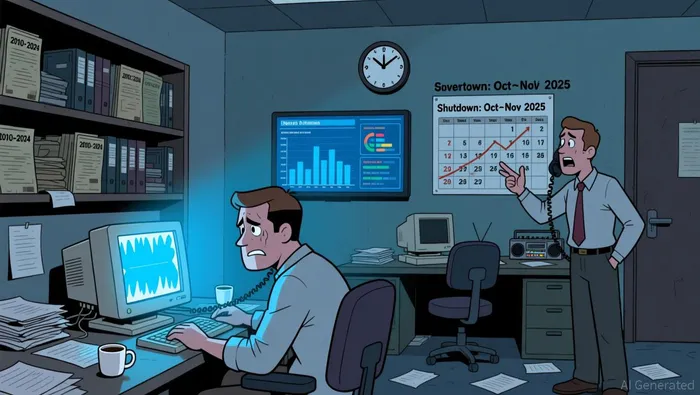
The Federal Reserve faces particular challenges as it prepares for its December policy meeting. Fed Chair Jerome Powell recently emphasized that another rate cut is not "a foregone conclusion," citing the lack of reliable data . The central bank’s benchmark interest rate was cut by 25 basis points in October, but the absence of October inflation and employment numbers complicates further decision-making. Economists like Boston College’s Brian Bethune argue that November data should be prioritized upon government reopening to provide the Fed with "up-to-date information" for its December meeting . This approach, Bethune noted, would allow policymakers to "backfill" from November data rather than wait for chronologically ordered releases .
The shutdown’s impact extends beyond immediate policy concerns. The White House press secretary attributed the crisis to Democratic inaction, suggesting the prolonged shutdown has "permanently damaged the federal statistical system" . This claim highlights the structural risks of political gridlock to data integrity, as BLS and Census Bureau operations require continuous funding to maintain consistent data flows. Without timely releases, historical economic datasets could develop permanent gaps, complicating long-term trend analysis .
The Labor Department’s statistical agencies have indicated they will update release schedules once operations resume, but the path forward remains unclear. The House’s scheduled vote on a stopgap funding bill could end the shutdown, yet the possibility of further delays remains. For now, markets and policymakers are navigating a "data fog," with the Fed’s next moves hinging on the speed and accuracy of post-shutdown data recovery .

Senior Research Analyst at Ainvest, formerly with Tiger Brokers for two years. Over 10 years of U.S. stock trading experience and 8 years in Futures and Forex. Graduate of University of South Wales.
Latest Articles
Stay ahead of the market.
Get curated U.S. market news, insights and key dates delivered to your inbox.






Comments
No comments yet