
Government Shutdown Nears! How Will Markets React?
Government Shutdown Nears! Markets hate uncertainty—will this be another short-lived drama, or the spark for panic selling?
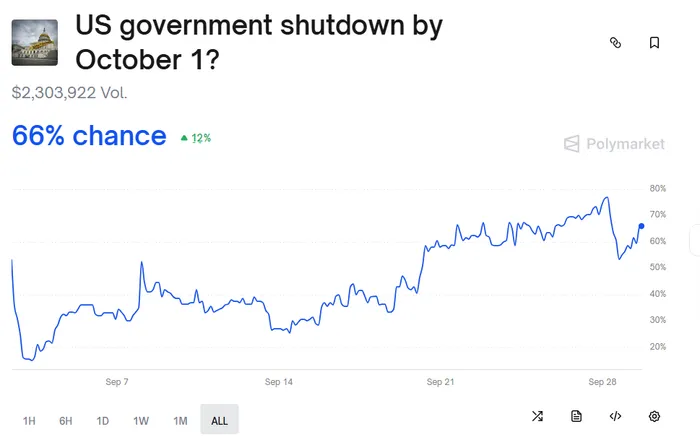
Negotiations between the two U.S. parties have reached an impasse. If lawmakers fail to agree on a temporary funding bill, the U.S. government will shut down on October 1.
According to Polymarket, the probability of a government shutdown currently stands at 66%.
How have assets performed during past shutdowns?
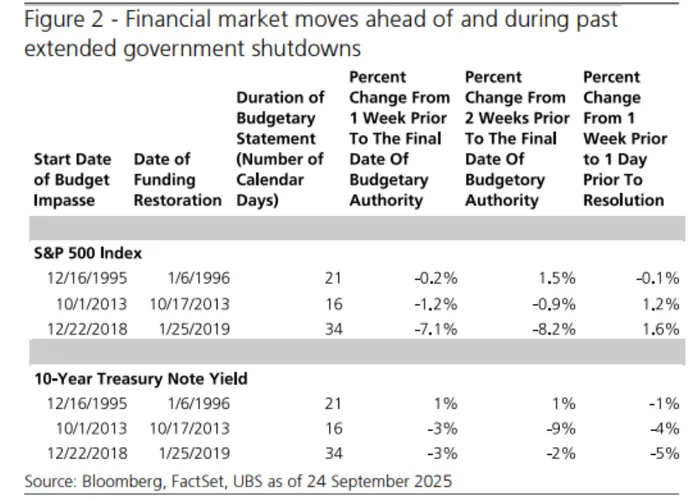
Historically, the impact of shutdowns on major asset classes has been limited, as investors typically prepare in advance. During the past three shutdowns, the U.S. dollar generally trended lower, though the decline was not directly caused by the shutdown itself.
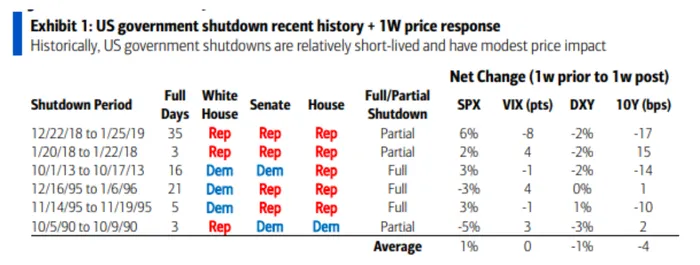
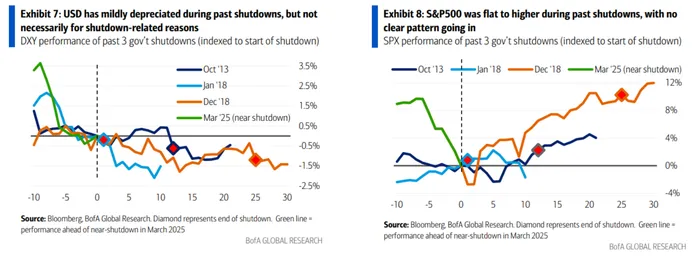

However, if the shutdown drags on, it could spark risk aversion. A surge in safe-haven gold prices would reflect investor caution. For richly valued U.S. equities, an extended shutdown could trigger correction risks.
Economic consequences of a government shutdown
From past experience, if the shutdown lasts less than a month, the economic impact is usually small. But prolonged shutdowns can create significant headwinds. The 35-day shutdown in late 2018—the longest in U.S. history—caused at least $11 billion in losses to the economy.
A Deutsche Bank report noted that while this shutdown will not trigger a 2013-style debt default panic, it still poses risks: slowing growth, disrupting key data releases, and leaving the Federal Reserve “flying blind” into its policy meeting. If the Bureau of Labor Statistics shuts down, the October 3 nonfarm payrolls and even September CPI are likely to be delayed.

The bank estimates that a full shutdown could furlough 800,000 federal employees and reduce real GDP growth by around 0.2 percentage points. The 2013 shutdown from October 1 to 16 cut real federal consumption spending by $8 billion (annualized), erasing 0.3 percentage points from Q4 GDP growth.
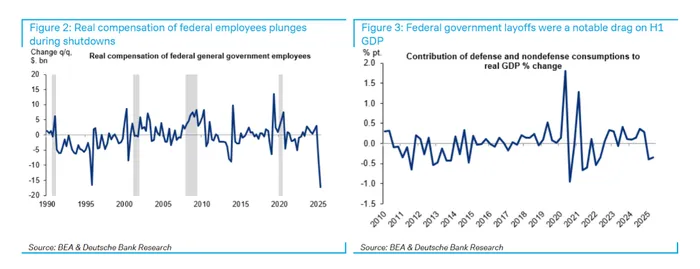
The impact of this shutdown depends on two factors:
Whether it is a “full shutdown” or “partial shutdown,” determining how many federal employees are furloughed without pay.
How long it lasts—whether temporarily suppressed demand can recover within the quarter, or whether delayed payments and missed wages spill over into the private sector.
This round will likely be a full shutdown. Since Congress has not passed any of the 2025 appropriations bills, the shutdown would resemble October 2013, when about 40% of federal employees were furloughed. Because federal compensation is counted in GDP through employment data, fewer working hours directly reduce GDP.
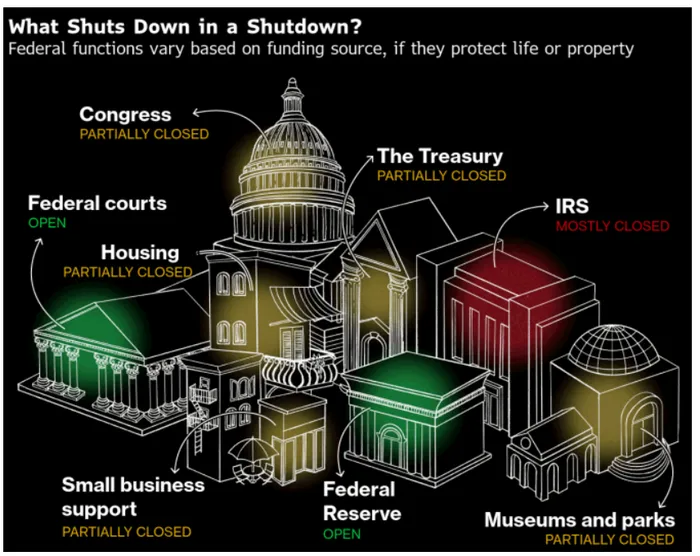
Civilian defense and non-defense federal employee compensation makes up about 1.2% of real GDP. Using 2013 as a baseline, with 40% of civilian workers furloughed, GDP growth would be dragged down by about 0.15 percentage points per week. Some growth will rebound the following quarter as work resumes, but the lost GDP cannot be fully recovered.
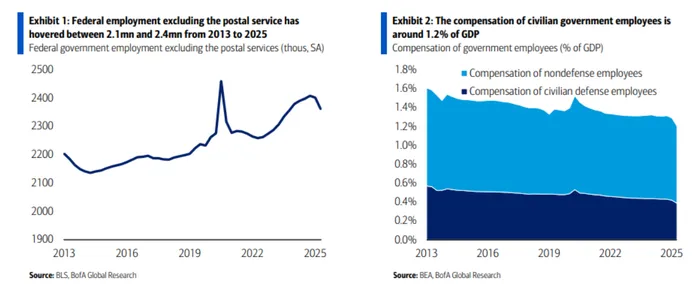
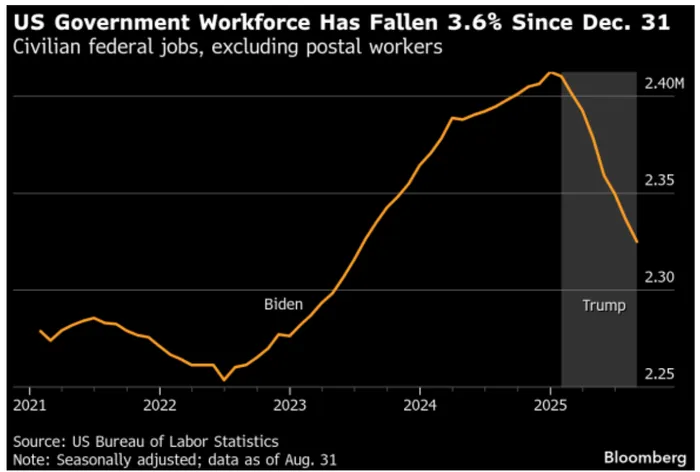
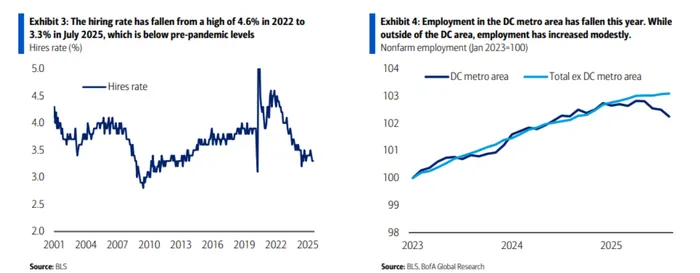
This shutdown could also trigger new layoffs. The Office of Management and Budget has instructed agencies to proceed with workforce reductions if funding lapses, adding more lasting downward pressure on activity. Democrats pushed back against the White House’s threat of layoffs, questioning the move’s legality.
The longer the shutdown, the greater the risk of delayed payments on federal contracts—such as construction work—exerting a stronger drag on the economy.
How long could the shutdown last?
Most expect it to be relatively short. Democrats are reluctant to bear the political costs of a prolonged shutdown ahead of the midterm elections. This suggests it may last less than two weeks, limiting the economic shock.
However, President Trump’s unwillingness to compromise and heightened political polarization reduce the chances of bipartisan cooperation, raising the risk of a more extended standoff.

Independent investment research powered by a team of market strategists with 20+ years of Wall Street and global macro experience. We uncover high-conviction opportunities across equities, metals, and options through disciplined, data-driven analysis.
Latest Articles
Unlock Market-Moving Insights.
Subscribe to PRO Articles.
Already have an account? Sign in
Unlock Market-Moving Insights.
Subscribe to PRO Articles.
Already have an account? Sign in
Stay ahead of the market.
Get curated U.S. market news, insights and key dates delivered to your inbox.






