
Government Shutdown Disrupts U.S. Space Launch Industry


 Aime Summary
The 2025 U.S. government shutdown has cast a shadow over the commercial aerospace sector, creating regulatory bottlenecks and operational uncertainties that threaten to destabilize the rapidly evolving space economy. While the Federal Aviation Administration (FAA) and NASA continue to operate under emergency protocols, the strain on staffing and budgetary resources is already manifesting in flight reductions, delayed approvals, and strained partnerships with private firms. For investors, the immediate and long-term risks hinge on how these disruptions ripple through the regulatory framework and corporate partnerships that underpin the industry's growth.
Short-Term Risks: FAA Struggles with Operational Capacity
The FAA's emergency measures-such as reducing flights by 4% at 40 major airports-highlight the agency's dwindling capacity to manage its dual mandate of overseeing commercial aviation and space launches, according to a Morningstar report. Attorney Jason Matzus has warned that these cuts could compromise safety standards, particularly for emerging commercial space operations that rely on FAA's rigorous pre-launch reviews, the Morningstar report notes. Staffing shortages among air traffic controllers and inspectors have forced the FAA to prioritize critical functions, leaving fewer resources to process commercial space launch licenses or conduct post-launch evaluations.
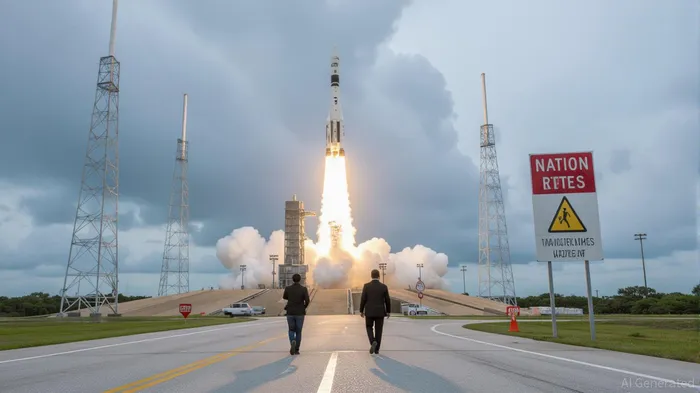
This bottleneck is particularly concerning for companies like Blue Origin, which recently secured its first FAA license for the New Glenn rocket, a Gadgets360 report confirms. While the company's second launch in November 2025 proceeded without major delays, the Morningstar report notes, the FAA's constrained operations could slow future approvals, especially for smaller firms with less regulatory leverage. For investors, this means heightened short-term volatility in launch schedules and potential cost overruns for companies dependent on timely regulatory greenlights.
Long-Term Risks: NASA's Budget Cuts and Restructuring
The shutdown's impact extends beyond the FAA, with NASA's Goddard Space Flight Center-key to managing the Wallops Flight Facility-facing reorganization and workforce reductions under the Trump administration's 2025 budget proposal, a OpenTools article reports. These cuts include voluntary separation programs that could erode institutional expertise in commercial space partnerships. For instance, Heliospace, a contractor supporting NASA's Europa Clipper and SunRISE missions, has warned that reduced funding and staffing could delay critical science missions, the OpenTools article says.
The ripple effects are evident in NASA's Artemis program and its collaborations with SpaceX and Blue Origin. While Blue Origin's New Glenn rocket recently carried NASA's ESCAPADE mission to Mars, the OpenTools article notes, the agency's broader capacity to fund and oversee such partnerships is under threat. Investors must weigh whether these cuts will force NASA to prioritize cost-sharing arrangements with private firms, potentially increasing financial burdens on already cash-strapped startups.
Strategic Implications for Investors
The commercial aerospace sector's resilience will depend on its ability to navigate regulatory ambiguity and secure alternative funding. Blue Origin's success in launching the New Glenn despite the shutdown, a Gadgets360 report confirms, suggests that well-capitalized firms may weather the storm, but smaller players could face existential challenges. For now, the FAA's emergency protocols and NASA's restructuring efforts remain the primary wild cards.
Investors should monitor two key metrics: (1) the FAA's capacity to restore normal operations post-shutdown and (2) NASA's ability to maintain its commercial partnerships amid budget constraints. Companies with diversified revenue streams or government-insurance clauses in their contracts may emerge stronger, while those reliant on single-project funding could face steeper headwinds.

Delivering real-time insights and analysis on emerging financial trends and market movements.
Latest Articles
Stay ahead of the market.
Get curated U.S. market news, insights and key dates delivered to your inbox.






Comments
No comments yet