
U.S. Government Explores Bitcoin Mining Partnerships, National Reserves
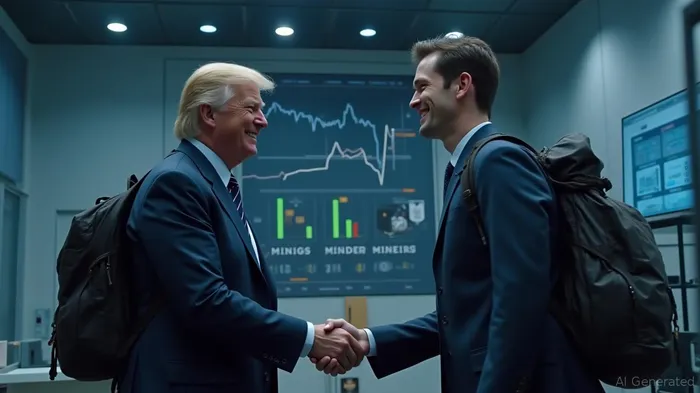
Bo Hines, Chairman of the Digital Assets Advisory Committee, has hinted at potential U.S. government partnerships in BitcoinBTC-- mining, leveraging public energy resources. However, these discussions have not yet materialized into formal declarations or agreements. The focus of these initiatives remains on establishing infrastructure for national Bitcoin reserves, as indicated by Hines' statement that "Government-level Bitcoin (BTC) holding infrastructure is being built."
Hines' suggestions align with broader regulatory interests in Bitcoin mining infrastructure, although the market has shown stability with no significant asset shifts or volatility due to these discussions. Institutions are likely to await concrete actions before making major investments. The potential shift towards government mining could alter global market dynamics, increasing regulatory scrutiny or inspiring similar responses from other nations. However, immediate effects on industries or governments are minimal due to the lack of formal agreements.
The U.S. government's examination of its role in Bitcoin mining initiatives is part of a broader trend where nations are exploring the strategic implications of cryptocurrencies. This trend includes various countries developing national-level crypto strategies to leverage Bitcoin and blockchain technology for economic and geopolitical advantages. The U.S. House Republican leadership has plans to review significant cryptocurrency bills, such as the GENIUS Act and the proposed BITCOIN Act, indicating growing institutional and governmental acceptance of cryptocurrencies. These legislative efforts aim to establish frameworks for stablecoin regulation and other digital asset initiatives.
The U.S. government holds a substantial amount of Bitcoin, primarily sourced from criminal seizures and company bankruptcies, managed by the Department of Justice and the U.S. Marshals Service. In March 2025, an executive order created a 'Strategic Bitcoin Reserve,' signaling a shift in the country's crypto policy. This reserve is funded by forfeited or seized BTC and aims to treat Bitcoin as a long-term store of value. The government can acquire more BTC or altcoins using budget-neutral strategies, ensuring that these acquisitions do not burden taxpayers. Additionally, several states, including Texas, Oklahoma, New Hampshire, and North Dakota, have plans for state-level Bitcoin policies.
Other countries are also taking strategic approaches to Bitcoin. For instance, El Salvador has recognized Bitcoin as an official legal tender alongside the USD and has launched a policy to buy 1 BTC a day, gradually building its strategic Bitcoin reserve. Bhutan, known for its 'green Bitcoin mining' initiative, uses surplus hydropower to mine BTC and other digital assets, holding a significant amount of Bitcoin valued at around $600 to $750 million. Kazakhstan has also announced plans to use seized crypto as part of its new national 'sovereign crypto reserve.'
The reasons behind these national-level crypto strategies are multifaceted. Many analysts see Bitcoin as a hedge against inflation, USD dominance, or international sanctions. Embracing blockchain and DeFi technology reflects a country's readiness for financial innovation. Governments are also looking to diversify their assets by investing in crypto and Bitcoin. Additionally, adopting Bitcoin and blockchain technology can enhance a country's soft power influence on the global stage.
Potential outcomes of the U.S. government's involvement in Bitcoin mining could include increased market efficiencies from U.S. reserves. Regulatory frameworks could lead to new technological protocols within cryptocurrency management. Future moves hinge on policy clarity and formal announcements, potentially altering both domestic and international crypto landscapes. Historical trends indicate that government involvement often precedes major shifts in the market, and the U.S. examination of its role in Bitcoin mining initiatives is a significant step in this direction.

Stay ahead of the market.
Get curated U.S. market news, insights and key dates delivered to your inbox.






Comments
No comments yet