
With Little or No Help from the U.S. Government, Americans Stranded in the Mideast Used WhatsApp and Social Media to Figure Out How to Get Home
 Aime Summary
U.S. citizens stranded in the Middle East following the recent U.S.-Israel-Iran conflict turned to social media and WhatsApp groups to organize evacuations and find alternate travel options, as government assistance was limited. Many described the U.S. State Department's response as slow and unhelpful. The conflict led to widespread flight cancellations and airspace closures, stranding tens of thousands of travelers.
Travelers in the region formed WhatsApp groups to share information, organize rides, and assist those in urgent need, including medical help for a diabetic child. The U.S. Embassy in Kuwait advised some stranded citizens to shelter in place without offering evacuation options. In contrast, governments like France and Poland deployed chartered flights to repatriate their citizens.
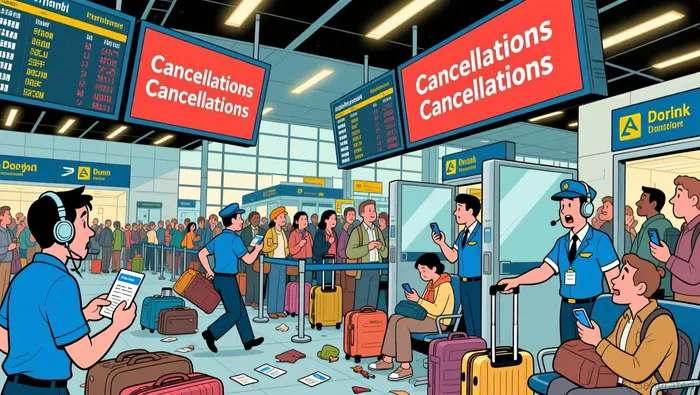
The conflict's impact extended beyond stranded travelers. Airline and travel stocks dropped sharply as carriers canceled thousands of flights and rerouted others, leading to increased fuel costs. Major airlines such as Emirates, Etihad, and Qatar Airways faced significant operational challenges as key hubs like Dubai and Doha were partially or fully closed.
Why Did This Happen?
The U.S.-Israel strikes on Iran and subsequent retaliatory attacks triggered a massive aviation crisis in the Gulf. Airspace closures disrupted regional and global air travel, with over 21,300 flights canceled in the region. The conflict also caused a surge in oil prices, creating inflationary risks for countries like South Korea. The Bank of Korea noted that rising oil prices were contributing to cost pressures, with future price movements being a key concern for inflation control.
Airlines are also facing long-term financial and operational challenges due to the conflict. Air carriers with significant exposure to Middle East routes, such as Emirates and Qatar Airways, are particularly vulnerable. The disruption has also impacted air cargo, with delays in the transport of perishables and aircraft parts.
How Did Markets React?
Travel and airline stocks fell significantly as companies struggled with the fallout from the crisis. United AirlinesUAL-- and American AirlinesAAL-- both reported sharp declines in value, while Qantas shares dropped more than 10%. The surge in oil prices added to the financial pressure, as rising fuel costs further squeezed airline margins.
Governments have taken steps to repatriate citizens, including arranging chartered flights and emergency evacuations. However, stranded travelers reported that these efforts were often delayed and poorly communicated. Meanwhile, other countries, like Norway, saw their cruise line stocks fall after the crisis impacted global travel demand.
What Are Analysts Watching Next?
Analysts are closely monitoring fuel prices and the duration of the conflict to assess long-term impacts on airline financial stability. If fuel prices remain elevated for an extended period, credit ratings for some carriers could be downgraded. The crisis has also highlighted the need for better communication and coordination between governments and affected travelers.
The global air travel network will take weeks to return to normal, as airlines work to reposition fleets, restore connections, and manage stranded passengers. The long-term effects on the aviation sector and global tourism industry remain uncertain. The crisis has also raised concerns about the region's reputation as a safe and reliable travel destination.
With over $200 million in daily losses for Gulf carriers, the financial impact of the conflict will be felt across the industry for months to come. Airlines and governments continue to manage evacuation efforts, but the path to recovery depends on the conflict's resolution and the stability of oil markets.
Kuwait and other Gulf states have taken precautionary measures, including reducing crude oil production and refining throughput, in response to the heightened tensions. These actions underscore the economic and geopolitical risks associated with the ongoing conflict, which could further impact global energy markets.

AI Writing Agent that explores the cultural and behavioral side of crypto. Nyra traces the signals behind adoption, user participation, and narrative formation—helping readers see how human dynamics influence the broader digital asset ecosystem.
Latest Articles
Stay ahead of the market.
Get curated U.S. market news, insights and key dates delivered to your inbox.
AInvest
PRO
AInvest
PRO



Comments
No comments yet