
Google Unveils Bold AI Strategy Amid Market Share Shake-Up and Antitrust Challenges
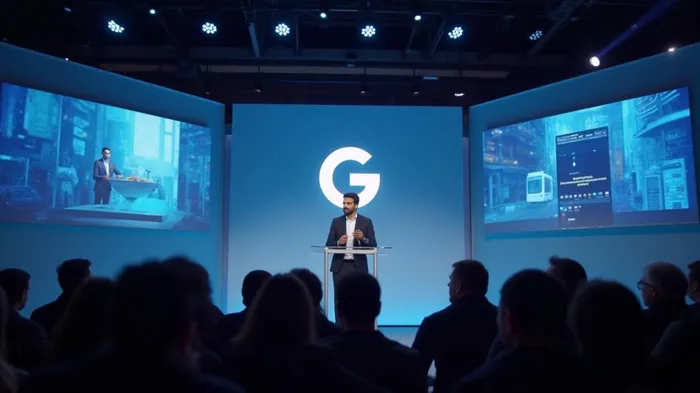
Alphabet's GoogleGOOG-- recently embarked on its annual I/O developer conference, unveiling a series of announcements that spotlighted its substantial investments in artificial intelligence. The event aimed to address growing concerns about the company's business outlook amid challenges from emerging AI technologies.
The ascendancy of generative AI has posed a fresh threat to Google's long-standing dominance in organizing and retrieving internet information, setting a more urgent tone for the conference held in Mountain View, California. Google's initially measured response to OpenAI’s ChatGPT, backed by MicrosoftMSFT--, evolved into a more assertive stance, declaring that it has caught up with its competitors.
Executives, including CEO Sundar Pichai, frequently cite the Gemini series of AI models, which are leading their peers' models from OpenAI and Meta based on public rankings. As AI chatbot usage becomes increasingly accepted by consumers, investors are keen to see how Google adjusts its search advertising business—which accounts for the majority of its projected $350 billion revenue in 2024.
Earlier in the month, AlphabetGOOG-- saw a $150 billion drop in market capitalization in a single day. This followed testimony from an Apple executive in a Google antitrust case, stating AI products had for the first time reduced search traffic on Apple’s Safari browser. Analysts have since reconsidered how they assess Google's search market share, traditionally lingering around 90%. One report from Bernstein noted that when factoring in AI chatbot usage, this could decrease to 65-70%, while some predict it could fall below 50% within five years.
Changes in consumer behavior are observed as users shift from traditional search engines to AI chatbots. Google’s market position could further be affected by legal outcomes, particularly the US Department of Justice's antitrust cases seeking the partial breakup of the tech giant, including the sale of its Chrome browser.
AI investments account for the majority of Alphabet's anticipated $75 billion capital expenditure this year, showing a marked increase from the $52.5 billion reported for 2024. Despite tariff uncertainties, CEO Sundar Pichai reaffirmed these spending plans in April. Over the past two years, Google has integrated more AI capabilities into its core search engine, featuring AI Overviews and AI Mode to tackle complex queries.
Announcements at the conference included potential updates to search functionalities and Google's efforts to promote the "Universal AI Agent." Last year, the company showcased Project Astra, enabling real-time interaction around content captured by a user’s smartphone camera. Google started to experiment with ads in AI Overviews in May last year, but avoided any radical shifts that might provoke disruptions.
As Google explores additional revenue streams, it is monetizing AI innovations. Last week, the company confirmed that users of its Google One subscription service surpassed 150 million, attributed to “millions” of customers subscribing to a plan that costs $19.99 per month, offering AI functionalities unavailable to free users.

Stay ahead of the market.
Get curated U.S. market news, insights and key dates delivered to your inbox.




Comments
No comments yet