
Google Relocates Blockchain Data to BigQuery, Boosts AI and Energy Collaborations
 Aime Summary
Google's Strategic Partnerships and Technological Advancements Are Reshaping the Landscape of Artificial Intelligence, Blockchain, and Energy Infrastructure
Google's strategic partnerships and technological advancements are reshaping the landscape of artificial intelligence, blockchain, and energy infrastructure. The company has integrated HederaHBAR-- Hashgraph's blockchain data into its BigQuery platform, enabling developers to analyze decentralized networks alongside major blockchains like BitcoinBTC-- and EthereumETH--. Simultaneously, Google's Gemini AI model is powering Apple's Siri upgrades, while collaborations with NextEraNEE-- Energy aim to address the growing energy demands of AI-driven data centers. These developments underscore a broader industry shift toward scalable, sustainable, and interoperable solutions.
Hedera's Blockchain Data Integration with GoogleGOOGL-- Cloud
Hedera Hashgraph has been added to Google Cloud’s BigQuery public datasets, providing open access to its full transaction history. This integration allows developers to analyze transactions, NFTs, and smart contracts using BigQuery’s tools and open-source framework. The move has already driven a nearly 10% surge in HBAR’s price to $0.19 within 24 hours, with trading volume increasing by 130% to $483 million, as reported in Hedera Joins Google BigQuery for Easier Blockchain Access. The dataset is maintained with transparency, as ETL scripts are open-source, ensuring future updates and community contributions, as noted in HBAR price boosted by ETF inflows, Google BigQuery addition.
Apple's Gemini-Powered Siri and Privacy Framework
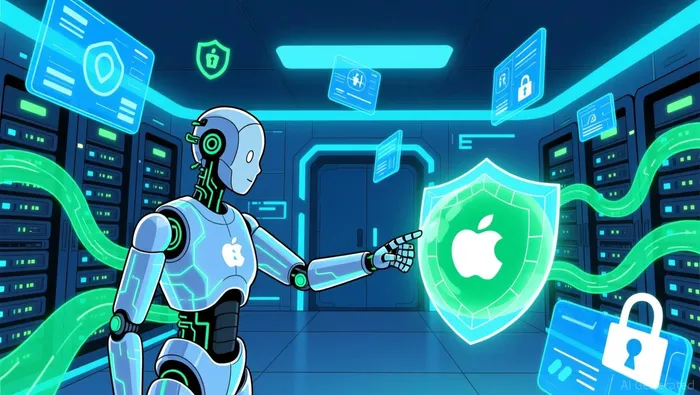
Apple has shifted its AI strategy to leverage Google’s Gemini Large Language Model (LLM) for advanced Siri functionalities. The integration bifurcates processing into on-device and cloud-based tiers: general queries use Apple’s proprietary models or third-party solutions like ChatGPT, while complex tasks are handled by Gemini within Apple’s Private Cloud Compute framework. All data processed in the cloud is encrypted and stateless, preserving user privacy, as reported in Apple strikes deal with Google to bring Gemini to Siri. The system is expected to launch in March 2026, with a delayed rollout in China due to regulatory hurdles, as highlighted in Apple Pays Google $1B for Gemini — But Google Pays Apple $20B to Stay Default.
Nuclear Energy Collaboration to Power AI Infrastructure
Google and NextEra Energy have partnered to restart the 615-megawatt Duane Arnold Energy Centre in Iowa, a nuclear facility slated to return to operation in Q1 2029. The 25-year power purchase agreement will supply Google with reliable, carbon-free energy to meet the 24/7 demands of AI data centers. The project is projected to generate $9 billion in economic benefits for Iowa, including 1,600 construction jobs and 400 permanent positions, as reported in Google & NextEra: Reviving Nuclear Energy to Power AI. Google also plans to explore new nuclear technologies, such as small modular reactors, to further reduce energy costs and emissions, as noted in Inside the data-center energy race with Google and Microsoft.
Privacy Settlement and Energy Demand Projections
Google has agreed to a $1.375 billion settlement with Texas over allegations of deceptive geolocation and biometric data practices. The resolution follows lawsuits under the Texas Deceptive Trade Practices Act and Capture or Use of Biometric Identifier Act, as detailed in Texas, Google Reach $1.4 Billion Privacy Settlement. Meanwhile, energy experts warn that U.S. data centers could consume 12% of the nation’s electricity by 2028, up from 4.4% in 2023. Google and Microsoft are investing in geothermal, nuclear, and long-duration storage solutions to mitigate this surge, as reported in Inside the data-center energy race with Google and Microsoft.

Stay ahead of the market.
Get curated U.S. market news, insights and key dates delivered to your inbox.




Comments
No comments yet