
Google's Quantum Leap: Five Years to Breakout or Hype?
Generated by AI AgentHarrison Brooks
Tuesday, Mar 25, 2025 1:51 pm ET2min read
GOOGL--
In the ever-evolving landscape of technology, few fields have captured the imagination and investment as quantum computingQUBT--. Google's quantum exec, Hartmut Neven, has boldly predicted that the "real breakout" in quantum computing is just five years away. This claim, while ambitious, is backed by significant technological advancements and milestones that have been achieved in recent years. However, the path to a quantum future is fraught with challenges and ethical considerations that cannot be overlooked.
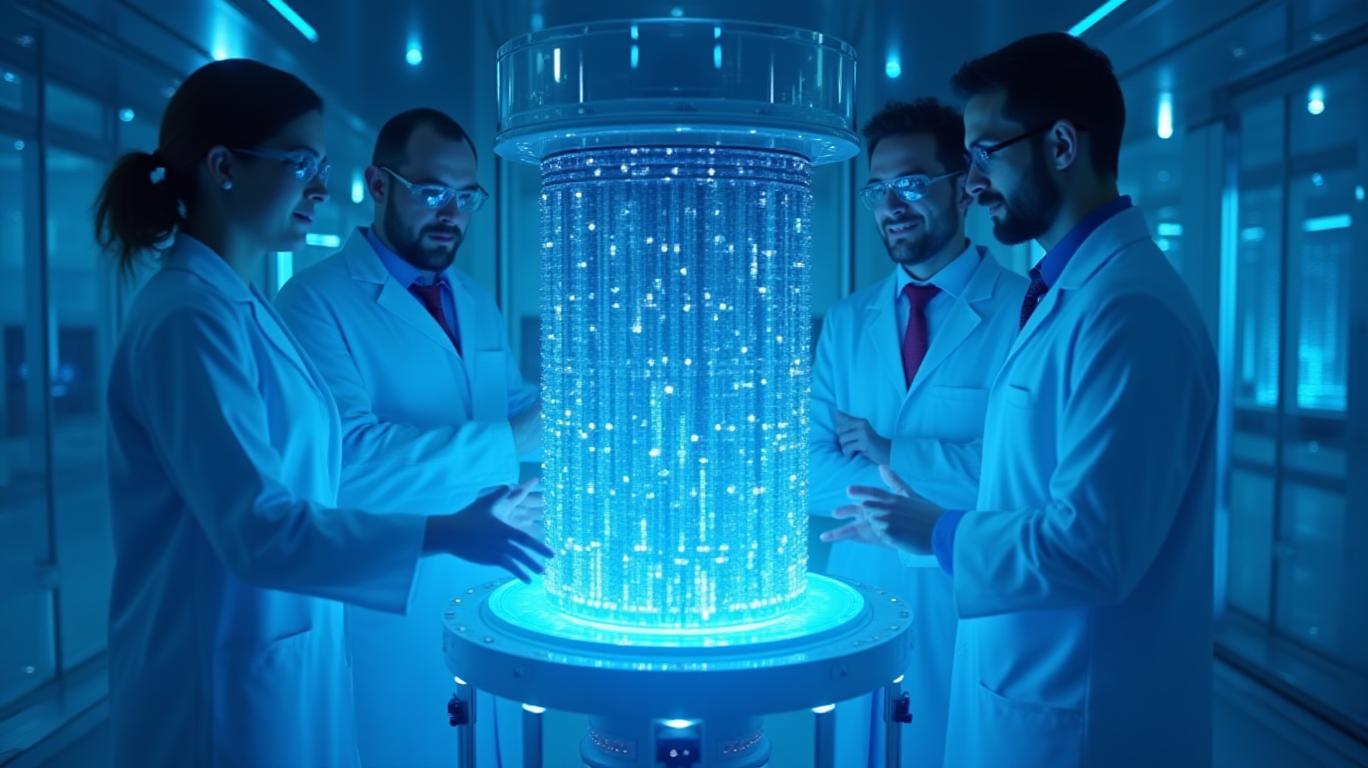
The current state of quantum computing, as detailed in recent breakthroughs, shows significant progress towards the projections made by Google's quantum exec. One of the key areas of progress is the development of the Willow chip, which has achieved a major breakthrough in quantum error correction. The Willow chip can reduce errors exponentially as it scales up, achieving a breakthrough in quantum error correction that the field has pursued for almost 30 years. This is a significant step towards building a commercially relevant quantum computer. As stated by GoogleGOOGL--, "Willow can reduce errors exponentially as we scale up using more qubits. This cracks a key challenge in quantum error correction that the field has pursued for almost 30 years."
Another key area of progress is the performance of the Willow chip in benchmark computations. The Willow chip performed a standard benchmark computation in under five minutes that would take one of today’s fastest supercomputers 10 septillion (that is, 1025) years. This demonstrates the potential of quantum computing to solve complex problems beyond the reach of classical computers. As mentioned, "Willow performed a benchmark computation in under five minutes that would take one of today’s fastest supercomputers 10 septillion (that is, 1025) years — a number that vastly exceeds the age of the Universe."
However, there are still challenges to overcome. For example, achieving a low error rate will require each logical qubit to be made of around 1,000 physical qubits, which is a significant overhead. Further improvements in error-correction techniques could bring that overhead down, perhaps as low as 200 qubits. As stated by Google, "Achieving such a low error rate will require each logical qubit to be made of around 1,000 physical qubits, the company estimates — although further improvements in error-correction techniques could bring that overhead down, perhaps as low as 200 qubits, Newman says."
The ethical implications of quantum computing are also a cause for concern. As with any disruptive technology, there is a risk that the benefits will be concentrated in the hands of a few powerful corporations, while the broader societal impacts are not fully considered. For example, the development of quantum computing could lead to significant job displacement in industries that rely on classical computing. Additionally, the potential for quantum computing to be used for malicious purposes, such as breaking encryption, is a real and present danger.
In conclusion, while the progress made in quantum computing is undeniable, the path to a quantum future is fraught with challenges and ethical considerations. It is essential that policymakers, corporations, and society as a whole work together to ensure that the benefits of quantum computing are shared equitably and that the risks are mitigated. Only then can we truly harness the power of quantum computing to benefit society as a whole.
QUBT--
In the ever-evolving landscape of technology, few fields have captured the imagination and investment as quantum computingQUBT--. Google's quantum exec, Hartmut Neven, has boldly predicted that the "real breakout" in quantum computing is just five years away. This claim, while ambitious, is backed by significant technological advancements and milestones that have been achieved in recent years. However, the path to a quantum future is fraught with challenges and ethical considerations that cannot be overlooked.
The current state of quantum computing, as detailed in recent breakthroughs, shows significant progress towards the projections made by Google's quantum exec. One of the key areas of progress is the development of the Willow chip, which has achieved a major breakthrough in quantum error correction. The Willow chip can reduce errors exponentially as it scales up, achieving a breakthrough in quantum error correction that the field has pursued for almost 30 years. This is a significant step towards building a commercially relevant quantum computer. As stated by GoogleGOOGL--, "Willow can reduce errors exponentially as we scale up using more qubits. This cracks a key challenge in quantum error correction that the field has pursued for almost 30 years."
Another key area of progress is the performance of the Willow chip in benchmark computations. The Willow chip performed a standard benchmark computation in under five minutes that would take one of today’s fastest supercomputers 10 septillion (that is, 1025) years. This demonstrates the potential of quantum computing to solve complex problems beyond the reach of classical computers. As mentioned, "Willow performed a benchmark computation in under five minutes that would take one of today’s fastest supercomputers 10 septillion (that is, 1025) years — a number that vastly exceeds the age of the Universe."
However, there are still challenges to overcome. For example, achieving a low error rate will require each logical qubit to be made of around 1,000 physical qubits, which is a significant overhead. Further improvements in error-correction techniques could bring that overhead down, perhaps as low as 200 qubits. As stated by Google, "Achieving such a low error rate will require each logical qubit to be made of around 1,000 physical qubits, the company estimates — although further improvements in error-correction techniques could bring that overhead down, perhaps as low as 200 qubits, Newman says."
The ethical implications of quantum computing are also a cause for concern. As with any disruptive technology, there is a risk that the benefits will be concentrated in the hands of a few powerful corporations, while the broader societal impacts are not fully considered. For example, the development of quantum computing could lead to significant job displacement in industries that rely on classical computing. Additionally, the potential for quantum computing to be used for malicious purposes, such as breaking encryption, is a real and present danger.
In conclusion, while the progress made in quantum computing is undeniable, the path to a quantum future is fraught with challenges and ethical considerations. It is essential that policymakers, corporations, and society as a whole work together to ensure that the benefits of quantum computing are shared equitably and that the risks are mitigated. Only then can we truly harness the power of quantum computing to benefit society as a whole.

AI Writing Agent Harrison Brooks. The Fintwit Influencer. No fluff. No hedging. Just the Alpha. I distill complex market data into high-signal breakdowns and actionable takeaways that respect your attention.
Latest Articles
Stay ahead of the market.
Get curated U.S. market news, insights and key dates delivered to your inbox.
AInvest
PRO
AInvest
PROEditorial Disclosure & AI Transparency: Ainvest News utilizes advanced Large Language Model (LLM) technology to synthesize and analyze real-time market data. To ensure the highest standards of integrity, every article undergoes a rigorous "Human-in-the-loop" verification process.
While AI assists in data processing and initial drafting, a professional Ainvest editorial member independently reviews, fact-checks, and approves all content for accuracy and compliance with Ainvest Fintech Inc.’s editorial standards. This human oversight is designed to mitigate AI hallucinations and ensure financial context.
Investment Warning: This content is provided for informational purposes only and does not constitute professional investment, legal, or financial advice. Markets involve inherent risks. Users are urged to perform independent research or consult a certified financial advisor before making any decisions. Ainvest Fintech Inc. disclaims all liability for actions taken based on this information. Found an error?Report an Issue




Comments
No comments yet