
Google Pays Windsurf $2.4B, Investors See Significant Returns
ByAinvest
Friday, Aug 1, 2025 12:03 pm ET1min read
CGTX--
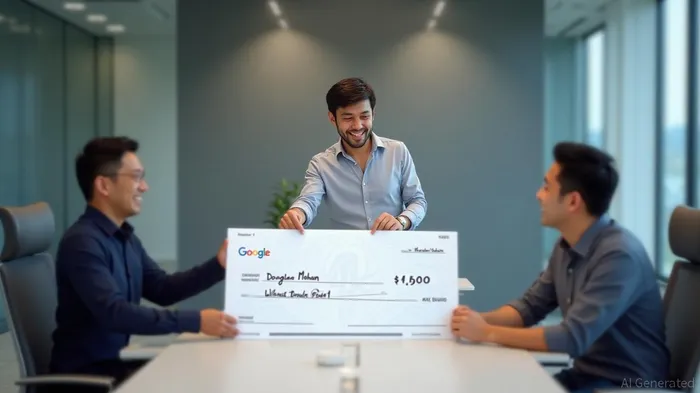
According to sources familiar with the deal, Google paid Windsurf $2.4 billion, with the payment effectively divided into two equal parts: $1.2 billion for investors and $1.2 billion for compensation for approximately 40 Windsurf employees [1]. The employee compensation package was substantial, with a significant portion going to the startup's co-founders, Varun Mohan and Douglas Chen.
Investors, including VCs like Greenoaks, Kleiner Perkins, and General Catalyst, fared well from the deal. Windsurf had previously raised about $243 million in funding, valuing the company at $1.25 billion. The total return to investors was approximately four times their original funding. Greenoaks, which owned 20% of the company, returned about $500 million on its $65 million investment, while Kleiner Perkins returned about three times its invested capital [1].
However, the deal was not without controversy. While the co-founders and investors benefited significantly, many of Windsurf's approximately 250 employees were left out. Employees hired after the last raise in 2024 did not receive a payout from the deal, and those hired by Google saw their stock grants revoked and their vesting timelines restarted [1]. This disparity in compensation has led to criticism from some investors and VC firms, who argue that the co-founders did not share their windfall with those who helped build the company.
The remaining assets of Windsurf were sold to Cognition for an estimated $250 million, allowing all employees to financially gain from the sale [1]. This acquisition provided a measure of closure for the company and its employees.
The Google-Windsurf deal is part of a growing trend in the AI arms race, where tech giants are sidestepping traditional acquisitions by hiring away elite teams and founders directly. This strategy avoids regulatory scrutiny and allows companies to quickly integrate top talent into their operations [2]. For AI investors, this trend underscores the importance of not just focusing on revenue, profits, or products, but also on the people behind the company.
References:
[1] https://techcrunch.com/2025/08/01/more-details-emerge-on-how-windsurfs-vcs-and-founders-got-paid-from-the-google-deal/
[2] https://fspinvest.co.za/a-growing-trend-in-the-ai-arms-race/
Google paid Windsurf $2.4 billion, splitting the payment into two equal parts for investors and compensation for 40 Windsurf employees. The startup's co-founders, Varun Mohan and Douglas Chen, received a significant portion of the $1.2 billion allocated to employees. Investors returned about four times their original funding, with Greenoaks returning $500 million on a $65 million investment and Kleiner Perkins returning three times its invested capital.
Google's recent acquisition of Windsurf's technology and key personnel for $2.4 billion has sparked significant interest and scrutiny in the tech and investment communities. The deal, announced in August 2025, involved a complex financial arrangement that saw the payment split between investors and employees.According to sources familiar with the deal, Google paid Windsurf $2.4 billion, with the payment effectively divided into two equal parts: $1.2 billion for investors and $1.2 billion for compensation for approximately 40 Windsurf employees [1]. The employee compensation package was substantial, with a significant portion going to the startup's co-founders, Varun Mohan and Douglas Chen.
Investors, including VCs like Greenoaks, Kleiner Perkins, and General Catalyst, fared well from the deal. Windsurf had previously raised about $243 million in funding, valuing the company at $1.25 billion. The total return to investors was approximately four times their original funding. Greenoaks, which owned 20% of the company, returned about $500 million on its $65 million investment, while Kleiner Perkins returned about three times its invested capital [1].
However, the deal was not without controversy. While the co-founders and investors benefited significantly, many of Windsurf's approximately 250 employees were left out. Employees hired after the last raise in 2024 did not receive a payout from the deal, and those hired by Google saw their stock grants revoked and their vesting timelines restarted [1]. This disparity in compensation has led to criticism from some investors and VC firms, who argue that the co-founders did not share their windfall with those who helped build the company.
The remaining assets of Windsurf were sold to Cognition for an estimated $250 million, allowing all employees to financially gain from the sale [1]. This acquisition provided a measure of closure for the company and its employees.
The Google-Windsurf deal is part of a growing trend in the AI arms race, where tech giants are sidestepping traditional acquisitions by hiring away elite teams and founders directly. This strategy avoids regulatory scrutiny and allows companies to quickly integrate top talent into their operations [2]. For AI investors, this trend underscores the importance of not just focusing on revenue, profits, or products, but also on the people behind the company.
References:
[1] https://techcrunch.com/2025/08/01/more-details-emerge-on-how-windsurfs-vcs-and-founders-got-paid-from-the-google-deal/
[2] https://fspinvest.co.za/a-growing-trend-in-the-ai-arms-race/
Stay ahead of the market.
Get curated U.S. market news, insights and key dates delivered to your inbox.
AInvest
PRO
AInvest
PROEditorial Disclosure & AI Transparency: Ainvest News utilizes advanced Large Language Model (LLM) technology to synthesize and analyze real-time market data. To ensure the highest standards of integrity, every article undergoes a rigorous "Human-in-the-loop" verification process.
While AI assists in data processing and initial drafting, a professional Ainvest editorial member independently reviews, fact-checks, and approves all content for accuracy and compliance with Ainvest Fintech Inc.’s editorial standards. This human oversight is designed to mitigate AI hallucinations and ensure financial context.
Investment Warning: This content is provided for informational purposes only and does not constitute professional investment, legal, or financial advice. Markets involve inherent risks. Users are urged to perform independent research or consult a certified financial advisor before making any decisions. Ainvest Fintech Inc. disclaims all liability for actions taken based on this information. Found an error?Report an Issue




Comments
No comments yet