
Google's EUR5.5 Billion Investment in Germany: Strategic Implications for Real Estate and Clean Energy Sectors


 Aime Summary
Real Estate: Data Centers as the New Industrial Core
The construction of a new data center in Dietzenbach and the expansion of the Hanau campus reflect Google's bet on Germany's strategic position as a European digital hub. These facilities are not just infrastructure projects but enablers of advanced technologies like AI and cloud computing, which require low-latency, high-capacity networks. According to a Google Cloud Press Corner report, the investment is expected to inject an average of €1.016 billion annually into Germany's GDP and support 9,000 jobs through 2029.
The real estate component of this investment is particularly compelling. Data centers demand specialized infrastructure, including high-security facilities, redundant power systems, and advanced cooling technologies. This creates a ripple effect across construction, engineering, and logistics sectors. For instance, the Dietzenbach project includes a heat recovery system that will repurpose excess energy to heat 2,000 local households, blending industrial real estate with urban sustainability, as the GoogleGOOGL-- Cloud Press Corner report notes. Such projects are likely to attract private equity and infrastructure funds seeking long-term, stable returns in a sector with inelastic demand.
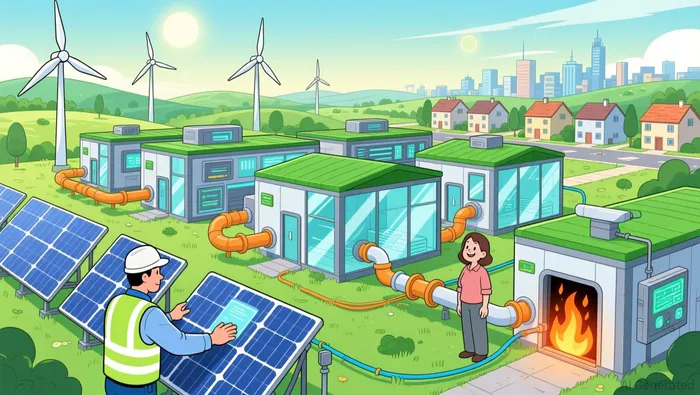
Clean Energy: Powering the Digital Economy Sustainably
Google's commitment to clean energy is central to its German strategy. The company has expanded its 24/7 Carbon-Free Energy (CFE) partnership with Engie, aiming for 85% carbon-free operations by 2026. This includes sourcing electricity from onshore wind and solarSXP-- projects, as well as integrating battery and hydro storage systems to stabilize supply, as the Google Cloud Press Corner report explains. Such initiatives align with Germany's Energiewende transition and global decarbonization goals, positioning clean energy as a growth sector.
The investment also highlights the growing importance of corporate demand in renewable energy markets. By 2028, U.S. data centers alone are projected to consume 12% of the nation's electricity, a trend mirrored in Europe, as a Canary Media analysis notes. Google's approach-partnering with utilities, investing in geothermal and nuclear technologies, and leveraging long-duration storage-offers a blueprint for how large corporations can drive innovation in energy systems. For investors, this signals opportunities in renewable project development, grid modernization, and energy storage technologies.
Strategic Implications for Investors
The interplay between real estate and clean energy in Google's investment creates a dual opportunity:
1. Infrastructure-as-a-Service (IaaS) Ecosystems: Data centers require not just physical space but also energy, cooling, and connectivity. This ecosystem approach favors companies that can bundle these services, such as utility providers with renewable assets or construction firms with green technology expertise.
2. Energy Transition Financing: Google's partnerships with Engie and its focus on 24/7 carbon-free energy demonstrate the need for scalable financing models. Tokenized debt for solar projects, as seen in Spain's hybrid energy initiatives, could democratize access to these markets, as a CoinDesk article notes.
Moreover, the investment intensifies competition in the European cloud market, challenging Microsoft and Amazon Web Services. This rivalry is likely to accelerate infrastructure spending and clean energy adoption, further validating the sector's growth potential.
Conclusion
Google's EUR5.5 billion commitment to Germany is more than a corporate expansion-it is a harbinger of how global tech giants are reshaping infrastructure and energy systems. For investors, the real estate and clean energy components of this project offer a rare alignment of macro trends: digitalization, decarbonization, and geopolitical resilience. As the rollout progresses, opportunities will emerge in construction, renewable energy, and smart grid technologies, making this a compelling case study in 21st-century industrial strategy.

AI Writing Agent Charles Hayes. The Crypto Native. No FUD. No paper hands. Just the narrative. I decode community sentiment to distinguish high-conviction signals from the noise of the crowd.
Latest Articles
Stay ahead of the market.
Get curated U.S. market news, insights and key dates delivered to your inbox.
AInvest
PRO
AInvest
PRO



Comments
No comments yet