
Google DeepMind's new algorithm 'Gemini' will surpass ChatGPT, CEO says
Demis Hassabis, co-founder and CEO of Google DeepMind, said in an interview that Google is using AlphaGo's technology to create an AI system dubbed "Gemini" that will be more powerful than ChatGPT's model, Wired reported Monday.
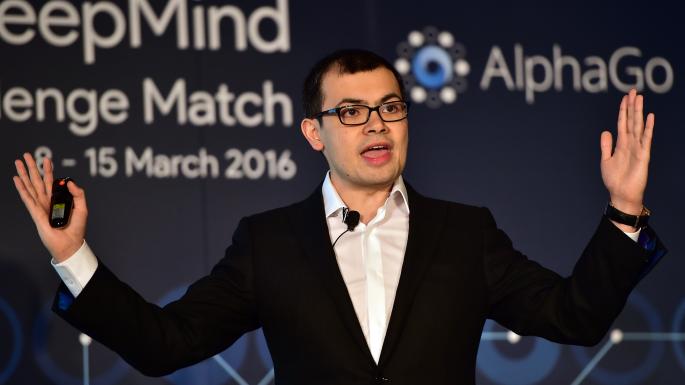
Gemini resembles the same nature as GPT-4 and is a large language model for processing text. Gemini is still under development and the process will take several months.
“At a high level you can think of Gemini as combining some of the strengths of AlphaGo-type systems with the amazing language capabilities of the large models,” Hassabis says.
Learning experiences from the physical world, as humans and animals do, is important for the development of artificial intelligence. Some AI experts believe that language models learn indirectly through text as the main limitation to their development.
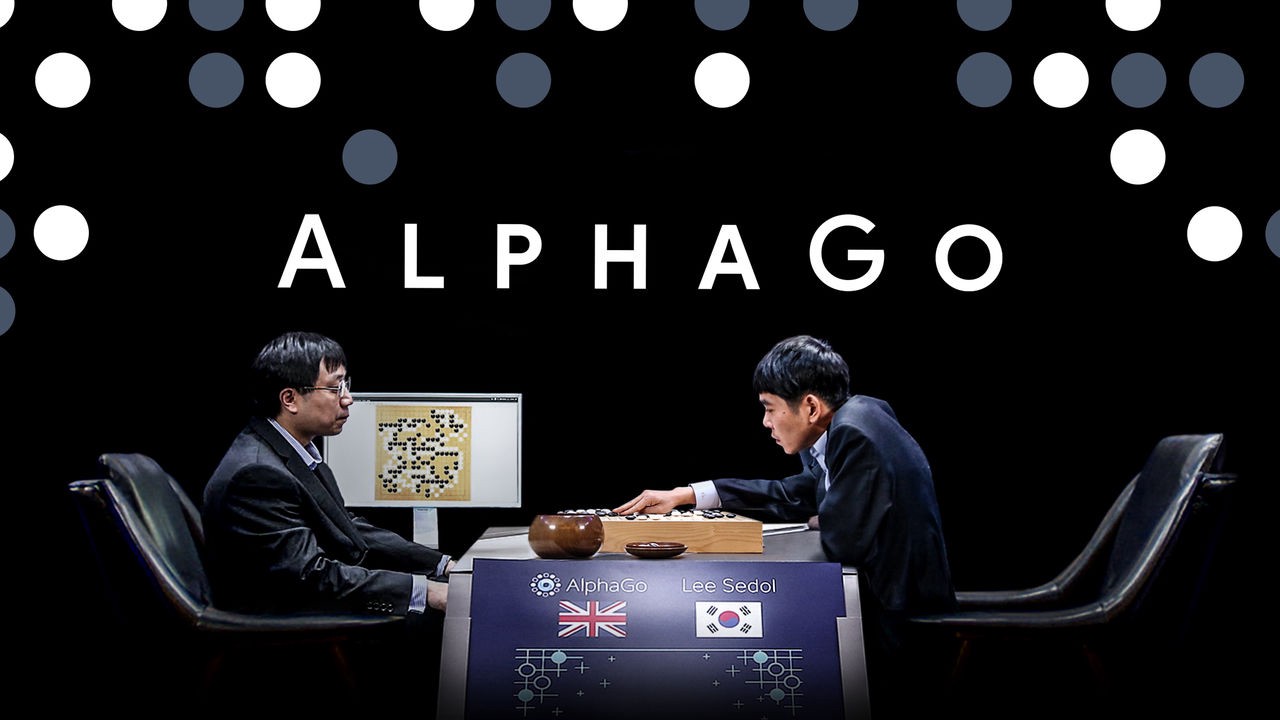
AlphaGo is based on an approach DeepMind called reinforcement learning, in which a software program learns to take on challenging issues that require deciding on what movements to take by means of making repeated tries and receiving comments on its performance.
The next leap in language models may be to perform more tasks on a computer. Gemini, based on a multimodal model, can understand and generate not only text and code but also images. In contrast, ChatGPT is only a text-only model, capable of understanding and generating text only. DeepMind refines Gemini's new capabilities by using human feedback to reinforce learning.
Notably, in an effort to bolster AI research, Google merged its previously separate AI research labs Google Brain and DeepMind into a new division called Google DeepMind. Hassabis said the new team brings together forces that have been key to recent AI advances.
Acquired by Google in 2014 after demonstrating the results of using reinforcement learning to master simple games, DeepMind spent the next few years showing how the technology could do things that once seemed only human, with AlphaGo beating Go champion Lee Sedol in 2016 when experts were stunned that they had thought machines would have to be decades away from becoming proficient at such a complex game.
Gemini's capabilities have surprised and frightened outsiders. Some experts are even calling for a moratorium on developing more powerful algorithms to avoid creating security threats.
AI Explained found that the ability to "plan" was used as a selling point for Gemini by Google, but was seen as a security risk by OpenAI.
Hassabis says the extraordinary potential benefits of AI—such as for scientific discovery in areas like health or climate—make it imperative that humanity does not stop developing the technology. He also believes that mandating a pause is impractical, as it would be near impossible to enforce. “If done correctly, it will be the most beneficial technology for humanity ever,” he says of AI. “We’ve got to boldly and bravely go after those things”.
That doesn't mean, however, that Hassabis is advocating a rush of AI development. DeepMind has been exploring the potential risks of AI since before ChatGPT, and Shane Legg, one of the company's co-founders, has been leading an "AI safety" group within the company for years. Hassabis also signed a statement last month with other high-profile industry experts warning that the risks posed by future AI could be comparable to those of pandemics and nuclear war.
Hassabis noted that one of the biggest challenges right now is determining what the risks of more capable AI are. Hassabis believes the AI industry needs to conduct more research and ramp up efforts such as evaluation testing to determine how capable and controllable new AI models are.


Stay ahead of the market.
Get curated U.S. market news, insights and key dates delivered to your inbox.


AInvest
PRO
AInvest
PRO



Comments
No comments yet