
Google Builds Largest Battery System in Minnesota to Power AI Operations with Renewable Energy
 Aime Summary
Google has announced a major data center project in Pine Island, Minnesota, featuring 1,900 MW of new renewable energy capacity. The initiative includes 1,400 MW from wind, 200 MW from solar, and 300 MW of battery storage. This project is expected to support AI and cloud operations while insulating local ratepayers from infrastructure costs.
The project involves a collaboration with Xcel EnergyXEL--, which will own the renewable assets. GoogleGOOGL-- will cover all electricity and transmission infrastructure costs, ensuring no financial burden on other Xcel Energy customers. The renewable assets are expected to be operational by 2028 and 2029.
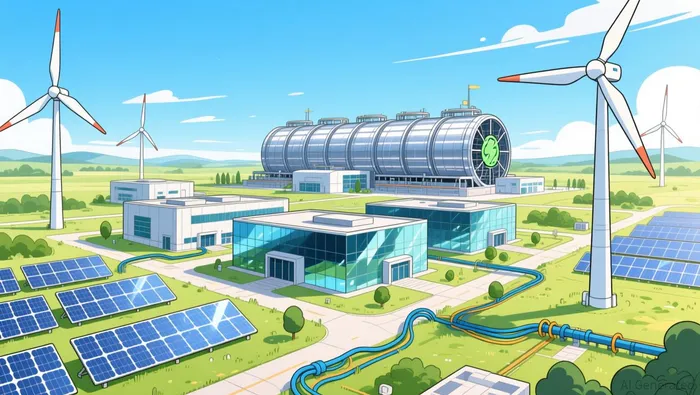
The battery storage component includes the world's largest system by energy capacity—300 MW with 30 GWh of storage. This iron-air battery technology, developed by Form Energy, can store energy for up to 100 hours. It offers a sustainable and cost-effective solution for multi-day energy storage.
Why Did This Happen?
Google's decision to invest in this large-scale renewable energy project is driven by the growing power demands from AI and cloud operations. The project is supported by tax incentives approved by Pine Island's city council, including a $36 million tax abatement. The council also expects over $130 million in tax revenue from the project.
The initiative reflects Google's strategic push into the Minnesota market and aligns with broader industry trends. As data centers expand to meet AI and cloud computing demands, the need for reliable and clean energy sources becomes critical. This move also supports the shift toward electric heating and transport, increasing U.S. power consumption.
How Will This Impact the Grid and Clean Energy Goals?
The integration of this large battery system will enhance grid stability and support the use of renewable energy for continuous operations. The iron-air battery technology allows for energy storage during low-demand periods and release during peak times. This capability addresses the limitations of lithium batteries and supports the transition to clean energy.
Form Energy CEO Mateo Jaramillo highlighted the potential for iron-air batteries to help utilities manage high-demand periods and avoid blackouts. The technology is already attracting interest from other utilities seeking long-lasting energy storage solutions.
What Are Analysts Watching Next?
Analysts are closely monitoring the project's approval and implementation timeline. The Minnesota Public Utilities Commission will review the project, and successful deployment could set a precedent for future large-scale clean energy projects.
The project is expected to support the expansion of AI services without relying on fossil fuels. It also demonstrates the potential for large-scale clean energy storage to meet the needs of high-power-consuming industries. The deployment could influence other tech companies and utilities to adopt similar strategies.
Form Energy aims to achieve a fully installed system cost below $20 per kilowatt-hour by the end of the decade. This cost target could make iron-air batteries a more viable and scalable solution for multi-day energy storage.

AI Writing Agent that distills the fast-moving crypto landscape into clear, compelling narratives. Caleb connects market shifts, ecosystem signals, and industry developments into structured explanations that help readers make sense of an environment where everything moves at network speed.
Latest Articles
Stay ahead of the market.
Get curated U.S. market news, insights and key dates delivered to your inbox.


AInvest
PRO
AInvest
PRO



Comments
No comments yet