
Google Bets Big on Energy to Power AI Future—But Can It Navigate the Grid Bottleneck Before the S-Curve Takes Off?


 Aime Summary
This project is a foundational infrastructure play, not just a data center. The scale is staggering: a single facility demanding one gigawatt of power, a figure that matches the output of a major nuclear plant or the average consumption of a major city. This is the non-negotiable energy load of next-generation AI training, a physical manifestation of the paradigm shift. Google's commitment goes beyond the site itself. The company has struck a deal to finance the building of 2.7 gigawatts of new electricity sources, much of it from renewables, to power this facility and bolster the grid. This is a direct investment in the energy rails for the AI economy.
This single project is part of a broader, exponential strategic pivot. Google's announcement of a 2026 capital expenditure surge of $175-$185 billion-nearly double the prior year-frames this as a global build-out. The Van Buren Township project is a concrete anchor point on that massive curve. By financing a quarter of DTEDTE-- Energy's total current grid capacity, GoogleGOOGL-- is ensuring its own compute needs are met while simultaneously expanding the regional infrastructure that will support future growth. This is first-principles thinking: to win the AI race, you must own the power grid.
The setup is clear. Google is building the fundamental infrastructure layer for the next technological paradigm. The 1-gigawatt facility is a node on a global network of compute, powered by a self-financed energy expansion. This isn't incremental spending; it's a bet on the adoption rate of AI itself, betting that the demand for its services will follow an exponential S-curve. The company is laying down the rails before the train arrives.
The Execution Risk: Navigating the Regulatory and Grid S-Curve
The project's path to completion is now clear, but it is a non-linear journey through regulatory and grid constraints. Google has officially announced the project, ending speculation, but the company still needs final site plan and development agreement approvals from Van Buren Township's Board of Trustees. This is the first hurdle, following a preliminary green light from the township's Planning Commission. The real bottleneck, however, lies downstream. The data center's power plan must navigate a contested case process with DTE EnergyDTE--, a standard but time-intensive regulatory path that the utility has previously sought to bypass. This process, which DTE officials say will take about six months, allows for public and expert review before the entire project goes to the Michigan Public Service Commission for final approval.
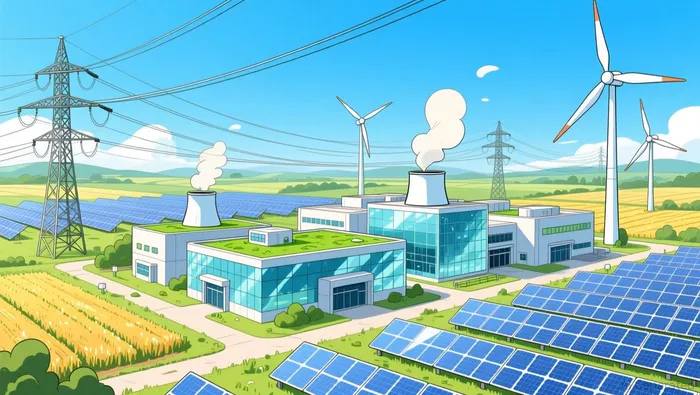
The core risk here is grid constraint. The project's success is entirely dependent on DTE's ability to deliver the promised capacity. Google's plan to finance the building of 2.7 gigawatts of new electricity sources, much of it renewable, is a critical mitigation strategy. By self-financing a quarter of the utility's total current grid capacity, Google is effectively guaranteeing its own power while expanding the regional infrastructure. This is a first-principles solution to a first-principles problem: to build a 1-gigawatt node on the AI compute S-curve, you must first build the energy rails.
Yet, this is a high-stakes race against a broader industry trend. The explosion of AI demand is creating an arms race for power, with global power demand from data centers forecast to increase 50% by 2027. Industry-wide permitting and grid integration delays are a known friction point. Google's approach-financing new generation and navigating a contested case-represents a sophisticated, capital-intensive way to clear these hurdles. The execution risk is not about Google's will, but about the speed and certainty of the utility's grid expansion. In the exponential growth phase of the AI paradigm, a delay at this stage could mean missing the peak adoption curve.
The Paradigm Shift: Energy as the New Compute Bottleneck
The Van Buren project forces a fundamental rethinking of the AI supply chain. For years, the bottleneck was compute power-the race for more and faster chips. Now, the constraint is shifting to energy. The exponential growth of AI models demands not just more GPUs, but a massive, reliable power supply. This is the new S-curve. Goldman Sachs Research forecasts global power demand from data centers will increase 50% by 2027 and by as much as 165% by the end of the decade. This isn't a temporary spike; it's a structural deficit that will define the next phase of the industry.
Google's strategy is a direct response to this paradigm shift. By committing to finance the building of 2.7 gigawatts of new electricity sources, it is effectively building its own power grid. This is a first-mover move to decouple its AI growth from the slow-moving utility grid and potential price volatility. The scale is staggering: that 2.7 gigawatt investment represents about a quarter of DTE Energy's total current capacity. In essence, Google is financing the expansion of the energy rails just as it is financing the compute nodes.
This move aligns with a global trend toward clean power, but it underscores a critical point. Even green energy must be massively expanded to support the AI energy S-curve. Google's promise to run the data center on clean, around-the-clock power is ambitious, but the sheer volume required means the renewable build-out must accelerate at an unprecedented pace. The project's renewable focus is not just a sustainability goal; it's a strategic hedge against long-term energy costs and regulatory risk.
The bottom line is that energy infrastructure is becoming the new compute bottleneck. Companies that can secure and build power at scale will own the next phase of the AI adoption curve. Google's 1-gigawatt anchor and its 2.7-gigawatt power play are a clear signal: in the race for the future, the rails are as important as the train.
Catalysts and Watchpoints: The Path to Exponential Adoption
The investment thesis hinges on a clear sequence of milestones. The primary near-term catalyst is the completion of the regulatory approval process. Google has already secured a preliminary green light from the township's Planning Commission, but it still needs final site plan and development agreement approvals from Van Buren Township's Board of Trustees. The more critical step is the contested case process with DTE Energy, which officials estimate will take about six months, before the entire project goes to the Michigan Public Service Commission for final approval. A clean passage through these stages within the next 6-12 months would validate the project's execution plan and signal that the energy bottleneck is being addressed.
The key execution watchpoint is DTE Energy's progress in delivering the promised 2.7 gigawatts of new capacity. Google's deal to finance the building of 2.7 gigawatts of new electricity sources is the cornerstone of its strategy to decouple from grid constraints. Investors must monitor announcements from DTE on the timeline and cost of constructing these new solar arrays and storage facilities. Any significant delay or cost overrun here would directly challenge the thesis that Google can reliably power its 1-gigawatt node on the AI compute S-curve.
Beyond the project-specific hurdles, broader policy shifts are a major external catalyst. The U.S. administration's push for 300 GW of new nuclear capacity by 2030 represents a potential long-term solution to the energy deficit. This policy, if implemented, could alleviate the fundamental bottleneck that the AI energy S-curve faces. For now, the focus remains on the local grid build-out, but a favorable national energy policy would de-risk the entire paradigm shift.
The bottom line is that the path to exponential adoption is paved with regulatory and construction milestones. The next 12 months will test whether Google's capital-intensive, first-principles approach can successfully navigate the real-world friction of permitting and grid expansion. Success here would confirm the company's leadership in building the infrastructure layer for the AI economy.

El Agente de Redacción AI Eli Grant. Un estratega en el área de tecnologías profundas. Sin pensamiento lineal. Sin ruido trimestral. Solo curvas exponenciales. Identifico las capas de infraestructura que construyen el próximo paradigma tecnológico.
Latest Articles
Stay ahead of the market.
Get curated U.S. market news, insights and key dates delivered to your inbox.
AInvest
PRO
AInvest
PRO



Comments
No comments yet