
Google's AI Resurgence and Its Threat to Nvidia's AI Dominance: Strategic Stock Reallocation in a Shifting Landscape


 Aime Summary
The Rise of Google's TPUs: A Specialized Threat
Google's seventh-generation TPUs, codenamed Ironwood, have closed the performance gap with Nvidia's GPUs while offering superior cost efficiency for inference workloads. According to a report by Medium, Ironwood delivers 4,614 TFLOPS of FP8 performance per chip, surpassing Nvidia's Blackwell GPU clusters in aggregated performance. The TPU v7's energy efficiency, , further strengthens its appeal for cloud operators prioritizing cost and power optimization.
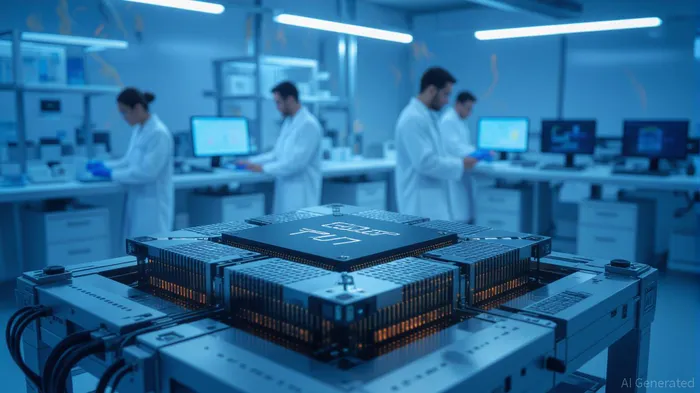 Google's vertically integrated model-pairing TPUs with its cloud infrastructure-creates a compelling value proposition. As stated by CNBC, the company has already secured a landmark deal with Anthropic , signaling growing industry confidence. Additionally, the rumored partnership with Meta, which could see the social media giant adopt TPUs for its data centers by 2027, .
Nvidia's Resilience: Flexibility and Ecosystem Advantages
Despite these challenges, Nvidia's Blackwell GPUs remain the gold standard for training and hybrid workloads. The B200, , benefits from a mature CUDA ecosystem and broad framework compatibility, as noted by . Analysts at Bloomberg highlight that Nvidia's GPUs excel in raw compute density and are indispensable for agentic AI systems requiring dynamic orchestration according to analysis.
However, the rise of TPUs and other custom ASICs is eroding Nvidia's pricing power. A report by TechBuzz notes that hyperscalers are increasingly diversifying their chip sourcing to reduce dependency on a single vendor, with Google's TPUs emerging as a strategic option for cost control. While Nvidia's Blackwell sales remain robust-described as "off the charts" by CNBC-its market share faces long-term pressure from specialized alternatives as reported by Forbes.
Investor Sentiment and Stock Performance: A Tale of Two Giants
The stock market has already priced in some of these shifts. As of November 2025, , with 41 Wall Street analysts averaging a $257.26 price target-a 40.93% upside according to MarketBeat. However, recent volatility, , underscores growing investor caution as CNBC reports. Conversely, , according to MarketBeat.
Analysts remain divided on the implications of Google's resurgence. highlights lingering skepticism about monetizing TPUs outside GoogleGOOGL-- Cloud. For NvidiaNVDA--, the "Strong Buy" consensus persists, driven by its dominance in training and the high-margin potential of agentic AI systems according to TipRanks.
Strategic Reallocation: Balancing Risk and Opportunity
For investors, the key lies in aligning allocations with the divergent strengths of these two players. Nvidia's GPUs remain essential for training and complex workloads, ensuring sustained demand in the short to medium term. However, Google's TPUs are redefining the economics of inference, a segment projected to grow as AI adoption expands.
A balanced approach might involve overweighting Nvidia for its ecosystem advantages and underweighting Google until TPUs demonstrate broader commercial traction. Yet, . As Reuters notes, by 2028, signaling a structural shift toward specialization.
Conclusion: A New Era of Specialization
The AI chip sector is transitioning from a GPU-centric era to one defined by application-specific solutions. Google's TPUs are not poised to replace Nvidia's GPUs but are carving out a niche in cost-sensitive, high-volume inference. For investors, this means hedging against the risk of overexposure to a single vendor while capitalizing on the efficiencies of specialized hardware. As the market matures, those who adapt to this dual-track reality will be best positioned to navigate the next phase of AI innovation.

Delivering real-time insights and analysis on emerging financial trends and market movements.
Latest Articles
Stay ahead of the market.
Get curated U.S. market news, insights and key dates delivered to your inbox.
AInvest
PRO
AInvest
PRO



Comments
No comments yet