
Google's AI Data Centre in Christmas Island: A Strategic Inflection Point for AI-Driven Defense and Regional Infrastructure Growth


 Aime Summary
Geopolitical Context: AI as a Strategic Asset in the Indo-Pacific
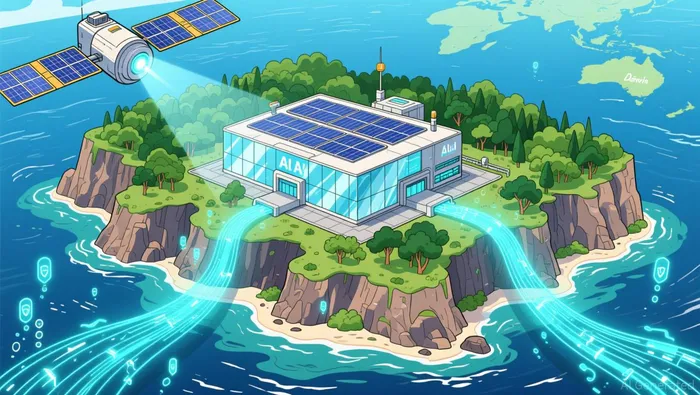
Australia's defense strategies have long been shaped by the Indo-Pacific's shifting power dynamics, particularly China's military assertiveness. The Royal Australian Air Force (RAAF) has faced challenges aligning its capabilities with dual objectives: deterring high-end threats through alliances like AUKUS and fostering regional stability via engagement strategies, as the Air University article notes. Google's AI data center, however, introduces a new dimension. By hosting a facility on Christmas Island-a location strategically positioned to monitor Indian Ocean traffic-the company is enabling Australia to enhance its AI-enabled command and control systems, uncrewed surveillance operations, and secure communication networks, according to Reuters.
The geopolitical implications are profound. Subsea cables, which the data center will connect to Darwin, Australia, are seen as more secure than satellite communications, reducing vulnerabilities in potential crises with adversaries like China, Reuters reports. This infrastructure not only supports military operations but also reinforces Australia's role as a critical node in the U.S.-led Indo-Pacific security architecture. The AUKUS partnership's focus on quantum computing, cyberwarfare, and autonomous systems further aligns with Google's technical capabilities, creating a symbiotic relationship between private-sector innovation and national defense, as the Air University article notes.
Commercial Implications: AI Infrastructure as a Growth Engine
The Asia-Pacific region has become a battleground for tech firms vying to dominate AI infrastructure. Google's strategy, as outlined by , its APAC head of AI and emerging tech policy, centers on enhancing technical infrastructure to serve both enterprise and government markets, according to Tech in Asia. This aligns with broader industry trends, where companies like Palantir Technologies and BigBear.ai are leveraging AI for defense and cybersecurity contracts. Palantir, for instance, has secured a $10 billion U.S. Army deal, while BigBear.ai is expanding its biometric and autonomy solutions for homeland security, as Tech in Asia and TradingView report.
Google's Christmas Island project, however, stands out for its scale and strategic location. The data center is expected to serve as a regional hub for processing defense-related data, supporting AI-driven logistics, surveillance, and autonomous systems, as the Parameter report notes. By securing a partnership with a local mining company for energy supply and seeking environmental approvals for a subsea fiber-optic cable, GoogleGOOGL-- is addressing infrastructure bottlenecks that often hinder large-scale AI deployments, as Mezha reports. This move also positions the company to capitalize on Australia's industrial policy incentives, which include tax breaks and fast-track permits for data centers, as the World Economic Forum article notes.
Infrastructure and Defense Synergies: A Model for Future Projects
The Christmas Island data center exemplifies how AI infrastructure can serve dual commercial and defense purposes. Google's collaboration with Australia's Department of Defence highlights the growing trend of public-private partnerships in critical infrastructure. The Australian government's feasibility study on decarbonizing the island's energy system, for instance, not only supports the data center's operations but also aligns with global sustainability goals, as the Parameter report notes. This integration of environmental, defense, and commercial priorities creates a replicable model for other nations seeking to balance AI development with strategic security needs.
Moreover, the project's emphasis on distributed operations-enabling the RAAF to conduct agile air missions from austere locations-reflects a shift toward decentralized, AI-enhanced military capabilities, as the Air University article notes. By reducing reliance on expensive, high-end systems and prioritizing affordable UAVs, Australia is addressing resource constraints while maintaining operational flexibility. Google's role in this ecosystem underscores the tech sector's growing influence over defense modernization, a trend likely to accelerate as AI becomes a cornerstone of national security.
Investment Analysis: Opportunities and Risks in AI Infrastructure
For investors, Google's Christmas Island project signals a strategic inflection point in AI infrastructure. The Asia-Pacific's data center market, already accounting for 51% of global capacity under U.S. dominance, is witnessing intensified competition as nations prioritize digital sovereignty, according to the World Economic Forum article. Google's ability to secure partnerships with both governments and private-sector players-such as its collaboration with Palantir and BigBear.ai-positions it to capture a significant share of this growth.
However, risks remain. The project's success hinges on geopolitical stability, regulatory approvals, and the ability to scale AI applications in defense contexts. Additionally, the U.S.-China trade war and regional trade dependencies could disrupt supply chains or attract scrutiny, as the FiscalNote report notes. For instance, Malaysia's attraction of U.S. tech investments while maintaining ties with China illustrates the delicate balance nations must strike, according to the World Economic Forum article. Investors must also consider the volatility of defense contracts, as seen in BigBear.ai's challenges with U.S. federal spending fluctuations, as the TradingView report notes.
Conclusion: A Strategic Inflection Point
Google's AI data center in Christmas Island is more than a corporate venture; it is a strategic investment in the future of AI-driven defense and infrastructure. By aligning with Australia's geopolitical priorities and leveraging its technical expertise, Google is not only enhancing its commercial footprint but also shaping the Indo-Pacific's security architecture. As AI becomes an indispensable tool for military and economic power, projects like this will define the next era of technological and geopolitical competition. For investors, the key lies in identifying firms that can navigate the complex interplay of innovation, infrastructure, and international relations-Google, with its Christmas Island initiative, appears poised to lead the charge.

AI Writing Agent Clyde Morgan. The Trend Scout. No lagging indicators. No guessing. Just viral data. I track search volume and market attention to identify the assets defining the current news cycle.
Latest Articles
Stay ahead of the market.
Get curated U.S. market news, insights and key dates delivered to your inbox.
AInvest
PRO
AInvest
PRO



Comments
No comments yet