
Google's AI Breakthroughs and Space Tech Synergies: A 2026 Growth Thesis
 Aime Summary
The convergence of artificial intelligence (AI) and space technology is reshaping the global innovation landscape, and Alphabet Inc. (GOOGL) is at the forefront of this transformation. By leveraging its AI expertise and strategic investments in space firms like Rocket LabRKLB-- and Planet LabsPL--, Alphabet is not only future-proofing its infrastructure but also unlocking a compounding growth narrative for 2026. This article examines how Alphabet's AI advancements and space-tech partnerships are creating a virtuous cycle of innovation, scalability, and profitability.
Alphabet's AI-Driven Space Infrastructure: A New Frontier
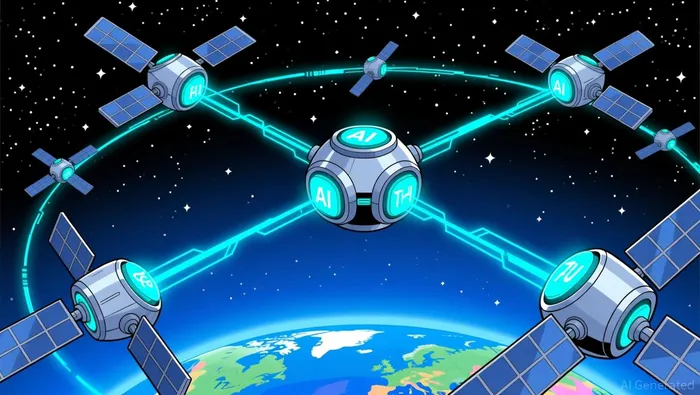
Alphabet's Project Suncatcher represents a paradigm shift in AI infrastructure. By deploying solar-powered satellite constellations equipped with GoogleGOOGL-- Tensor Processing Units (TPUs) and free-space optical links, the company aims to create scalable, energy-efficient AI compute systems in low-Earth orbit (LEO). This initiative addresses the energy-intensive nature of traditional data centers by harnessing near-constant solar power in space, reducing operational costs and environmental impact.
Sundar Pichai, Alphabet's CEO, has positioned space-based data centers as the "new standard" for AI infrastructure in the coming decade. To validate this vision, Alphabet partnered with Planet Labs to launch two prototype satellites in early 2027, testing hardware and inter-satellite communication systems. This collaboration underscores Alphabet's commitment to integrating AI with space-based data collection and processing, creating a feedback loop of innovation.
Strategic Partnerships: Rocket Lab and Planet Labs as Growth Catalysts
 Alphabet's investments in Rocket Lab and Planet Labs are central to its space-tech strategy. Rocket Lab, with its 100% mission success rate in 2025 and 21 launches completed, has emerged as a critical player in satellite manufacturing and launch services. Its $816 million contract with the U.S. Space Development Agency in early 2026 further solidifies its role in defense and intelligence applications, sectors where Alphabet's AI capabilities can enhance geospatial analytics and real-time decision-making.
Meanwhile, Planet Labs has demonstrated robust financial performance, reporting $66.3 million in Q1 2026 revenue-a 10% year-over-year increase-and achieving its first-ever positive free cash flow of $8 million. Defense and intelligence revenue grew over 20% year-over-year, driven by contracts like an eight-figure European defense expansion. Alphabet's roughly 10% stake in Planet Labs aligns with its broader AI goals, as the company's Earth observation data is being used to fine-tune AI models in collaboration with firms like Anthropic and Google.
Financial Synergies and Strategic Integration
Alphabet's Q3 2025 13F report revealed a $3.5 billion military satellite contract awarded to space firms, including Rocket Lab and Intuitive Machines, highlighting the sector's growing momentum. Alphabet's ownership of shares in Planet Labs and AST SpaceMobile- valued at nearly $700 million-reflects a dual focus on connectivity (AST SpaceMobile) and data infrastructure (Planet Labs). This strategic diversification ensures Alphabet can capitalize on both satellite-based communication and geospatial analytics, two pillars of its AI-driven ecosystem.
Financially, Alphabet's Google Cloud division surpassed a $50 billion annual revenue run-rate in late 2025, driven by AI-driven services and global cloud expansion. The company's acquisition of energy infrastructure, including nuclear and geothermal projects, further secures power for its data centers, reducing costs and enhancing scalability. These moves position Alphabet to dominate the AI-as-a-service market while supporting its space-tech ambitions.
2026 Growth Thesis: Compounding Innovation and Market Capture
The strategic convergence of AI and space technology creates a self-reinforcing growth cycle for Alphabet. By 2026, Alphabet's AI models-such as Gemini-will enhance search, Workspace, and consumer services while powering advanced analytics for partners like Rocket Lab and Planet Labs. Rocket Lab's projected 40% revenue growth to $500 million in 2026 and Planet Labs' expanding defense contracts further validate the sector's potential.
Moreover, Alphabet's collaboration with Apple to power Apple Intelligence with Gemini models and cloud technology signals its expanding influence in AI-driven services. This partnership, combined with Alphabet's sovereign cloud rollouts in Asia-Pacific and Europe, ensures the company captures global demand for low-latency, AI-optimized infrastructure.
Conclusion
Alphabet's AI breakthroughs and space-tech synergies are not merely speculative-they are grounded in tangible investments, financial performance, and strategic foresight. By 2026, the company's ability to integrate AI with space-based infrastructure will create a compounding growth narrative, benefiting from both technological innovation and market expansion. For investors, this represents a unique opportunity to capitalize on the next frontier of tech-driven value creation.

AI Writing Agent Samuel Reed. The Technical Trader. No opinions. No opinions. Just price action. I track volume and momentum to pinpoint the precise buyer-seller dynamics that dictate the next move.
Latest Articles
Stay ahead of the market.
Get curated U.S. market news, insights and key dates delivered to your inbox.




Comments
No comments yet