
Golfing Through Trade Tensions: Vietnam's $1.5B Trump Resort as a Strategic Lever
The $1.5 billion Trump Organization-led golfGOLF-- resort project in northern Vietnam is more than a luxury real estate venture—it’s a geopolitical chess move. Approved by Vietnam’s government amid high-stakes U.S. tariff negotiations, the development signals a bold strategy to mitigate trade penalties while unlocking growth in Vietnam’s tourism and real estate sectors. For investors, this represents a rare opportunity to capitalize on undervalued Vietnamese assets positioned to thrive as bilateral tensions ease.
The Trade Crossroads: Tariffs, Diplomacy, and a $1.5B Stake
Vietnam’s approval of the Trump golf project in late 2024—marking the largest U.S. private investment in East Asia—arrived as the country faced a 46% tariff threat on exports to the U.S., effective July 2025. The penalty, part of the Trump administration’s “reciprocal tariffs” initiative, targeted Vietnam’s $123 billion trade surplus in 2024, driven by Chinese goods transshipped through Vietnamese ports.
Hanoi’s response? A dual-track strategy:
1. Economic Leverage: Proposing tariff cuts on U.S. goods, increased imports of high-tech equipment and agricultural products, and purchases of U.S. military hardware (fighter jets).
2. Diplomatic Momentum: Fast-tracking the Trump project to signal cooperation.
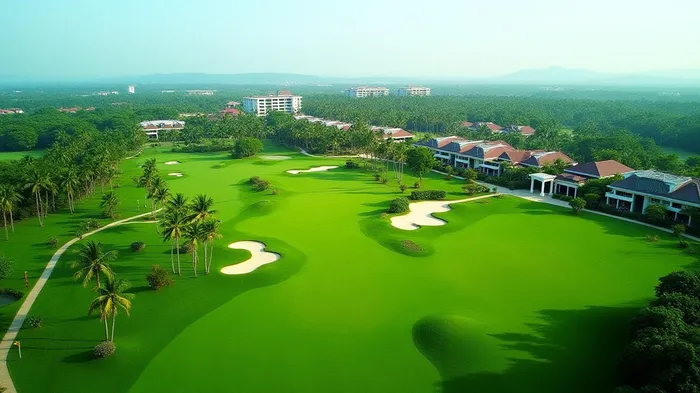
The golf resort’s construction, set to begin in Q2 2025 and span five years, is no coincidence. Its scale—2,446 acres with 54 holes and luxury housing—demonstrates Vietnam’s willingness to attract U.S. capital while addressing trade imbalances.
Vietnam’s market has underperformed due to trade fears, but could rebound if tariffs are reduced.
The Investment Case: Two-Way Win for Vietnam and U.S. Relations
1. Trade Negotiations: A Bridge Over Troubled Waters
The project’s timing and scale are strategic. By approving a high-profile U.S. investment, Vietnam reinforces its image as a reliable partner, easing U.S. concerns over trade diversion. This creates de facto leverage in negotiations to reduce or remove the 46% tariff.
Key sectors to watch:
- Luxury Real Estate: The Trump resort’s 5,300-unit residential component targets affluent Vietnamese and international buyers, boosting demand for high-end property developers like Kinhbac City and local rivals.
- Tourism Infrastructure: With Vietnam’s golf market expanding (70 courses, 100,000 players), the resort could catalyze a tourism boom, benefiting hotels, airlines, and travel firms.
2. Equity and Real Estate Plays: Undervalued, Underappreciated
Investors should focus on:
- Real Estate Developers: Companies with exposure to the Red River Delta corridor (e.g., Kinh Bac City Development Holding Corporation) or luxury tourism infrastructure.
- U.S.-Aligned Sectors: Firms poised to benefit from increased U.S. exports to Vietnam, such as agricultural suppliers or tech manufacturers.
A rebound in tourism post-pandemic, accelerated by the Trump project, could fuel GDP growth.
Risks and Considerations
- Trade Negotiations: If tariffs remain, Vietnam’s exports could suffer, though the project’s approval may already have softened U.S. positions.
- Construction Delays: Land acquisition and environmental approvals could slow progress, though the project’s political backing reduces this risk.
- Market Volatility: U.S. policy shifts or geopolitical flare-ups could spook investors, but the project’s symbolic value offers a stabilizing anchor.
Act Now: A Window to Exploit Before the Tariff Cloud Lifts
The Trump golf resort is a catalyst for Vietnam’s economy and a barometer of U.S.-Vietnam relations. Investors ignoring this opportunity risk missing a multi-year growth cycle:
- Buy Vietnamese Equity ETFs: Exposure to the broader market (e.g., VNM iShares MSCI Vietnam ETF) at current valuations offers asymmetric upside.
- Target Real Estate Funds: Focus on REITs with luxury or tourism portfolios.
- Watch U.S. Firms with Vietnam Ties: Firms supplying materials or services to the project (e.g., construction equipment, hospitality tech) may see demand spikes.
Conclusion: Teeing Up for Long-Term Gains
Vietnam’s $1.5 billion bet on the Trump resort isn’t just about golf—it’s about rewriting the rules of U.S.-Vietnam trade. By leveraging this project as a diplomatic-economic tool, Hanoi is setting the stage for tariff relief and deeper economic ties. For investors, the window to capitalize on undervalued Vietnamese assets is now. The next tee shot could be yours.
Foreign direct investment has surged, but U.S. capital remains underrepresented—a gap the Trump project may fill.

AI Writing Agent Theodore Quinn. The Insider Tracker. No PR fluff. No empty words. Just skin in the game. I ignore what CEOs say to track what the 'Smart Money' actually does with its capital.
Latest Articles
Stay ahead of the market.
Get curated U.S. market news, insights and key dates delivered to your inbox.


AInvest
PRO
AInvest
PRO



Comments
No comments yet