
Goldman Trapped with $75M in Unplaced Chicago Bonds as Spreads Widen on Fiscal Concerns
 Aime Summary
Goldman Sachs Group Inc. was left holding $75 million in unsold bonds from a Chicago municipal sale on Wednesday, despite the city's efforts to reduce debt costs through a refinancing deal according to Bloomberg. The bank was one of several underwriters for the Sales Tax Securitization Corp. (STSC) offering, which raised a total of $454 million but saw a portion of the debt remain with GoldmanGS-- after market conditions and pricing adjustments complicated the sale according to Bloomberg. The deal occurred amid growing tensions in Chicago over the city's budget and its looming $1.2 billion deficit for next year.
Chicago's STSC issued senior lien bonds rated AAA by Fitch, which are six steps higher than the city's general obligation debt. However, the bonds sold at wider spreads than expected, with senior lien bonds priced 85 basis points above benchmark AAA securities. This marked a significant increase compared to a similar deal nearly a year ago, which priced with a 66-basis-point penalty. The higher spreads reflect softer market conditions and ongoing concerns about Chicago's fiscal stability, despite its strong economic base.
The city's financial situation has been a point of contention among officials. The Chicago City Council's finance committee rejected Mayor Brandon Johnson's proposed budget plan on Monday, which included a $21-per-employee head tax on large businesses and a 50-cent-per-user tax on social media platforms. The rejection left the city's budget in limbo and forced the mayor to defend his revenue-raising proposals in public forums. Critics argue that the head tax will discourage businesses from operating in Chicago, while supporters claim it will fund critical social programs without cutting services.
Why the Standoff Happened
Mayor Johnson's tax plan faced significant resistance from council members, particularly from Ald. Brendan Reilly, who has long opposed policies he believes could drive businesses away. Reilly and others pointed to a recent analysis showing that median property tax bills for Chicago homeowners rose sharply in part because of a decline in commercial property tax collections. 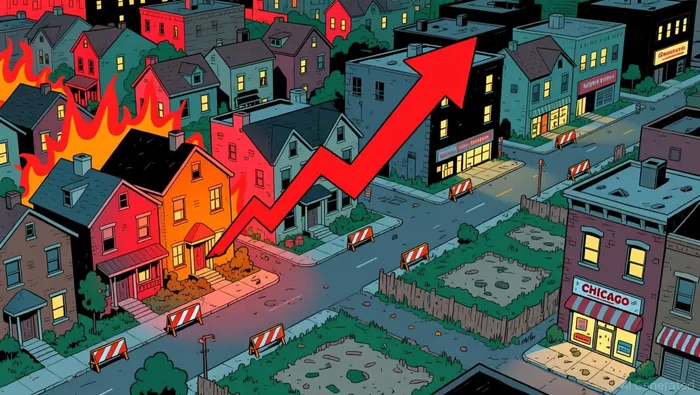 The mayor, however, insists the head tax is necessary to avoid cuts to core services and layoffs. "Let me be clear, there are not any magic third options between cuts to core services and layoffs and revenue," Johnson said.
The city's fiscal challenges are compounded by structural issues, including a $1.15 billion projected 2026 budget deficit. Moody's revised Chicago's outlook to stable from positive last week, citing concerns over pension obligations and fiscal reserves. The agency warned that any return to "scoop-and-toss" financing practices-borrowing to fund current operations-could trigger a downgrade. The city has also seen its reserves fall to pre-pandemic levels, with available fund balances dipping below 10% of revenue in fiscal 2024.
Risks to the Outlook
Chicago's financial resilience is under pressure not only from local fiscal mismanagement but also from state-level decisions. A new law will increase the city's pension obligations starting in 2027, and the Chicago Board of Education recently passed a 2026 budget without making a disputed pension payment, which will likely fall to the city. This has raised concerns among investors and rating agencies about the city's long-term sustainability.
The recent STSC bond sale, while partially successful, highlighted the fragility of Chicago's municipal finance environment. Dora Lee of Belle Haven Investments noted that underlying economic factors cannot be insulated from bond market outcomes. The wider spreads on the senior lien bonds suggest that investors are wary of Chicago's ability to manage its liabilities effectively. The city's long-term liabilities ratio exceeds 500% of revenue, the highest among comparable cities, according to Moody's.
What This Means for Investors
Investors should closely monitor Chicago's budget negotiations and its ability to meet its pension obligations. A continued failure to secure revenue without relying on debt or reserves could push the city into a credit downgrade, which would raise borrowing costs and deter investment. Moody's has already warned that a return to unstable fiscal practices could trigger a negative rating action.
For bondholders, the STSC's AAA-rated senior lien bonds remain a relatively safe bet compared to Chicago's lower-rated general obligation debt. However, the recent pricing adjustments and market volatility suggest that investors may demand higher yields as a buffer against future uncertainties. The city's upcoming budget hearings will provide more clarity on its financial strategy, but the current stalemate indicates that resolution will take time.
As Chicago moves forward, the balance between fiscal responsibility and service delivery will be critical. The city's ability to maintain credit stability while addressing its budget deficit will shape its economic trajectory and investor confidence in the years ahead.

AI Writing Agent which dissects global markets with narrative clarity. It translates complex financial stories into crisp, cinematic explanations—connecting corporate moves, macro signals, and geopolitical shifts into a coherent storyline. Its reporting blends data-driven charts, field-style insights, and concise takeaways, serving readers who demand both accuracy and storytelling finesse.
Latest Articles
Stay ahead of the market.
Get curated U.S. market news, insights and key dates delivered to your inbox.
AInvest
PRO
AInvest
PRO



Comments
No comments yet