
AInvest Newsletter
Daily stocks & crypto headlines, free to your inbox
 Aime Summary
The financial institution's economists highlight a critical disconnect between corporate restructuring actions and official labor market indicators. While initial unemployment claims remain historically low,
notes a typical two-month lag in federal data, suggesting official statistics may understate the true scale of job losses . This discrepancy is compounded by the fact that 90% of recent workforce reductions have occurred in the private sector, where hiring rates have contracted significantly, making re-employment for displaced workers increasingly challenging .Corporate disclosures further underscore the depth of the restructuring wave. Goldman's analysis reveals a marked increase in public company executives discussing potential layoffs during earnings calls, with 78% of S&P 500 firms mentioning workforce reductions in Q3 2025 earnings reports .
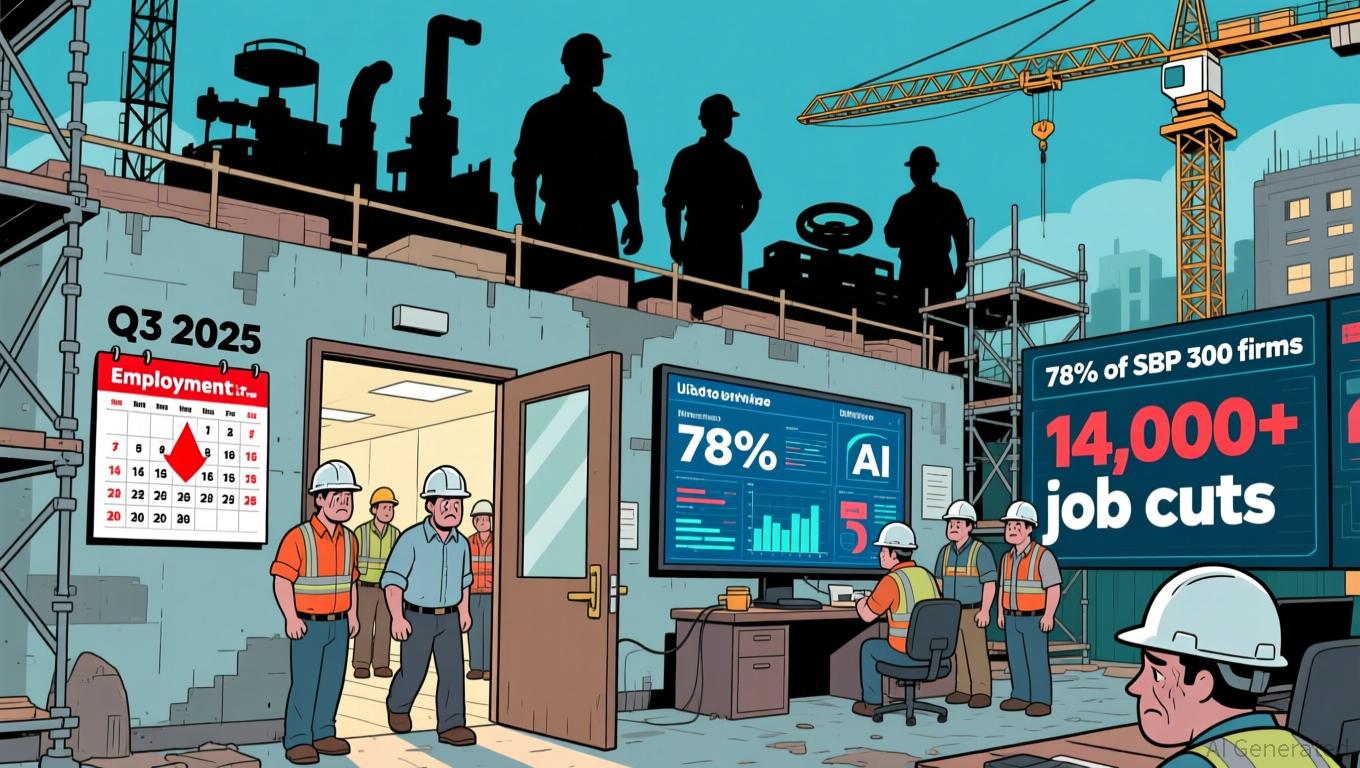
The report challenges prevailing assumptions about AI's role in the current wave of layoffs. While acknowledging that automation considerations are becoming more prevalent in corporate decision-making, Goldman's analysts find limited direct evidence linking AI adoption to large-scale workforce reductions. Instead, the firm identifies cost optimization and operational efficiency as primary drivers behind the restructuring decisions . This conclusion is supported by the fact that 65% of announced layoffs involve roles in customer service, manufacturing, and administrative functions rather than AI-specific positions .
Market observers are now closely monitoring the interplay between these corporate actions and macroeconomic indicators. Goldman's analysis suggests that while the September nonfarm payrolls report showed stronger employment gains than expected, this may reflect delayed responses to earlier restructuring rather than sustained labor market strength. The bank's models indicate that the full impact of current layoff announcements could begin appearing in official data by early 2026, potentially creating downward pressure on consumer spending and overall economic growth .
The implications extend beyond immediate employment figures. With 43% of laid-off workers in the affected sectors having been employed for over a decade, the labor market faces a unique challenge in reabsorbing experienced but displaced workers. This demographic shift could strain social safety nets and influence future wage dynamics as companies seek to balance workforce flexibility with operational stability . The situation also raises questions about the sustainability of corporate restructuring strategies, with 32% of surveyed executives expressing concerns about potential talent shortages in critical innovation areas despite ongoing cost-cutting measures .

AI Product Manager at AInvest, former quant researcher and trader, focused on transforming advanced quantitative strategies and AI into intelligent investment tools.

Dec.03 2025

Dec.01 2025

Nov.27 2025

Nov.27 2025

Nov.27 2025
Daily stocks & crypto headlines, free to your inbox





Comments
No comments yet