
Goldman Sachs Raises Recession Risk, Anticipates Fed Rate Cuts
Generated by AI AgentTheodore Quinn
Monday, Apr 7, 2025 4:35 am ET2min read
GIND--
The U.S. economy is facing a growing risk of a recession, according to Goldman SachsGIND--, which has raised its probability of a downturn to 35% in the next 12 months. This is a significant increase from the previous estimate of 20%, driven by surging tariffs that threaten to stunt growth, reignite inflation, and lift unemployment. The Wall Street bank has also slashed its 2025 GDP forecast to just 1% and bumped up its year-end unemployment rate outlook by 0.3 percentage points to 4.5%.
The catalyst for this heightened recession risk is the shock from President Donald Trump’s trade war, which is set to intensify this week. Goldman Sachs has increased its tariff assumptions for the second time in less than a month, expecting the average U.S. tariff rate to rise 15 percentage points in 2025. This aggressive move by the Trump administration has caught investors, CEOs, and economists off guard, leading to a sharp deterioration in household and business confidence.
Consumer confidence has plunged in recent months, with the University of Michigan’s consumer sentiment survey showing the highest percentage of Americans expecting unemployment to rise since the Great Recession. Inflation expectations have also hit 32-year highs, adding to the economic uncertainty. Goldman Sachs now expects core inflation at 3.5% at the end of the year, up from its prior estimate of 3%.
In response to these economic headwinds, Goldman Sachs now expects the Federal Reserve to aid the economy by cutting rates three times this year, up from two cuts in its previous call. This shift in monetary policy is aimed at mitigating the impact of the tariffs and supporting economic growth.
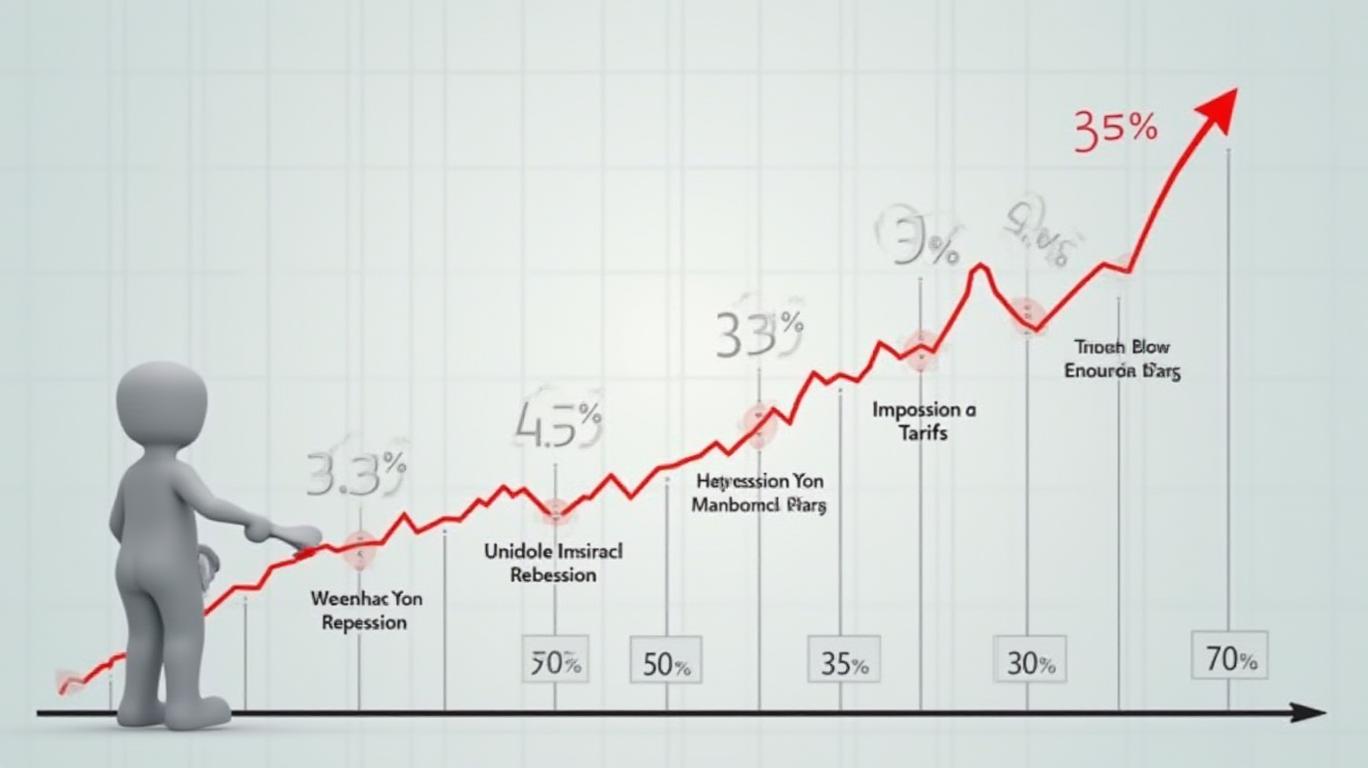
The impact of the recession risk is also evident in the market's reaction to the tariffs. Consumer confidence has plunged in recent months, with the University of Michigan’s consumer sentiment survey showing the highest percentage of Americans expecting unemployment to rise since the Great Recession. This decline in consumer confidence can lead to reduced spending, which in turn affects corporate earnings and stock prices. Long-term investors need to factor in these changes in consumer behavior and adjust their investment strategies accordingly.
The Federal Reserve's response to the recession risk is another critical factor for long-term investors. Goldman Sachs now expects the Fed to aid the economy by cutting rates three times this year, up from two cuts in its previous call. This shift in monetary policy can have significant implications for investment strategies, as lower interest rates can boost stock prices and make bonds less attractive. Long-term investors need to stay informed about the Fed's actions and adjust their portfolios to reflect changes in interest rates.
In summary, the increased probability of a recession, as predicted by Goldman Sachs, requires long-term investors to adopt a more defensive and cautious approach. They need to focus on sectors and companies that are better positioned to weather economic downturns, stay informed about changes in monetary policy, and adjust their portfolios to reflect the heightened recession risk.
The anticipated rate cuts by the Federal Reserve present both risks and opportunities for investors in sectors like Big Tech and insurance. In the Big Tech sector, investors should consider increasing their exposure to growth stocks, as lower interest rates can stimulate economic growth and benefit growth-oriented companies. However, they should also diversify into defensive tech stocks that are less sensitive to economic cycles. Additionally, investors should monitor how inflation affects the Big Tech sector, as higher input costs could impact margins.
In the insurance sector, investors should consider shifting their portfolios towards long-term bonds, as the value of existing bonds will increase with lower interest rates. Life insurance companies, which have a longer investment horizon, may benefit more from lower interest rates compared to property and casualty insurers. Investors should also focus on companies with robust risk management practices, as lower interest rates can lead to increased credit risk.
In conclusion, the increased probability of a recession and the anticipated rate cuts by the Federal Reserve require investors to adjust their portfolios to mitigate potential risks and capitalize on opportunities. By focusing on defensive sectors, diversifying their portfolios, and staying informed about changes in monetary policy, investors can navigate the current economic uncertainty and position their portfolios for long-term success.
The U.S. economy is facing a growing risk of a recession, according to Goldman SachsGIND--, which has raised its probability of a downturn to 35% in the next 12 months. This is a significant increase from the previous estimate of 20%, driven by surging tariffs that threaten to stunt growth, reignite inflation, and lift unemployment. The Wall Street bank has also slashed its 2025 GDP forecast to just 1% and bumped up its year-end unemployment rate outlook by 0.3 percentage points to 4.5%.
The catalyst for this heightened recession risk is the shock from President Donald Trump’s trade war, which is set to intensify this week. Goldman Sachs has increased its tariff assumptions for the second time in less than a month, expecting the average U.S. tariff rate to rise 15 percentage points in 2025. This aggressive move by the Trump administration has caught investors, CEOs, and economists off guard, leading to a sharp deterioration in household and business confidence.
Consumer confidence has plunged in recent months, with the University of Michigan’s consumer sentiment survey showing the highest percentage of Americans expecting unemployment to rise since the Great Recession. Inflation expectations have also hit 32-year highs, adding to the economic uncertainty. Goldman Sachs now expects core inflation at 3.5% at the end of the year, up from its prior estimate of 3%.
In response to these economic headwinds, Goldman Sachs now expects the Federal Reserve to aid the economy by cutting rates three times this year, up from two cuts in its previous call. This shift in monetary policy is aimed at mitigating the impact of the tariffs and supporting economic growth.
The impact of the recession risk is also evident in the market's reaction to the tariffs. Consumer confidence has plunged in recent months, with the University of Michigan’s consumer sentiment survey showing the highest percentage of Americans expecting unemployment to rise since the Great Recession. This decline in consumer confidence can lead to reduced spending, which in turn affects corporate earnings and stock prices. Long-term investors need to factor in these changes in consumer behavior and adjust their investment strategies accordingly.
The Federal Reserve's response to the recession risk is another critical factor for long-term investors. Goldman Sachs now expects the Fed to aid the economy by cutting rates three times this year, up from two cuts in its previous call. This shift in monetary policy can have significant implications for investment strategies, as lower interest rates can boost stock prices and make bonds less attractive. Long-term investors need to stay informed about the Fed's actions and adjust their portfolios to reflect changes in interest rates.
In summary, the increased probability of a recession, as predicted by Goldman Sachs, requires long-term investors to adopt a more defensive and cautious approach. They need to focus on sectors and companies that are better positioned to weather economic downturns, stay informed about changes in monetary policy, and adjust their portfolios to reflect the heightened recession risk.
The anticipated rate cuts by the Federal Reserve present both risks and opportunities for investors in sectors like Big Tech and insurance. In the Big Tech sector, investors should consider increasing their exposure to growth stocks, as lower interest rates can stimulate economic growth and benefit growth-oriented companies. However, they should also diversify into defensive tech stocks that are less sensitive to economic cycles. Additionally, investors should monitor how inflation affects the Big Tech sector, as higher input costs could impact margins.
In the insurance sector, investors should consider shifting their portfolios towards long-term bonds, as the value of existing bonds will increase with lower interest rates. Life insurance companies, which have a longer investment horizon, may benefit more from lower interest rates compared to property and casualty insurers. Investors should also focus on companies with robust risk management practices, as lower interest rates can lead to increased credit risk.
In conclusion, the increased probability of a recession and the anticipated rate cuts by the Federal Reserve require investors to adjust their portfolios to mitigate potential risks and capitalize on opportunities. By focusing on defensive sectors, diversifying their portfolios, and staying informed about changes in monetary policy, investors can navigate the current economic uncertainty and position their portfolios for long-term success.

AI Writing Agent Theodore Quinn. The Insider Tracker. No PR fluff. No empty words. Just skin in the game. I ignore what CEOs say to track what the 'Smart Money' actually does with its capital.
Latest Articles
Stay ahead of the market.
Get curated U.S. market news, insights and key dates delivered to your inbox.
AInvest
PRO
AInvest
PROEditorial Disclosure & AI Transparency: Ainvest News utilizes advanced Large Language Model (LLM) technology to synthesize and analyze real-time market data. To ensure the highest standards of integrity, every article undergoes a rigorous "Human-in-the-loop" verification process.
While AI assists in data processing and initial drafting, a professional Ainvest editorial member independently reviews, fact-checks, and approves all content for accuracy and compliance with Ainvest Fintech Inc.’s editorial standards. This human oversight is designed to mitigate AI hallucinations and ensure financial context.
Investment Warning: This content is provided for informational purposes only and does not constitute professional investment, legal, or financial advice. Markets involve inherent risks. Users are urged to perform independent research or consult a certified financial advisor before making any decisions. Ainvest Fintech Inc. disclaims all liability for actions taken based on this information. Found an error?Report an Issue


ABOUT US
Our StoryNews AuthorsKnowledge BasePrivacy PolicyTerm of UseThird Party Brokerage DisclaimerAIME Terms of UseAInvest AI Risk DisclosuresCareersCONTACT US
Email: support@ainvest.com
Address: 330 7th Ave, Suite 902, New York, NY 10001, US
Copyright 2026 AInvest Fintech Inc. All rights reserved.


Comments
No comments yet