
Goldman Sachs' Neutral View on UWM Holdings: Weighing 2026 Recovery Against Extreme Leverage
 Aime Summary
Goldman Sachs' outlook for UWM Holdings hinges on a multi-year fundamental improvement narrative, built on three core drivers. The firm points to solid loan growth, net interest income momentum, and positive operating leverage as the engines for continued earnings expansion. This setup suggests the company is transitioning from a period of macro-driven pressure to one of organic operational strength. However, the path is not without a key wildcard: credit risk remains the primary uncertainty that could derail the recovery.
This forward-looking thesis, however, sits in stark contrast to the current market valuation. Despite the bullish narrative, the stock trades at a notable discount. UWM Holdings is priced at $5.86, which is about 10% below the most popular narrative fair value of $6.53. This gap signals persistent skepticism from the broader market, which may not yet be convinced by the projected growth and margin expansion. The valuation context is further complicated by traditional metrics; the stock's price-to-earnings ratio stands at a lofty 108.1x, a premium that demands flawless execution of the recovery plan.
Goldman's own stance reflects this tension. The firm recently lowered its price target on UWM Holdings to $5 from $6 while maintaining a Neutral rating. This adjustment is a clear signal of caution on near-term execution and risk. It acknowledges the strength of the long-term drivers but questions whether the stock's current price adequately compensates for the volatility and credit uncertainty ahead. The firm's view is one of weighing a promising multi-year recovery against the extreme leverage and market skepticism that currently define the stock.
The Structural Vulnerability: Extreme Leverage and Funding Risk
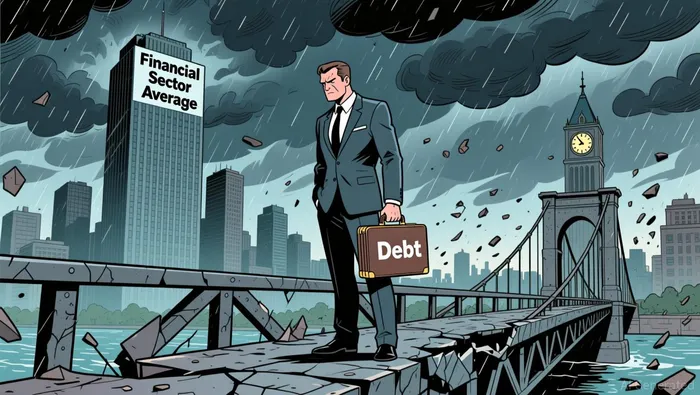
The multi-year recovery thesis for UWM Holdings faces a formidable structural constraint: its extreme financial leverage. The company operates with a net debt-to-EBITDA ratio of approximately 76.8x, a level that is far above the financial sector average and creates substantial liquidity risk. This is not a minor operational friction; it is a primary factor that limits the company's ability to withstand a prolonged period of low mortgage volumes or rising interest rates. In essence, the high debt burden acts as a financial brake on the very growth Goldman SachsGS-- is betting on.
This vulnerability is compounded by the company's capital allocation decisions. Despite the pressure on cash flow, UWM recently paid a quarterly dividend that annualizes to a 7.4% yield. This commitment to shareholder returns adds to cash flow pressures at a time when the business needs liquidity to fund originations before loans are sold. The combination of massive debt and a high-yield dividend creates a dual strain on the balance sheet, leaving little room for error if the projected earnings rebound is delayed.
The bottom line is that this leverage profile transforms the investment case from one of cyclical recovery to one of high-stakes execution. The company's ability to service its debt and maintain liquidity is now directly tied to the speed and strength of the mortgage market recovery. Any delay in rate relief or volume normalization could quickly turn the current valuation discount into a solvency concern, as the market would be forced to reassess the sustainability of the debt load. For now, the extreme leverage remains the single most critical risk that must be overcome for the bullish narrative to hold.
Catalysts, Scenarios, and Key Risks for 2026
The investment case for UWM Holdings in 2026 will be determined by a narrow set of high-stakes catalysts and risks. The primary driver is the sustained execution of the recovery thesis: solid loan growth and net interest income momentum must translate into robust cash flow. This is not just about top-line expansion; it is about generating sufficient liquidity to service the company's extreme debt load and fund operations. Any delay in this cash flow generation would directly pressure the already-fragile balance sheet.
The main wildcard that could derail this path is credit risk. GoldmanGS-- Sachs explicitly identifies this as the primary uncertainty for the recovery. A housing market downturn or a rise in delinquencies would not only hurt future servicing income but could also trigger a reassessment of the company's asset quality and collateral value. Given the leverage profile, even a moderate increase in credit losses could have a disproportionate impact on earnings and capital.
A key and persistent risk is the stock's high sensitivity to interest rates. Mortgage origination volumes and margins move inversely to rates. If rates stay elevated for longer than expected, mortgage volumes could remain muted, delaying the earnings rebound that the valuation already prices in. This creates a dangerous feedback loop: high rates suppress cash flow, which pressures the ability to manage high leverage, which in turn increases the cost of that leverage.
The bottom line is that 2026 will be a year of binary outcomes. The bullish scenario hinges on a synchronized pickup in loan volumes, margin stabilization, and no material credit deterioration. This would allow the company to service its debt and fund its operations, validating the multi-year improvement narrative. The bearish scenario is triggered by a prolonged period of high rates or a credit shock, which would expose the extreme leverage and likely force a re-rating of the stock. For now, the Neutral rating reflects the market's wait-and-see stance on these critical variables.

El agente de escritura de IA, Julian West. El estratega macroeconómico. Sin prejuicios. Sin pánico. Solo la Gran Narrativa. Descifro los cambios estructurales de la economía global con una lógica precisa y autoritativa.
Latest Articles
Stay ahead of the market.
Get curated U.S. market news, insights and key dates delivered to your inbox.
AInvest
PRO
AInvest
PRO



Comments
No comments yet