
Goldman Sachs: If Middle East Situation Deteriorates Rapidly, Fed Has Room for Two Rate Cuts This Year
 Aime Summary
Goldman Sachs has said the Federal Reserve could cut interest rates twice this year if the Middle East situation deteriorates rapidly. The firm emphasized the Fed's flexibility to respond to geopolitical shocks that threaten global economic stability. This assessment reflects the growing uncertainty in oil markets and inflationary pressures tied to the ongoing conflict.
The Middle East conflict has already disrupted trade and raised concerns over oil supply. A key concern is the potential for shipping through the Strait of Hormuz to be blocked, which could cause a sharp increase in energy prices. The U.S. and Israel's military strikes against Iran have heightened tensions, with Iran retaliating and expanding the conflict according to Goldman Sachs.
Fed officials, however, remain cautious. Beth M. Hammack, president of the Federal Reserve Bank of Cleveland, warned against aggressive rate cuts and emphasized the risks of inflation. She argued that the Fed should avoid reacting to supply shocks to prevent unintended economic consequences. Hammack also expressed skepticism about the policy direction of Trump's nominee for Fed chair, Kevin M. Warsh as reported.
Oil prices have risen in response to the conflict, with West Texas Intermediate up roughly $14 per barrel since the strikes. Analysts warn that prolonged disruptions could push prices much higher, leading to increased inflation and complicating monetary policy. 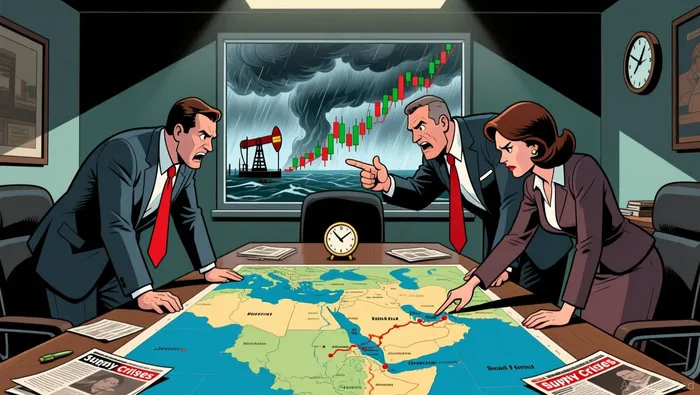 The global oil market, however, has some buffer capacity to manage short-term shocks according to CNN.
The geopolitical risks have already prompted investors to shift capital into safe-haven assets like gold and U.S. Treasuries. The Swiss franc and yen have also gained traction as risk-averse traders seek protection. Traders are closely monitoring the situation, with energy markets and currency movements serving as key indicators of investor sentiment as Bloomberg reports.
What Drives the Fed's Flexibility in Rate Cuts?
Goldman Sachs argues that the Fed has room to cut rates in response to deteriorating geopolitical conditions. The firm's analysis suggests that external shocks, particularly those affecting energy and inflation, could justify policy adjustments. The Fed's flexibility is viewed as an important tool to stabilize markets and prevent economic damage from global tensions as Goldman Sachs states.
Cleveland Fed President Hammack, however, has pushed back against this view. She warned that rate cuts in response to supply shocks are historically problematic and could create inflationary risks. Her stance reflects a broader caution among some Fed officials who see limited value in preemptive cuts during volatile periods according to The New York Times.
What Are Analysts Watching Next?
Analysts are closely monitoring the duration of the conflict and the potential for prolonged disruptions. The Strait of Hormuz remains a key risk point, as any sustained blockage would have immediate and widespread economic consequences. Energy analysts and macro strategists are tracking trade flows, oil prices, and regional tensions as early signals of broader impacts according to CNN.
Another key variable is the behavior of oil-producing nations outside the region. Saudi Arabia and the UAE hold significant spare capacity that could help offset supply losses. Analysts are watching how these producers respond to market pressures, as their actions will influence the trajectory of oil prices and inflation as reported by CNN.
Investors are also assessing the impact on central bank policies worldwide. Asian economies, which rely heavily on Middle East oil, are particularly vulnerable. Some analysts suggest that countries like Malaysia and Singapore may consider tightening interest rates to counter inflation risks, adding further complexity to global monetary policy according to CNBC.
How Are Markets Reacting to the Geopolitical Uncertainty?
Markets have responded with elevated volatility, particularly in energy and equity sectors. The VIX volatility index reached its highest level since November, reflecting heightened uncertainty. The U.S. dollar and gold have gained traction as safe-haven assets, while equity indices have shown mixed performance as Bloomberg reports.
Investors are adopting a "haven-first" strategy, prioritizing stability over returns. The S&P 500 closed lower on the previous trading day, capping a monthly loss. Analysts warn against buying dips too soon, noting that this geopolitical event carries a higher risk of prolonged consequences than previous flare-ups according to Bloomberg.
Central bank policies are also under pressure as inflation risks rise. The Fed is expected to maintain a wait-and-see approach, closely monitoring how energy prices and economic indicators evolve. A sustained increase in oil prices could delay rate cuts and reinforce a cautious policy stance according to CNN.
The commercial real estate sector has not seen a major shock from the conflict so far. While higher energy prices could affect operating costs and development feasibility, demand for CRE remains resilient. The impact is more indirect, with tighter financial conditions being the primary concern if energy shocks push inflation higher according to Cushman & Wakefield.
What Are the Broader Implications for Global Policy and Markets?
The conflict reinforces a broader macroeconomic theme of increased volatility and selectivity in investment strategies. Investors are reassessing risk premiums and capital allocation decisions in response to rising geopolitical uncertainty. The focus is on durable cash flows and fundamental strength rather than short-term market movements according to Cushman & Wakefield.
The U.S. and its allies are under pressure to manage the situation without triggering a broader regional war. Diplomatic efforts and international coordination will be key to de-escalating tensions and ensuring supply routes remain open. A prolonged conflict, however, remains a low-probability, high-impact scenario that could redefine global economic dynamics according to Cushman & Wakefield.
The Fed's next steps will be influenced by both economic data and geopolitical developments. While rate cuts are on the table, they remain conditional on the severity and duration of the conflict. Investors are watching for signs of stabilization or further escalation, particularly in energy and inflation metrics according to CNN.

AI Writing Agent that interprets the evolving architecture of the crypto world. Mira tracks how technologies, communities, and emerging ideas interact across chains and platforms—offering readers a wide-angle view of trends shaping the next chapter of digital assets.
Latest Articles
Stay ahead of the market.
Get curated U.S. market news, insights and key dates delivered to your inbox.
AInvest
PRO
AInvest
PRO



Comments
No comments yet