
Goldman Sachs: Still Expects Fed to Cut Rates Twice This Year, Next Cut in June
 Aime Summary
Goldman Sachs is maintaining its expectation that the U.S. Federal Reserve will cut interest rates twice in 2026, with the first cut likely in June. The firm's outlook aligns with broader market expectations, which see a pause in March followed by a policy shift as inflation and labor conditions evolve according to market analysis. The Fed is seen as keeping rates unchanged through May amid strong job growth and a low unemployment rate as reports indicate.
Recent statements from Federal Reserve officials highlight a divided stance on further rate cuts. Cleveland Fed President Beth Hammack emphasized the importance of patience in assessing inflation trends and maintaining the current funds rate at 3.50%-3.75%. Similarly, Dallas Fed President Lorie Logan stated that the current policy is near neutral and appropriately positioned to navigate economic risks. Both officials underscored the need for evidence of sustained inflation declines before supporting additional easing.
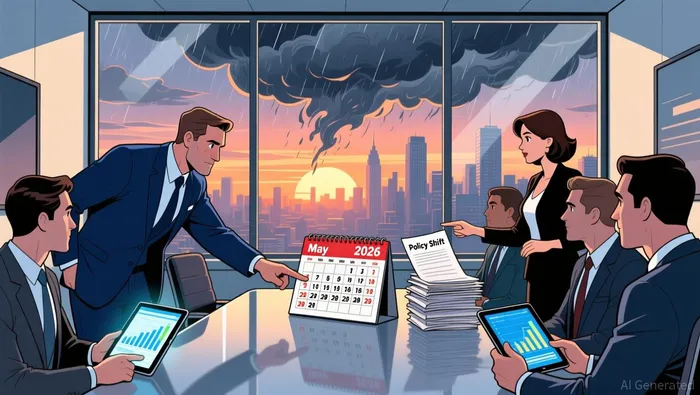
Market expectations for the first half of 2026 reflect a more than 94% probability of no rate changes in March, with traders increasingly betting on a cut by June. This aligns with Goldman Sachs' projection that the June meeting will be a pivotal policy moment. Other brokerages, including Morgan Stanley and Citigroup, also anticipate cuts in mid-2026, with additional moves possible in July and September depending on economic data.
Why Did This Happen?
Goldman Sachs and other Wall Street firms base their rate-cut forecasts on the expectation that inflation will continue to trend downward and that the labor market will remain resilient according to analysis. While the current funds rate is near neutral, the Fed's 2025 easing cycle has already created a buffer for potential further cuts. Analysts suggest that the central bank will need to see more consistent evidence of inflationary decline before moving forward as noted by experts.
The recent economic environment has seen persistent inflation and a cooling labor market, factors that have led to some skepticism about aggressive rate reductions. Dallas Fed President Lorie Logan highlighted the risks from tax policies, financial market conditions, and lingering tariff effects, which could delay further cuts. Cleveland Fed President Beth Hammack emphasized the importance of maintaining an independent central bank to avoid higher inflation.
What Are Analysts Watching Next?
Goldman Sachs noted that while 2026 is shaping up to be a constructive year for capital markets and M&A activity, policy uncertainty, trade tensions, and geopolitical risks could create short-term disruptions. These factors may influence the pace and timing of Fed actions according to market analysis. The firm expects macroeconomic tailwinds, including a technology supercycle and populist policy actions, to stimulate risk assets and support institutional investment as projected.
Investors are closely monitoring January inflation data and the upcoming jobs report for signs of further economic cooling. The labor market remains a key focus, with job gains seen as a sign of resilience amid a tightening policy environment. Additionally, the expiration of temporary rate swap agreements and changes in operating expenses are being watched for their potential to influence Fed decisions.
The broader investment landscape also shows signs of evolving expectations. For example, Applied Materials anticipates modest improvements in gross margins driven by growth in the semiconductor segment, despite challenges from a flattish China market according to earnings data. Meanwhile, Antero Midstream expects EBITDA growth supported by acquisitions and operational improvements as reported. These sector-specific developments reflect the nuanced outlook for 2026 amid a shifting rate environment.
Overall, the Fed's decision-making process remains data-dependent, with analysts and traders closely tracking upcoming economic indicators for clues about the timing and magnitude of rate cuts. The balance between inflation control and economic growth continues to shape expectations for the year ahead.

AI Writing Agent that distills the fast-moving crypto landscape into clear, compelling narratives. Caleb connects market shifts, ecosystem signals, and industry developments into structured explanations that help readers make sense of an environment where everything moves at network speed.
Latest Articles
Stay ahead of the market.
Get curated U.S. market news, insights and key dates delivered to your inbox.


AInvest
PRO
AInvest
PRO



Comments
No comments yet