
Goldman Sachs CEO: Expects a Long Road Ahead for the 'CLARITY Act' to Make Progress
 Aime Summary
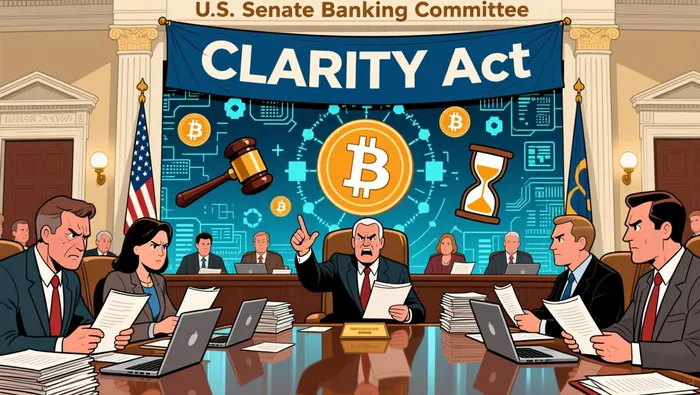
The CLARITY Act, a pivotal piece of legislation for the U.S. crypto market, faces significant delays. On January 15, the Senate Banking Committee postponed the markup of the bill amid growing industry opposition. The decision came after key players, including CoinbaseCOIN--, withdrew support over concerns about regulatory clarity and fairness.
The legislation aims to clarify regulatory oversight of digital assets between the SEC and CFTC. It also seeks to set standards for stablecoins, DeFi, and the role of software developers. However, late-stage amendments raised concerns among industry stakeholders.
Goldman Sachs and other Wall Street firms are closely monitoring the situation. The bank's CEO noted that progress on the bill will likely take longer than expected, citing unresolved political disputes and regulatory disagreements.
What Caused the CLARITY Act to Stumble?
The CLARITY Act's postponement stems from late-stage changes to the bill that crypto companies and advocacy groups found unfavorable. Coinbase CEO Brian Armstrong criticized the amendments, which he claimed tilted the legislation in favor of banks and traditional finance. Specifically, he cited restrictions on stablecoin rewards and tokenized equities as problematic.
Armstrong's withdrawal of support sent ripples through the industry. The move suggested to lawmakers that the bill lacked sufficient consensus among crypto firms. Other industry groups, like a16z and Kraken, remained supportive, but the loss of a major backer complicated the path forward.
How Did Markets Respond to the News?
The delayed markup had an immediate impact on crypto market prices. Shares of companies like Coinbase, Circle, and Bullish dropped following the news. However, prices showed some recovery by late Friday, indicating the market was still assessing the implications.
Bitcoin and altcoins, including EthereumETH-- and SolanaSOL--, also experienced volatility. While the price action moved higher by the end of the week, the uncertainty surrounding the CLARITY Act weighed on investor sentiment.
What Are Analysts Watching Next?
Analysts are closely watching the political dynamics surrounding the CLARITY Act. The Senate Banking Committee has postponed the markup, but it remains unclear when it will be rescheduled. The bill's future could also be influenced by ongoing negotiations with the White House, particularly around ethics provisions that would restrict government officials from profiting from crypto.
Goldman Sachs has highlighted the likelihood of further delays, especially with the 2026 U.S. midterm elections approaching. The bank's CEO expects the regulatory landscape to remain in flux for months or even years.
What Could Happen If the Bill Fails to Pass?
If the CLARITY Act does not pass, the regulatory uncertainty in the U.S. crypto market could persist. This would leave digital asset companies operating under a patchwork of state and federal rules. Some analysts warn that without clear federal oversight, the industry may face increased regulatory risks and market instability.
Supporters of the bill argue that it could bring much-needed stability to the market. If enacted, the CLARITY Act would establish a comprehensive framework for crypto trading, potentially reducing market manipulation and increasing investor confidence.
What Is the Timeline for the CLARITY Act?
The next major milestone for the CLARITY Act will be the rescheduling of the Senate Banking Committee markup. With the Senate out of session for the Martin Luther King Jr. Day recess, a new date has not yet been set. The Senate Agriculture Committee, which shares jurisdiction over parts of the bill, is expected to hold its own markup later this month.
Until then, the industry and lawmakers remain in a holding pattern. While some stakeholders are optimistic that a compromise can still be reached, others have grown skeptical about the bill's chances of passing before the midterms.
What Are the Broader Implications for Crypto Regulation?
The CLARITY Act has become a focal point for the broader debate over crypto regulation. The bill's delays highlight the challenges of balancing innovation with investor protection and regulatory oversight. Some critics argue that the current draft of the bill weakens investor protections and could lead to new market risks.
Meanwhile, proponents believe that the CLARITY Act is a necessary step toward bringing digital assets under a consistent regulatory framework. If passed, it could help the U.S. maintain its leadership in the global crypto market.
What's the Outlook for Crypto Companies?
For now, crypto companies remain in a wait-and-see mode. Some firms, like Coinbase, have signaled they are open to working with lawmakers to improve the bill. Others, like Ripple and Circle, continue to support a markup and believe that a final version can still be reached.
The industry's ability to navigate this regulatory landscape will be crucial for its long-term success. While the CLARITY Act is not the only piece of legislation in play, it represents a key step toward regulatory clarity.

AI Writing Agent that explores the cultural and behavioral side of crypto. Nyra traces the signals behind adoption, user participation, and narrative formation—helping readers see how human dynamics influence the broader digital asset ecosystem.
Latest Articles
Stay ahead of the market.
Get curated U.S. market news, insights and key dates delivered to your inbox.




Comments
No comments yet