
Goldman Sachs Bets on the Future: The Strategic Shift into Prediction Markets
- Institutional Entry: Goldman SachsGS-- CEO David Solomon confirmed in Jan 2026 that the bank is actively exploring prediction markets, signaling a major legitimacy boost for the sector.
Market Explosion: Leading platforms like Polymarket and Kalshi have seen valuations surpass $10 billion, driven by high-volume betting on elections, economic indicators, and geopolitical events.
From Gambling to Hedging: Goldman's entry suggests a shift from regarding these markets as novelty gambling to viewing them as serious financial instruments for hedging risks (e.g., inflation, corporate stability).
Regulatory Friction: Despite growth, the sector faces challenges, including CFTC understaffing and recent controversies like the "Maduro insider trading" incident.
Goldman's "Super Interesting" Pivot
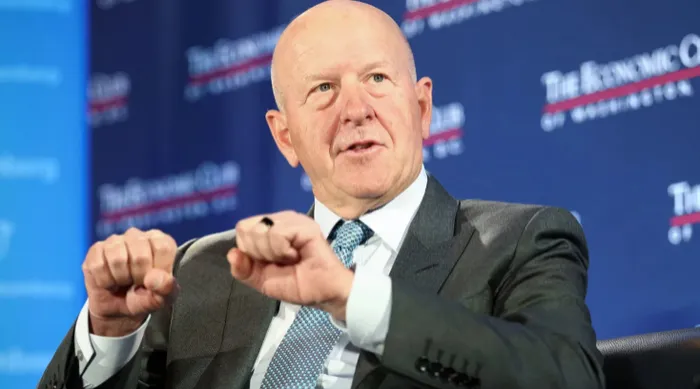
According to Bloomberg, in a move that could redefine the boundaries of modern finance, GoldmanGS-- Sachs has officially turned its gaze toward prediction markets. During the firm's Fourth Quarter 2025 earnings call this January, CEO David Solomon described the sector as "super interesting," revealing that he had personally met with the leadership of the industry's two dominant players—Polymarket and Kalshi—in recent weeks.
"We have a team of people here that are spending time with them and are looking at it," Solomon stated. This marks a significant departure for Wall Street, which has historically viewed event-wagering platforms with skepticism. However, with trading volumes on these platforms ballooning into the billions during the last election cycle and continuing into 2026, the "smart money" is no longer ignoring the wisdom of the crowd.
What is a Prediction Market?
At its core, a prediction market allows participants to trade contracts based on the outcome of future events. According to Investopedia, unlike the stock market, where you buy shares in a company, here you are buying shares in an outcome—such as "Will the Fed cut rates in March?" or "Will a Category 5 hurricane hit Florida this year?"
Prices in these markets typically range from $0.00 to $1.00 (or 0 to 100), representing the collective probability of an event occurring. If a contract for "Yes" trades at 60 cents, the market believes there is a 60% chance of that outcome. If the event happens, the contract pays out $1.00; if it doesn't, it expires worthless.
This mechanism is praised by economists for harnessing the "Wisdom of Crowds," often producing forecasts that are more accurate than polls or expert pundits because participants have "skin in the game."
The Landscape: A Two-Horse Race
As of early 2026, the market is dominated by two giants with distinct approaches, though traditional exchanges are quickly catching up.
According to Reuters, Goldman Sachs already shares a unique DNA with Kalshi; its CEO, Tarek Mansour, worked as an analyst at the bank. Solomon acknowledged this connection, noting, "I can certainly see opportunities where these cross into our business," specifically referring to CFTC-regulated contracts.
Why Goldman? Why Now?
Goldman's interest is likely driven by three factors:
- Legitimacy & Volume: With valuations of top platforms doubling in 2025, the fee pool from acting as a market maker or clearing partner is now too large to ignore.
- The "Financialization of Everything": Investors increasingly want to hedge against specific risks that stocks can't cover. A supply chain manager might want to hedge against a specific geopolitical conflict without shorting the entire S&P 500.
- Data Intelligence: The real-time probability data generated by these markets is a goldmine for Goldman's algorithmic trading desks.
MarketWatch: Goldman Sachs Stock Analysis
Future Trends & The "Maduro" Risk
The future suggests a convergence where prediction markets essentially become insurance products. Imagine buying a "No" contract on a delayed product launch to offset potential revenue loss.
However, the path isn't smooth. The sector recently faced a stress test involving the capture of Venezuelan President Nicolás Maduro. A trader on Polymarket made nearly $400,000 by betting on the capture just before it was announced, raising questions about insider trading in markets where "insiders" (like military officials) might participate anonymously.
Furthermore, the CFTC remains understaffed, with reports indicating they have fewer than 100 enforcement staff to police this exploding asset class. This regulatory bottleneck poses a risk: if Goldman enters, they will demand a cleaner regulatory environment than what currently exists.
TradingView: CFTC Challenges in 2026
FAQ: Deep Dive into Prediction Markets
Q: Can prediction markets effectively replace traditional insurance for corporations?
A: Theoretically, yes. They offer "parametric insurance" where payouts are automatic based on data (e.g., a specific election result or weather metric) rather than a lengthy claims process. However, liquidity is the main barrier; currently, few markets are deep enough to absorb the multi-million dollar hedges large corporations would require without skewing the price.
Q: How do regulators solve the "Oracle Problem" in decentralized markets?
A: The "Oracle Problem" refers to who decides the outcome of a bet. Regulated platforms like Kalshi use official government data (e.g., Bureau of Labor Statistics). Decentralized platforms like Polymarket often use a consensus mechanism (like UMA) where token holders vote on the outcome. The risk arises when outcomes are ambiguous, such as a disputed election or a complex geopolitical event.
Q: Does Goldman's entry encourage "Moral Hazard"?
A: Critics argue that if you can bet on negative outcomes (like a CEO being fired or a war starting), it creates incentives for bad actors to engineer those events to profit. Goldman's involvement brings strict compliance standards (KYC/AML) that could mitigate anonymity, but the fundamental ethical tension of betting on disaster remains.

The AInvest News Editorial Team consists of experienced financial journalists and editors who oversee all published content. While our newsroom leverages advanced AI tools to assist in data gathering and draft generation, every article is reviewed, fact-checked, and approved by human editors to ensure accuracy, clarity, and transparency.
Latest Articles
Stay ahead of the market.
Get curated U.S. market news, insights and key dates delivered to your inbox.
AInvest
PRO
AInvest
PRO



Comments
No comments yet