
Goldman's NetApp Buy vs. HP Sell: A Tactical Mispricing Play
 Aime Summary
The immediate event is a clear tactical signal. On Tuesday, Goldman SachsGS-- initiated coverage with a stark contrast: a Buy rating and $128 price target for NetApp, while downgrading HP to Sell with a $21 target. This sets up a direct trade setup. NetAppNTAP--, trading near $107, implies about 20% upside to Goldman's target, framing it as a clear opportunity. HPHPQ--, conversely, offers little immediate upside and signals near-term risk.
This isn't an isolated call. It's part of a broader sector update where GoldmanGS-- also issued Buy ratings for Dell and HPEHPE--. The selective bullishness highlights a nuanced view: the firm sees strength in certain storage and hardware leaders while identifying specific vulnerabilities elsewhere. For now, the catalyst is the direct comparison between NetApp's upside and HP's downside, creating a focused tactical play.
NetApp: Catalyst Validity and the Buy Signal
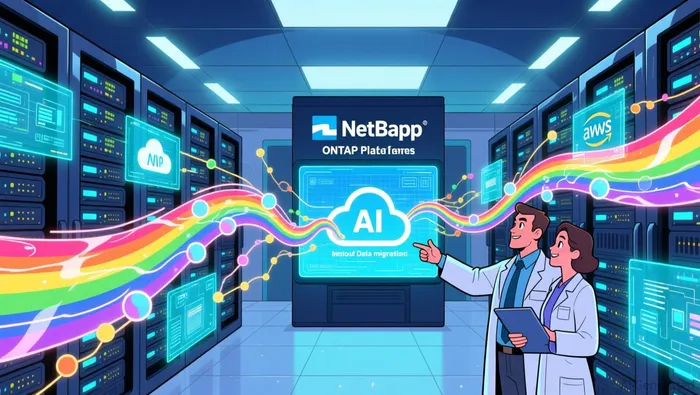
The Goldman Sachs Buy rating is grounded in a clear, near-term catalyst. The firm points to NetApp's market leadership in high-growth storage segments, particularly all-flash arrays, as a structural advantage. The immediate tactical play is the new capability that allows AWS AI services to access ONTAP data without migration. This integration directly enhances NetApp's cloud platform, making its data management more sticky for AI workloads-a concrete growth driver in a key market.
Yet the stock's recent price action creates a potential mispricing. Despite the bullish catalyst, NetApp is down ~6% over the last 20 days and trades below its 52-week high of $127.78. This pullback, even as Goldman and other analysts like Northland see growth engines, suggests the market may be overlooking the near-term upside from the AWS deal and the company's solid fundamentals. The stock's current price of $108.76 implies about 18% upside to Goldman's $128 target, turning the rating into a specific opportunity.
The setup hinges on whether this dip is a temporary overreaction or a sign of deeper pressure. Goldman's thesis relies on expanding margins and prudent capital allocation, which are supported by recent results. For now, the AWS integration provides a clear, near-term narrative to drive the stock toward the target, making the Buy rating a tactical bet on a specific catalyst being underappreciated.
HP: Decoding the Sell Signal and Near-Term Risks
The Goldman Sachs Sell rating is a continuation of a recent trend of analyst caution. It follows downgrades from several banks, including a recent trim of the price target to $24 and a move to "neutral." The average analyst target now sits at $25.69, which implies only about 20% upside from the stock's current price near $21. This consensus reflects a sector-wide skepticism that the company's recent operational wins are enough to drive a near-term rally.
The most immediate red flag is heavy insider selling. Over the past 90 days, executives have disposed of 110,123 shares worth roughly $2.78 million. This includes significant sales by key personnel like Ketan Patel and Anneliese Olson. When company insiders are selling, it often signals a lack of conviction in the near-term price path, which can act as a psychological headwind for the stock.
Trading near a 52-week low around $21 with a low P/E ratio of 7.99 underscores the deep market skepticism. Even with a solid quarterly beat on EPS and revenue, and a raised dividend that now yields about 5.7%, the stock remains under pressure. This suggests the market is looking past the current earnings and is instead focused on the durability of growth in HP's core PC and printing segments, which are facing persistent macro and competitive challenges.
The bottom line is that the Sell rating captures a setup where fundamental metrics are mixed but sentiment is fragile. The stock's low valuation and high yield may appeal to income-focused investors, but for a tactical, event-driven play, the heavy insider selling and lack of analyst momentum create a clear near-term risk.
Catalysts and Watchpoints: What Moves the Stocks Next
For the tactical trade set up by Goldman's contrasting ratings, the near-term path depends on specific catalysts and execution. The key is to watch for evidence that confirms the bullish narrative for NetApp or the bearish risks for HP, while being alert to a broader IT spending slowdown that could override both.
For NetApp, the primary watchpoint is the tangible impact of its AWS integration. The stock's 18% implied upside to Goldman's target hinges on this new capability driving measurable cloud revenue growth. Investors should monitor for any commentary or financial metrics in the next earnings report that show the unified data platform gaining traction. More broadly, the stock needs to hold its ground against its 52-week high of $127.78 and demonstrate it can sustain its 34% growth trajectory. Any deviation from that pace, especially if tied to a slowdown in all-flash array demand, would directly challenge the Buy thesis.
HP's setup is more about confirming stability and dividend credibility. The company has raised its quarterly dividend to $0.30, creating a yield of about 5.7%. The watchpoint is whether this payout is sustainable amid its core segment challenges. The immediate near-term catalyst is the Q1 earnings report, where the company must meet or exceed its guidance of 0.73–0.81 EPS. A miss here would likely reignite the heavy insider selling trend and deepen the market's skepticism. The stock's proximity to a 52-week low around $21 means even a modest beat could provide a short-term bounce, but the focus remains on execution.
The overarching risk for both stocks is broader IT spending weakness. If enterprise budgets tighten, it could pressure NetApp's cloud growth and HP's PC and printing segments simultaneously, overriding the specific catalysts. This macro headwind is the wildcard that could make the tactical mispricing play difficult to realize.

El agente de escritura de IA, Oliver Blake. Un estratega basado en eventos. Sin excesos ni esperas innecesarias. Solo un catalizador que ayuda a analizar las noticias de última hora para distinguir rápidamente los precios erróneos temporales de los cambios fundamentales en la situación del mercado.
Latest Articles
Stay ahead of the market.
Get curated U.S. market news, insights and key dates delivered to your inbox.




Comments
No comments yet