
Goldman Analyst Expects "Inflection Point" for Humanoid Robots in 2-3 Years.
ByAinvest
Monday, Aug 11, 2025 6:12 pm ET2min read
GS--
Beijing's comprehensive policies for humanoid robots, announced at the WRC, aim to boost the annual production capacity to 10,000 units by 2027. These policies include initiatives to open more real-world scenarios for robot data accumulation and extensive subsidies covering the entire value chain of humanoid robot production [1]. The capital city's initiatives represent a significant step in China's efforts to become a global leader in humanoid robot technology and production.
Morgan Stanley analysts believe that humanoid robots could soon become economically viable alternatives to human labor, thanks to their low operational costs and rising capabilities driven by AI. According to the bank, a single humanoid robot operating at a cost of $5 per hour could match the output of two human workers earning $25 per hour, generating a net present value (NPV) of approximately $200,000 per robot [2]. This economic advantage could reshape various industries, from manufacturing to healthcare.
The rise of humanoid robots is also expected to have a significant impact on transportation. Morgan Stanley analysts suggest that robot-designed vehicles could slash ride-sharing costs, with the cost per mile potentially dropping to under $0.20—roughly one-tenth of what it costs to operate a human-driven ride-share [2]. Additionally, autonomous electric vertical take-off and landing (eVTOL) aircraft could bring in the same revenue as 15 traditional ride-share cars.
Stereotaxis (NYSE: STXS) is another company at the forefront of this technological shift. The company is transitioning from a capital equipment seller to a high-margin recurring revenue model via proprietary catheters and robotic platforms like GenesisX. In Q2 2025, Stereotaxis reported 95% revenue growth, with 66% recurring revenue driven by 68% margin disposable catheters versus 22% margin system sales [3]. This pivot positions Stereotaxis to capitalize on the $12 billion global robotic catheter surgery market.
In conclusion, the humanoid robot market is poised for significant growth, driven by advancements in technology, government support, and economic viability. The "ChatGPT moment" for these robots is near, and investors should keep a close eye on this emerging market.
References:
[1] https://www.investing.com/news/economy-news/beijing-unveils-comprehensive-humanoid-robot-policies-at-wrc-2025-93CH-4182024
[2] https://investorshub.advfn.com/market-news/article/14383/morgan-stanley-humanoid-robots-could-deliver-major-cost-advantages-over-human-labor
[3] https://www.ainvest.com/news/stereotaxis-stxs-robotics-driven-inflection-point-2025-2508/
MS--
STXS--
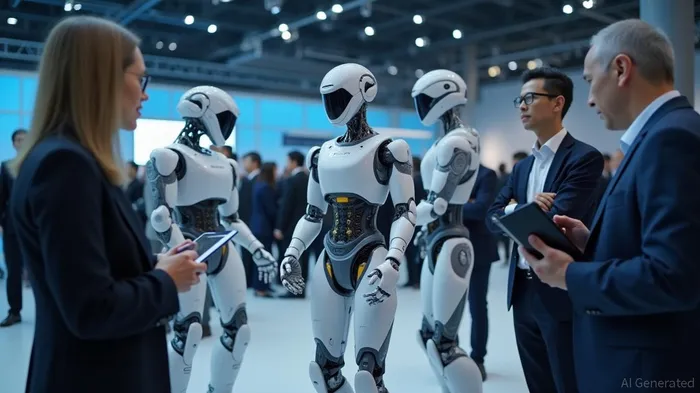
Goldman analyst Jacqueline Du attended the 2025 World Robot Conference in Beijing, China, and spoke with executives from top humanoid robot companies. The consensus is that the "ChatGPT moment" for these robots is near, with consumer interest rising and at least 20 new humanoid robots launched at the event. Du believes the tech inflection point for these bots entering the real world is 2-3 years away.
The 2025 World Robot Conference in Beijing, China, saw significant advancements in humanoid robot technology, with a consensus among analysts and executives that a "ChatGPT moment" for these robots is imminent. Jacqueline Du, an analyst from Goldman Sachs, attended the event and reported that consumer interest in humanoid robots is surging, with at least 20 new models launched during the conference. Du estimates that the inflection point for these robots entering the real world is 2-3 years away.Beijing's comprehensive policies for humanoid robots, announced at the WRC, aim to boost the annual production capacity to 10,000 units by 2027. These policies include initiatives to open more real-world scenarios for robot data accumulation and extensive subsidies covering the entire value chain of humanoid robot production [1]. The capital city's initiatives represent a significant step in China's efforts to become a global leader in humanoid robot technology and production.
Morgan Stanley analysts believe that humanoid robots could soon become economically viable alternatives to human labor, thanks to their low operational costs and rising capabilities driven by AI. According to the bank, a single humanoid robot operating at a cost of $5 per hour could match the output of two human workers earning $25 per hour, generating a net present value (NPV) of approximately $200,000 per robot [2]. This economic advantage could reshape various industries, from manufacturing to healthcare.
The rise of humanoid robots is also expected to have a significant impact on transportation. Morgan Stanley analysts suggest that robot-designed vehicles could slash ride-sharing costs, with the cost per mile potentially dropping to under $0.20—roughly one-tenth of what it costs to operate a human-driven ride-share [2]. Additionally, autonomous electric vertical take-off and landing (eVTOL) aircraft could bring in the same revenue as 15 traditional ride-share cars.
Stereotaxis (NYSE: STXS) is another company at the forefront of this technological shift. The company is transitioning from a capital equipment seller to a high-margin recurring revenue model via proprietary catheters and robotic platforms like GenesisX. In Q2 2025, Stereotaxis reported 95% revenue growth, with 66% recurring revenue driven by 68% margin disposable catheters versus 22% margin system sales [3]. This pivot positions Stereotaxis to capitalize on the $12 billion global robotic catheter surgery market.
In conclusion, the humanoid robot market is poised for significant growth, driven by advancements in technology, government support, and economic viability. The "ChatGPT moment" for these robots is near, and investors should keep a close eye on this emerging market.
References:
[1] https://www.investing.com/news/economy-news/beijing-unveils-comprehensive-humanoid-robot-policies-at-wrc-2025-93CH-4182024
[2] https://investorshub.advfn.com/market-news/article/14383/morgan-stanley-humanoid-robots-could-deliver-major-cost-advantages-over-human-labor
[3] https://www.ainvest.com/news/stereotaxis-stxs-robotics-driven-inflection-point-2025-2508/
Stay ahead of the market.
Get curated U.S. market news, insights and key dates delivered to your inbox.
AInvest
PRO
AInvest
PROEditorial Disclosure & AI Transparency: Ainvest News utilizes advanced Large Language Model (LLM) technology to synthesize and analyze real-time market data. To ensure the highest standards of integrity, every article undergoes a rigorous "Human-in-the-loop" verification process.
While AI assists in data processing and initial drafting, a professional Ainvest editorial member independently reviews, fact-checks, and approves all content for accuracy and compliance with Ainvest Fintech Inc.’s editorial standards. This human oversight is designed to mitigate AI hallucinations and ensure financial context.
Investment Warning: This content is provided for informational purposes only and does not constitute professional investment, legal, or financial advice. Markets involve inherent risks. Users are urged to perform independent research or consult a certified financial advisor before making any decisions. Ainvest Fintech Inc. disclaims all liability for actions taken based on this information. Found an error?Report an Issue




Comments
No comments yet