
The Golden Ticket: How Sports Franchises Like the Lakers Are the New Hedge Against Volatility
The Los Angeles Lakers' record-breaking $10 billion valuation—nearly 150 times Jerry Buss's 1979 purchase price—marks a watershed moment in sports finance. For high-net-worth investors, this deal is more than a headline; it's a blueprint for blending legacy brand equity with tech-driven growth to create resilient, high-return portfolios. Mark Walter's acquisition of the Lakers, paired with his strategic AI investments, exemplifies a paradigm shift: sports franchises are no longer just entertainment assets—they're hybrid financial instruments with emotional resonance, recurring revenue, and inflation-resistant value.
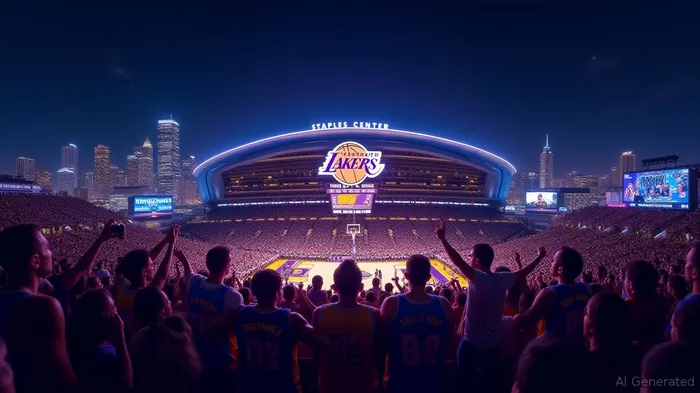
The Legacy Equity Advantage
The Lakers' value isn't just about basketball. It's a cultural institution with 18 NBA championships, a global fanbase of 200 million, and media rights generating $1.5 billion annually. This brand equity acts as an inflation hedge: ticket prices, merchandise sales, and sponsorships rise with demand, while the franchise's storied history ensures loyalty. Walter's deal leverages this stability, locking in revenue streams that outperform volatile markets.
Consider the Buss family's legacy: their 44-year tenure built a brand that transcends sports. Even as global markets falter, the Lakers' ability to sell naming rights, premium streaming content, and experiential fan packages remains bulletproof.
Tech-Driven Growth: AI as the New Playbook
Walter's genius lies in pairing the Lakers' legacy with 21st-century innovation. His TWG Global firm, which already owns the Dodgers and Chelsea FC, has invested $40 billion in AI tools to optimize every aspect of sports management. Here's how it works:
- Player Performance: AI analyzes biometric data to reduce injuries and optimize training regimens. The Dodgers' World Series wins (2020, 2024) were fueled by predictive analytics identifying undervalued talent.
- Fan Engagement: Machine learning personalizes content, from real-time highlights to VR experiences. Walter's AI platform, FanFlow, boosted the Dodgers' digital revenue by 300% since 2020.
- Operational Efficiency: Computer vision reduces stadium operational costs by 20% through automated crowd management and energy use optimization.
The Investment Case: Why Allocate Here?
For investors, the Lakers model offers three critical advantages:
- Diversification Beyond Traditional Assets: Sports franchises are non-correlated with stocks and bonds. Their revenue streams (media rights, sponsorships) thrive in both bull and bear markets.
- Scalability via Technology: Walter's AI tools turn legacy assets into growth engines. For example, the Lakers' global fanbase can now monetize via NFTs, AI-curated subscription services, and virtual events.
- Emotional Resonance as a Hedge: Cultural assets like the Lakers are recession-resistant. People spend on sports even during downturns—think Super Bowl ads or NBA Finals merch.
The $40 billion TWG AI fund, backing these innovations, ensures scalability. Investors gain exposure to both tangible (stadiums, TV rights) and intangible (brand, tech) assets.
Risk Management: Balancing Legacy and Tech
Critics argue sports franchises are “vulnerable to star player departures” or “over-reliance on fickle fan sentiment.” Walter counters this with diversification:
- Geographic Expansion: The Lakers' Asia-Pacific fanbase fuels merchandise sales and stadium partnerships in markets like Dubai.
- Cross-Portfolio Synergy: TWG's ownership of the Dodgers, Chelsea, and F1's Cadillac team creates cross-promotional opportunities. A Lakers-Celtics NBA Finals broadcast, for instance, could be paired with Chelsea's Champions League matches for advertisers.
Final Play: Allocate 5–10% to Sports Franchises
For portfolios seeking stability and innovation, allocate 5–10% to sports franchises through private equity stakes or ETFs like the Sports Tech Innovation ETF (STX). Focus on entities with:
- Proven AI integration (e.g., Walter's Lakers/Dodgers).
- Global revenue streams (media rights, international sponsorships).
- Scalable tech platforms (fan engagement tools, data analytics).
The Lakers' $10 billion valuation isn't just a price tag—it's a promise. In a world of algorithmic trading and AI-driven markets, the enduring power of emotional equity and cultural capital will keep these assets rising. Walter's blend of legacy and tech isn't just a sports strategy—it's the future of finance.
Risk Disclosure: Sports franchises involve risks, including dependence on star talent and market trends. Always consult a financial advisor before investing.

Stay ahead of the market.
Get curated U.S. market news, insights and key dates delivered to your inbox.


AInvest
PRO
AInvest
PRO



Comments
No comments yet