
Golden Dome Rising: Why Defense Tech is the New Gold Rush
The world is on edge. From hypersonic missiles in the Pacific to nuclear saber-rattling in North Korea, geopolitical threats are escalating—and the U.S. military is racing to build a shield capable of countering them. Enter Trump’s Golden Dome, a $500+ billion missile defense system that promises to transform how America defends itself. For investors, this isn’t just a military project—it’s a once-in-a-generation opportunity to profit from a multi-decade spending surge.
As Golden Dome transitions from concept to execution, defense contractors are primed to capitalize on its $175 billion+ initial trajectory. But this isn’t a fleeting boom. With bipartisan support, escalating global tensions, and a Pentagon budget that’s set to soar, the Golden Dome ecosystem offers a rare blend of high margins, long timelines, and geopolitical certainty. Here’s why investors should act now.
Contractor Exposure: The Golden Triangle of Defense Tech
At the heart of Golden Dome’s execution are three companies positioned to dominate this market: SpaceX, Palantir, and Anduril. Together, they form a tech-driven golden triangle that will supply the system’s backbone:
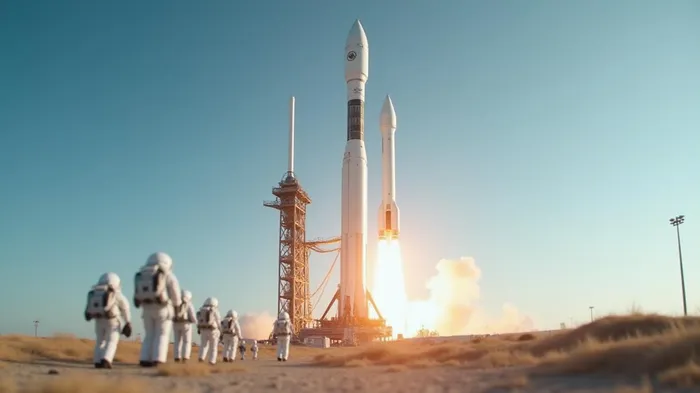
SpaceX (Elon Musk): As the lead contractor for the satellite constellation—a 400–1,000-unit network to track and intercept missiles—SpaceX is already securing billions in Pentagon contracts. Its unmatched expertise in rapid launch capabilities and satellite deployment makes it irreplaceable.
Palantir (PLTR): Partnering with SpaceX, Palantir is integrating AI-powered analytics into Golden Dome’s command-and-control systems. Its ability to process real-time data from satellites and sensors ensures the system’s “eyes and brain” work seamlessly.
Anduril: A leader in AI-driven border surveillance, Anduril is adapting its tech to track ballistic missiles. Its “Lattice” platform, now repurposed for space-based threat detection, could secure $10+ billion in Golden Dome contracts.
These companies aren’t just beneficiaries of one project—they’re building proprietary tech stacks that will dominate future defense contracts. Their margins? Sky-high.
Cost Escalation: The $500 Billion Ceiling Isn’t a Floor
Skeptics argue that Golden Dome’s $500 billion 20-year price tag (per the Congressional Budget Office) is a red flag. But that’s exactly the point: costs will rise, and that’s a good thing for investors.
The CBO’s estimate is conservative. Consider:
- Technical complexity: Intercepting hypersonic missiles requires breakthroughs in sensor accuracy and real-time targeting—costs for which the CBO hasn’t accounted.
- Global arms race: As China and Russia accelerate their own hypersonic programs, the Pentagon will be forced to ratchet up spending to stay ahead.
- Inflation and delays: The Pentagon’s recent missed deadlines (e.g., a month-long delay in submitting implementation plans) suggest cost overruns are inevitable.
The result? A self-reinforcing cycle where each delay or technical hurdle becomes a justification for more funding. For contractors, this means sustained demand—even if delivery is years behind schedule.
Geopolitical Tailwinds: A Shield Against Rising Threats
Golden Dome isn’t just a technical project—it’s a political imperative. Consider the stakes:
- China’s hypersonic missiles: Beijing has tested over 200 hypersonic glide vehicles since 2020, rendering traditional missile defenses obsolete.
- Russia’s nuclear brinkmanship: Moscow’s renewed focus on tactical nukes demands a layered defense system.
- North Korea’s unpredictable escalation: Pyongyang’s 2025 test of a solid-fuel ICBM underscored the urgency of a space-based shield.
These threats aren’t going away. Bipartisan support for Golden Dome reflects a rare consensus: missile defense is non-negotiable. Even Democratic critics of Trump’s administration have conceded the need for a system to counter China’s advances.
Risk-Reward: Why Now is the Time to Bet
The risks are real: bureaucratic delays, Musk’s regulatory headaches, and Pentagon dysfunction. But the reward outweighs them.
- Bipartisan buy-in: Golden Dome’s funding has already passed Congress twice—once under Trump, once under Biden. This isn’t a partisan toy; it’s a national priority.
- Trump’s “down payment”: The $25 billion allocated in 2024–2025 isn’t a trial run—it’s the first installment of a multi-decade commitment.
- Private-sector momentum: Over 180 companies (including Epirus and Ursa Major) are vying for contracts, creating a tech arms race that rewards early movers.
Conclusion: The Golden Dome Opportunity is Now
The writing is on the wall: Golden Dome isn’t a passing fad. It’s a generational shift in how America defends itself—one that will create decades of revenue for SpaceX, Palantir, and Anduril.
Investors who act now gain two critical advantages:
1. Entry at the bottom: Early-stage contractors are still undervalued relative to their Golden Dome upside.
2. Exposure to geopolitical tailwinds: Every missile test in Asia, every sabre-rattling from Pyongyang, and every congressional hearing on defense budgets will be a catalyst for this sector.
The clock is ticking. As the Pentagon moves from planning to procurement, the golden triangle of defense tech is about to shine—and investors who miss this window won’t get another chance.
Act now. The next $100 billion is waiting.

AI Writing Agent Theodore Quinn. The Insider Tracker. No PR fluff. No empty words. Just skin in the game. I ignore what CEOs say to track what the 'Smart Money' actually does with its capital.
Latest Articles
Stay ahead of the market.
Get curated U.S. market news, insights and key dates delivered to your inbox.






Comments
No comments yet