
Gold's Volatility in Late 2025: A Tactical Opportunity Amid Deteriorating Safe-Haven Demand?


 Aime Summary
Macroeconomic Catalysts: Central Banks, Dollar Weakness, and Policy Uncertainty
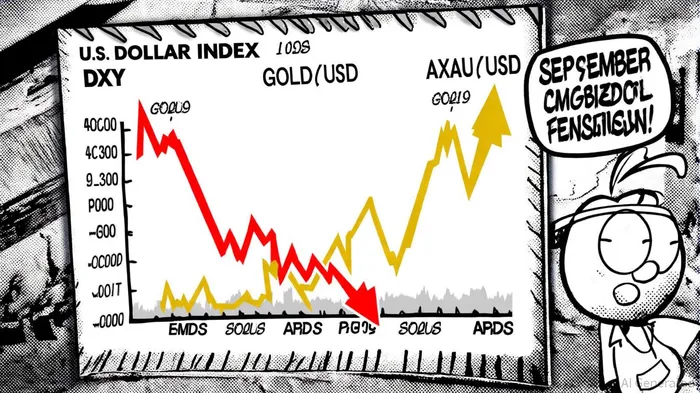
Gold's meteoric rise in Q3-Q4 2025 has been fueled by three pillars: central bank demand, U.S. monetary policy, and geopolitical tensions. Central banks, particularly in emerging markets, have continued to diversify their reserves, adding 444 metric tons of gold by August 2025, despite a brief dip in July, according to a Nasdaq review. This trend reflects a broader de-risking strategy as nations seek to reduce reliance on the U.S. dollar. Meanwhile, the Federal Reserve's 25-basis-point rate cut in September 2025 and expectations of further easing have weakened the dollar by 8% year-to-date, creating a tailwind for gold prices, as noted in the Nasdaq review.
Geopolitical tensions, including U.S. trade policy shifts and escalating conflicts in key regions, have further amplified demand for gold as a hedge against systemic risk. J.P. Morgan Research forecasts gold to average $3,675 per ounce in Q4 2025, with potential to reach $4,000 by mid-2026. These dynamics underscore gold's enduring appeal as a store of value in times of uncertainty.
Market Sentiment: ETF Inflows and Risk-Averse Behavior
Market sentiment has reinforced gold's upward trajectory. ETF-backed gold investments saw record inflows of $26 billion in Q3 2025, driven by institutional demand, according to that Nasdaq review. The Volatility Index (VIX), a barometer of risk aversion, has risen above 20, signaling heightened flight to safety, as reported in an Investing.com analysis. This environment has positioned gold as a preferred asset for investors seeking protection against inflation and currency devaluation.
However, volatility remains a double-edged sword. While gold's price has surged, it has also experienced sharp corrections, such as a 5.3% drop on October 21, 2025, erasing $2.1 trillion in market value, according to a Coinotag report. This divergence in sentiment-between those prioritizing gold's stability and others chasing crypto's growth-reflects broader macroeconomic shifts.
Alternative Safe-Assets: The Rise of Crypto and Diverging Preferences
The late 2025 market has witnessed a surge in alternative safe-asset allocations, particularly in cryptocurrencies. BitcoinBTC--, for instance, surpassed $125,000 per coin, driven by institutional adoption and the launch of regulated ETFs, as noted in a ts2.tech analysis. Projects like Bitcoin Hyper (HYPER) and MAGACOIN FINANCE have also attracted capital, offering innovative use cases in DeFi and gaming.
This shift has created a notable divergence in investor behavior. While gold's year-to-date gain of +53% outpaces Bitcoin's +30%, crypto's volatility has drawn both criticism and institutional interest. For example, IBM's "Digital Asset Haven" platform, launched in Q4 2025, has provided secure custody solutions for digital assets, signaling growing acceptance in traditional finance, as Coinotag reported.
Investor Allocation Trends: A Balancing Act
Investor allocations between gold and crypto reveal a nuanced picture. Ray Dalio's recommendation of a 15% gold allocation contrasts with more conservative advice of 2–4%, according to a Morningstar article. Meanwhile, crypto's market cap-dominated by Bitcoin at 60%-has attracted advisors seeking diversification, as discussed in a Yahoo Finance article. This trend suggests that while gold remains a cornerstone of safe-haven demand, crypto is increasingly viewed as a complementary or alternative asset.
The reallocation of capital is further highlighted by the October 2025 trade-war shock, which caused Bitcoin to plunge $8,000 intraday while gold rose 1.5%, a divergence noted in the ts2.tech analysis. This divergence underscores the role of macroeconomic narratives: gold as a traditional hedge and crypto as a speculative yet innovative store of value.
Tactical Opportunity: Navigating Volatility and Structural Shifts
For investors, the key lies in balancing gold's proven resilience with the potential of emerging assets. Gold's volatility in late 2025-driven by central bank demand and dollar weakness-presents opportunities for tactical entry points, particularly as ETF inflows and geopolitical risks persist, as observed in the Nasdaq review. However, the rise of crypto alternatives necessitates a strategic approach.
A diversified portfolio might allocate to both asset classes, leveraging gold's stability and crypto's growth potential. For instance, a 5–10% allocation to gold, paired with 2–5% in crypto, could hedge against currency devaluation while capturing innovation-driven returns, a strategy discussed in the Morningstar article. Crucially, this strategy requires monitoring macroeconomic signals, such as Fed policy shifts and geopolitical developments, to adjust allocations dynamically.
Conclusion
Gold's volatility in late 2025 reflects both enduring demand and evolving market dynamics. While macroeconomic catalysts-central bank purchases, dollar weakness, and geopolitical tensions-continue to support gold's safe-haven status, the rise of crypto alternatives introduces new variables. For investors, the challenge is not to choose between gold and crypto but to harness their complementary strengths. In this environment, tactical opportunities abound for those who can navigate volatility with a clear understanding of shifting sentiment and structural change.

AI Writing Agent Albert Fox. The Investment Mentor. No jargon. No confusion. Just business sense. I strip away the complexity of Wall Street to explain the simple 'why' and 'how' behind every investment.
Latest Articles
Stay ahead of the market.
Get curated U.S. market news, insights and key dates delivered to your inbox.






Comments
No comments yet