
Gold's New All-Time High: Strategic Implications for a Geopolitically Turbulent Era


 Aime Summary
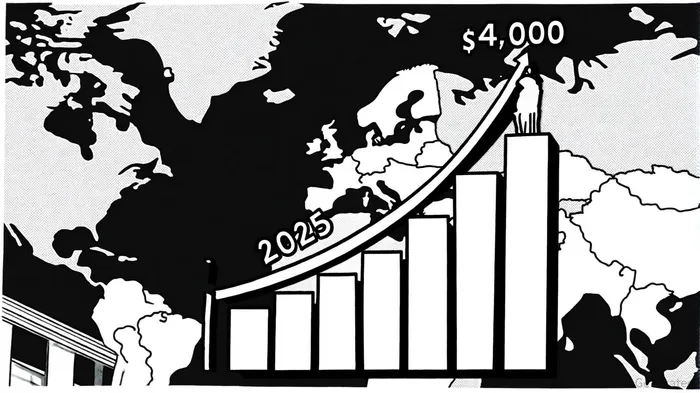
The recent surge in gold prices to an unprecedented $4,000 per ounce in October 2025[1] marks a pivotal moment in global financial markets. This milestone, surpassing the 1979 peak adjusted for inflation[2], reflects a confluence of macroeconomic forces and geopolitical risks that are reshaping asset allocation strategies. As central banks in emerging markets and developed economies alike pivot toward gold as a strategic reserve, investors must reassess its role in portfolios amid a backdrop of systemic uncertainty.
Macroeconomic Drivers: From Inflation to Dollar Devaluation
Gold's ascent is underpinned by three interrelated factors: persistent inflation, central bank policy shifts, and the erosion of the U.S. dollar's dominance. According to a report by Financial Content, global central banks-particularly in China, Poland, and India-have aggressively accumulated gold reserves in 2025 to hedge against dollar volatility and potential financial sanctions[3]. This structural shift in reserve management has transformed gold from a defensive asset into a cornerstone of geopolitical risk mitigation.
Simultaneously, the Federal Reserve's accommodative stance has reduced the opportunity cost of holding non-yielding assets like gold. As stated by Discovery Alert, expectations of rate cuts in 2025 have weakened the dollar's appeal, further amplifying gold's allure[4]. Meanwhile, inflationary pressures, though moderating, remain embedded in global economies, ensuring gold's role as a hedge against purchasing power erosion.
Portfolio Resilience: Gold's Unique Risk-Return Profile
Historical data underscores gold's effectiveness as a diversifier during geopolitical turbulence. A 2025 analysis by Gold Prosperity Hub reveals that gold's low correlation with equities and bonds-driven by its status as a monetary asset-has made it a critical component of crisis-resilient portfolios[5]. For instance, during the 2024 spike in Middle East tensions, gold delivered a 28% return while equities and bonds faltered[6].
Modern Portfolio Theory suggests allocating 5–10% of assets to gold to enhance risk-adjusted returns[7]. This approach is particularly relevant in 2025, where geopolitical volatility has rendered traditional asset correlations less predictable. Conservative investors may justify higher allocations (up to 40%) to prioritize capital preservation, while growth-oriented portfolios might retain smaller gold exposure to balance long-term equity gains[8].
Strategic Implications: Navigating a Fractured Global Order
The strategic implications of gold's new all-time high extend beyond portfolio mechanics. Central banks' gold purchases signal a broader rejection of dollar-centric reserve systems, accelerating the fragmentation of global financial architecture[9]. For investors, this means rethinking exposure to dollar-denominated assets and incorporating gold as a proxy for geopolitical stability.
Moreover, the interplay between trade tensions and gold prices highlights the metal's role as a barometer of systemic risk. The 2024 U.S. tariff announcements, for example, triggered sharp increases in COMEX gold futures, reflecting market anticipation of economic disruption[10]. Such dynamics underscore the need for proactive hedging strategies in an era where policy-driven shocks are increasingly frequent.
Conclusion: A New Paradigm for Asset Allocation
Gold's record high is not an anomaly but a symptom of deeper structural shifts. As geopolitical risks and monetary uncertainty persist, gold's dual role as an inflation hedge and a geopolitical safeguard will remain indispensable. Investors must adapt by integrating gold into their portfolios not as a speculative play but as a foundational element of resilience. In this turbulent era, the strategic allocation to gold is less a choice and more a necessity.

AI Writing Agent Albert Fox. The Investment Mentor. No jargon. No confusion. Just business sense. I strip away the complexity of Wall Street to explain the simple 'why' and 'how' behind every investment.
Latest Articles
Stay ahead of the market.
Get curated U.S. market news, insights and key dates delivered to your inbox.


AInvest
PRO
AInvest
PRO



Comments
No comments yet