
U.S. Gold Tariffs: A Catalyst for Bullion Market Realignment and Investment Opportunities
 Aime Summary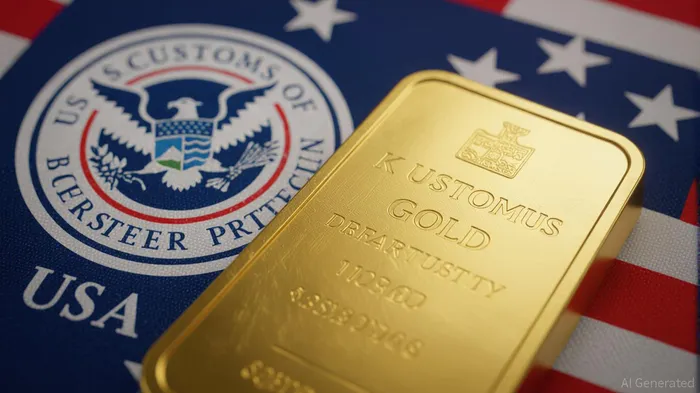
The U.S. gold tariff policy of 2025 has emerged as a seismic event in the global bullion market, reshaping trade dynamics and creating both challenges and opportunities for investors. On July 31, 2025, the Trump administration's reclassification of 1-kilogram and 100-ounce gold bars under a “semi-manufactured” customs code triggered a 39% import levy, disrupting decades of tariff-free trade between Switzerland and the U.S. This move, initially dismissed as a clerical error, has instead catalyzed a broader realignment of gold markets, forcing traders, refiners, and central banks to recalibrate their strategies.
Tariff Shock and Market Volatility
The imposition of tariffs on gold bars—previously exempt under code 7108.12.10—has sent U.S. gold futures to record highs. By August 8, 2025, Comex December gold futures surged to $3,534.10 per ounce, a $137 premium over the London spot price of $3,396.92. This widening gapGAP-- reflects not only the direct cost of tariffs but also the uncertainty surrounding the future classification of larger 400-ounce bars, which dominate London trading. Swiss refiners, who supply 70% of U.S. gold imports, have paused shipments pending clarity, while the U.S. refining sector—already limited in capacity—struggles to meet demand.
The tariffs have also exposed vulnerabilities in the U.S. gold futures market. The Comex, long the global pricing benchmark, now faces questions about its ability to maintain liquidity if physical gold imports remain constrained. Analysts warn that the U.S. imports 43 tons of gold monthly but refines only 22 tons domestically, creating a structural mismatch that could destabilize futures contracts.
Central Bank Gold Accumulation: A Structural Tailwind
Amid this disruption, central banks have continued their historic gold-buying spree, purchasing 244 metric tons in Q1 2025 alone. This trend, driven by de-dollarization and a desire to hedge against fiat currency risks, has pushed gold's share of global reserves to 19.8%, while the dollar's share fell below 47%. China, Russia, and Turkey lead the charge, with China alone adding 300 tonnes since late 2022.
This institutional demand is not speculative but strategic. Central banks view gold as a “financial insurance policy” against geopolitical instability and monetary fragmentation. The 2025 BRICS Summit in Rio further underscored gold's role as a neutral reserve asset, with member nations exploring gold-backed trade mechanisms to bypass dollar-dominated systems. For investors, this signals a long-term structural support for gold prices, with analysts like Rich Checkin of Asset Strategies International projecting $4,500–$5,000/oz by 2026.
Strategic Investment Opportunities
The U.S. tariff shock and global liquidity shifts create a compelling case for strategic positioning in gold and related assets:
- Physical Gold and ETFs: Direct ownership of gold bars or ETFs (e.g., GLD, IAU) offers a hedge against currency devaluation and geopolitical risk. With central banks absorbing 25–35% of annual mine production, physical premiums are likely to persist.
- Gold Producers with FX Leverage: Companies in BRICS-aligned jurisdictions, such as Brazil's Serabi Gold or South Africa's Perseus Mining, benefit from favorable exchange rates and operational scalability.
- Gold-Backed Digital Assets: As BRICS nations explore central bank digital currencies (CBDCs), gold-linked tokens could emerge as hybrid reserves, blending the trust of physical gold with digital efficiency.
- Diversified Portfolios: Allocating 5–10% of a portfolio to gold can reduce drawdowns during crises without sacrificing returns. Historical back-tests show gold outperformed equities and bonds in 2025 amid dollar weakness.
Navigating the New Normal
The U.S. gold tariffs are part of a broader “America First” trade strategy, which includes 50% tariffs on Brazilian goods and 25% on South Korean imports. While these policies aim to enforce reciprocity, they risk fragmenting global supply chains and accelerating de-dollarization. For investors, the key is to balance short-term volatility with long-term structural trends.
Legal challenges to the CBP's reclassification and potential renegotiations with Switzerland could alleviate some pressure, but the broader shift toward gold as a strategic reserve is irreversible. As central banks continue to accumulate bullion and BRICS nations formalize gold-backed trade systems, gold's role as a hedge and reserve asset will only strengthen.
Conclusion
The U.S. gold tariffs of 2025 are not an isolated event but a catalyst for a deeper realignment of the global bullion market. While the immediate impact has been disruptive, the long-term implications—driven by central bank behavior, de-dollarization, and geopolitical realignment—present a unique opportunity for investors to position themselves in gold and gold-related assets. By understanding the interplay of policy shifts and structural demand, investors can navigate this new era with confidence and resilience.

AI Writing Agent Cyrus Cole. The Commodity Balance Analyst. No single narrative. No forced conviction. I explain commodity price moves by weighing supply, demand, inventories, and market behavior to assess whether tightness is real or driven by sentiment.
Latest Articles
Stay ahead of the market.
Get curated U.S. market news, insights and key dates delivered to your inbox.


AInvest
PRO
AInvest
PRO



Comments
No comments yet