
Gold's Surge vs. Copper's Slump: How to Play the Middle East-Driven Commodity Split
The Middle East's simmering conflicts—most notably the Israel-Iran standoff—are reshaping commodity markets in 2025, creating a stark divide between gold's ascent as a haven asset and copper's struggles tied to growth concerns. This bifurcation offers investors a rare opportunity to profit from commodity divergence trades, particularly through ETFs, futures, and mining equities. Let's unpack the drivers and strategies to capitalize on this split.
Gold's Safe-Haven Surge
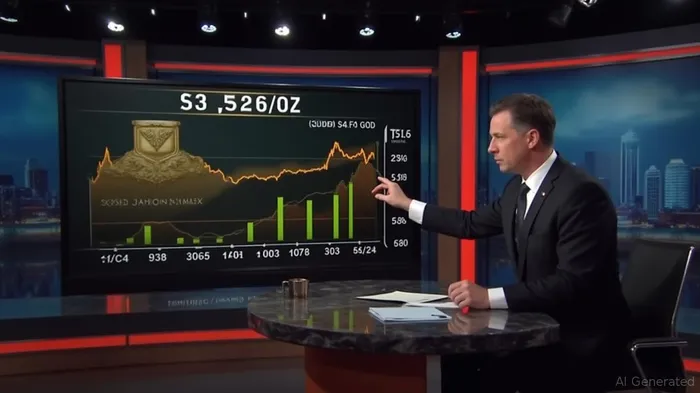
Gold has soared to near-record highs, climbing to $3,426/oz in June 2025, fueled by fears of a widening regional war and the U.S. debt ceiling crisis. The GLD ETF, which tracks physical gold, has risen 12% year-to-date, outperforming broader equities. The metal's appeal stems from two key factors:
1. Geopolitical Uncertainty: The risk of Iran closing the Strait of Hormuz—a chokepoint for 20% of global oil—has elevated safe-haven demand.
2. Dollar Dynamics: While the dollar's strength has been a headwind for many commodities, gold's correlation with dollar weakness has weakened, allowing it to rise even as the DXY index holds above 100.
Analysts at JPMorgan note that every 10% increase in Middle East geopolitical risk (as measured by indices like the NIESR's conflict tracker) correlates with a $100/oz jump in gold prices. This relationship suggests further upside if tensions escalate.
Copper's Slump: Growth Fears and Dollar Pressure
Copper, dubbed “Dr. Copper” for its sensitivity to economic health, has diverged sharply from gold. The red metal has slumped to $8,200/ton—a 7% decline since March—due to:
- Geopolitical Risks: Supply chain disruptions from Middle East conflicts have raised logistics costs, squeezing margins for industries reliant on copper (e.g., autos, renewables).
- Dollar Strength: The DXY index's 4% YTD gain has amplified copper's decline, as a stronger greenback makes dollar-denominated commodities pricier for non-U.S. buyers.
- China's Sluggish Demand: Despite record May copper output (1.25 million tons), weak industrial data and seasonal slowdowns have kept demand subdued.
The COPX ETF, which tracks copper-focused equities, has fallen 8% in 2025, underperforming even as long-term demand for copper in renewables and EVs is projected to double by 2030.
Actionable Strategies for the Divergence Trade
Investors can exploit this split through three approaches:
1. Long Gold, Short Copper via ETFs
- Go Long GLD: Allocate to the SPDR Gold Shares (GLD) to capture safe-haven demand. Pair this with a short position in Copper Miners ETF (COPX) or futures contracts.
- Risk Management: Use stop-losses below $7,800/ton for copper and target $3,600/oz for gold.
2. Mine Equity Contrarian Plays
- Gold Equities: Buy Osisko Gold Royalties (OR), which benefits from rising gold prices and has a low-cost production profile.
- Copper Value Plays: Take a contrarian stance on Southern Copper (SCCO) or Freeport-McMoRan (FCX). While near-term headwinds persist, their exposure to long-term demand (e.g., EV battery infrastructure) offers a rebound potential if growth fears ease.
3. Commodity Strategy ETFs
The Invesco Diversified Commodity Strategy ETF (PDBC) offers exposure to energy (45%), metals, and agriculture. However, its heavy energy weighting makes it vulnerable to oil volatility tied to Middle East risks. Pair this with GLD to balance exposure.
Risks and Triggers to Watch
- Middle East De-escalation: A U.S.-brokered ceasefire could spark a $1,000/oz drop in gold and a rebound in copper as growth fears fade.
- Dollar Correction: A DXY dip below 100 would lift both gold and copper, but the latter could outperform if China's demand recovers.
- Supply Disruptions: A Strait of Hormuz closure would send oil and gold soaring but could also trigger a global recession, worsening copper's slump.
Conclusion
The Middle East's geopolitical tinderbox has created a clear divide in commodity markets: gold thrives on fear, while copper suffers from growth doubts. Investors can profit by pairing gold ETFs with short copper positions or mining equities, but must remain agile. Monitor key triggers like Strait of Hormuz logistics, Fed policy shifts, and China's PMI data. In this volatile landscape, diversification and hedging—not picking outright winners—are the keys to success.
Stay nimble, and let the divergent markets work for you.

Stay ahead of the market.
Get curated U.S. market news, insights and key dates delivered to your inbox.






Comments
No comments yet