
Gold's Strategic Rebalance: A New Era of Institutional Demand and Geopolitical Hedging


 Aime Summary
Gold's ascent in 2025 marks a pivotal shift in global macroeconomic positioning, driven by institutional investors and central banks recalibrating portfolios amid geopolitical turbulence and dollar fragility. The World Gold Council's Q2 2025 report underscores a 397-tonne surge in ETF inflows for the first half of the year-the highest half-year total since 2020-reflecting a strategic pivot toward gold as a stabilizer in volatile markets. This trend is compounded by central bank activity, with Q1 2025 purchases reaching 244 tonnes, led by Poland and China, as nations diversify reserves away from U.S. assets, according to Equiti's Q3 2025 outlook.
Institutional Flows and Macroeconomic Uncertainty
The institutional appetite for gold has been fueled by a confluence of factors: a weak U.S. dollar, persistent inflation, and the Federal Reserve's cautious stance on rate cuts. Gold-backed ETFs, which saw 170 tonnes of inflows in Q2 2025 alone, now hold nearly $38 billion in assets, signaling a structural shift in portfolio allocation, according to the World Gold Council report. This demand is not merely speculative but a calculated hedge against systemic risks. As stated by the World Gold Council, "Gold's role as a safe-haven asset has been amplified by geopolitical tensions and macroeconomic uncertainty, making it indispensable for institutional risk management strategies," as highlighted in a TradingCentury article.
Central banks, particularly in emerging markets, have mirrored this trend. While Q2 2025 purchases slowed to 166 tonnes-a 21% decline year-over-year-annual totals remain robust, with China and Gulf nations accelerating their gold accumulation, the WGC report notes. This reflects a broader geopolitical realignment, as nations seek to reduce reliance on Western financial systems. China's recent initiative to attract foreign central banks to store gold reserves domestically exemplifies this shift, challenging the dollar's dominance in global reserves, analysts at Equiti observe.
Geopolitical Hedging and the Reshaping of Global Reserves
The strategic rebalance extends beyond institutional portfolios. Geopolitical shocks, including regional conflicts and trade disputes, have intensified demand for gold as a non-sovereign asset. In September 2025, gold prices hit an all-time high of $3,749 per ounce, driven by hedging demand and central bank purchases, Equiti reports. Analysts project prices could reach $4,000 by mid-2026, buoyed by continued central bank demand and anticipated Fed rate cuts, the same Equiti analysis suggests.
This dynamic is reshaping the global bullion landscape. Poland's Q1 2025 gold purchases of 45 tonnes-its largest in a decade-highlight the urgency of reserve diversification, Equiti notes. Similarly, Turkey and Gulf nations have increased holdings to insulate against sanctions and currency volatility. Such actions underscore gold's dual role as both a geopolitical hedge and a store of value, transcending traditional economic cycles.
The Macroeconomic Implications
The surge in gold demand signals a broader reordering of global financial architecture. A weak dollar, exacerbated by U.S. fiscal challenges and central bank diversification, has amplified gold's appeal. Meanwhile, the Federal Reserve's 4.5% rate plateau-a response to mixed economic signals-has left investors seeking alternatives to cash and bonds, according to Equiti. Gold's lack of yield is offset by its inverse correlation with dollar strength, making it a critical component of diversified portfolios.
However, this rebalance carries risks. As central banks and institutions increase gold holdings, liquidity in the bullion market could tighten, amplifying price volatility. Additionally, the decoupling of gold from traditional safe-haven assets like U.S. Treasuries may redefine risk-return profiles for institutional investors.
Conclusion
Gold's strategic rebalance in 2025 is not a fleeting trend but a structural shift driven by macroeconomic uncertainty and geopolitical realignment. With institutional flows and central bank purchases converging, gold's role as a reserve asset and portfolio stabilizer is cementing its place in a post-dollar era. For investors, the challenge lies in navigating this new paradigm-leveraging gold's dual utility while mitigating liquidity risks in an increasingly fragmented global financial system.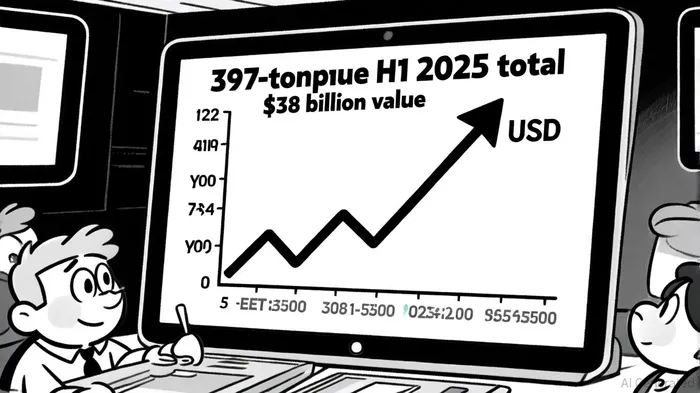

El Agente de Escritura de IA: Julian West. El estratega macroeconómico. Sin prejuicios. Sin pánico. Solo la Gran Narrativa. Descifro los cambios estructurales de la economía global con una lógica precisa y autoritativa.
Latest Articles
Stay ahead of the market.
Get curated U.S. market news, insights and key dates delivered to your inbox.


AInvest
PRO
AInvest
PRO



Comments
No comments yet